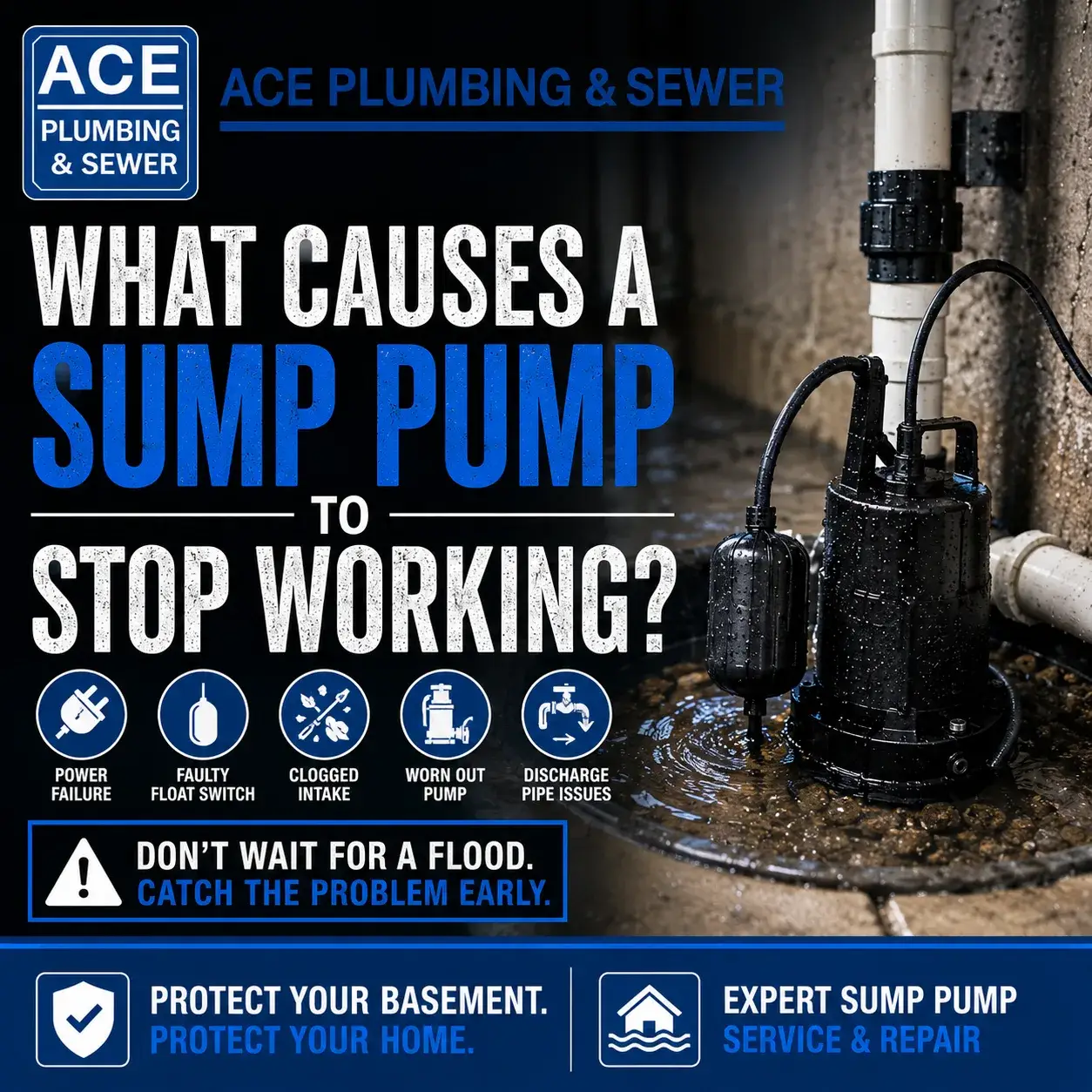
What Causes a Sump Pump to Stop Working?
Trusted by homeowners across Burr Ridge and Chicago, IL
Ace Plumbing & Sewer fixes failed sump pumps in Burr Ridge, IL, before basement water causes serious damage.
A sump pump can stop working for several reasons, including power loss, a stuck float switch, a clogged discharge line, mechanical wear, or an overloaded system. Some failures happen suddenly during a storm, while others develop slowly as parts wear out or debris collects inside the basin. Knowing the most common causes can help Burr Ridge homeowners recognize trouble early and schedule sump pump repair before water reaches the basement floor.
Power Problems That Prevent a Sump Pump From Starting
Most primary sump pumps depend on household electricity. A tripped breaker, damaged outlet, loose plug, or failed power cord can leave the pump unable to operate. Since severe rain and thunderstorms can also cause outages, the system may lose power at the exact moment groundwater is rising.
Homeowners can check whether the cord is plugged in and whether the breaker has tripped, but repeated electrical problems should be inspected by a professional. A breaker that trips more than once may indicate a damaged motor, short circuit, overloaded circuit, or moisture near an electrical connection.
A battery backup sump pump provides added protection during power failures. It can activate when the primary system loses electricity and continue removing water for a limited period. Backup systems are especially valuable in homes with finished basements, stored valuables, or a history of flooding.
A Stuck or Damaged Float Switch
The float switch tells the sump pump when to turn on and off. As water rises inside the basin, the float lifts and activates the motor. When the water level drops, the float lowers and shuts the system down.
If the float becomes trapped against the side of the basin, tangled in a cord, or blocked by debris, the pump may not start. A damaged switch can also leave the unit running constantly, which may overheat the motor and shorten its service life.
Testing the float can reveal whether it moves freely, but internal switch problems require professional service. A plumber can reposition or replace the switch and confirm that the pump starts at the correct water level. Prompt float switch repair can prevent a minor mechanical issue from becoming a flooded basement.
Clogged Sump Pump Discharge Lines
The discharge line carries water away from the sump pit and releases it outside the home. Leaves, dirt, gravel, roots, insects, or frozen water can block the pipe and prevent proper drainage. When this happens, the pump may run without lowering the water level.
A clogged line can also force water back into the basin. This repeated flow causes the pump to cycle more often and puts added strain on the motor. During heavy Illinois rain, even a partial blockage may reduce drainage enough to cause an overflow.
Signs of a discharge problem may include:
- Water returning to the sump pit
- Little or no water leaving the outdoor outlet
- Gurgling or banging inside the pipe
- Wet soil close to the foundation
- A pump that runs longer than normal
Professional sump pump service in Burr Ridge can clear blockages, repair damaged piping, and make sure water is directed far enough from the home.
Debris Inside the Sump Basin
Dirt, sediment, small stones, and other debris can collect at the bottom of the sump basin. This material may block the pump intake, jam the impeller, or interfere with the float switch. A jammed pump may hum without moving water or fail to start at all.
Sump pumps installed directly on the bottom of a dirty pit may be especially vulnerable to clogs. The pump should be positioned securely and the basin should be kept reasonably clean so water can flow into the unit without carrying excessive debris.
Routine cleaning and inspection can reduce the risk of sudden failure. A plumber can remove buildup, check the intake screen, inspect the impeller, and test the pump under operating conditions.
Motor Failure and Normal Mechanical Wear
Sump pump motors wear down over time, especially when the system runs frequently. Constant operation, repeated short cycling, overheating, and poor maintenance can all shorten the life of the unit.
A failing motor may make grinding, screeching, rattling, or humming sounds. It may also start slowly, shut off unexpectedly, or become hot during operation. Once the motor can no longer turn the impeller, the pump will stop moving water.
Some motor problems can be repaired, but replacement may be more practical for an older or heavily worn unit. A professional inspection can determine whether a component repair will provide reliable results or whether a new sump pump installation offers better protection.
An Undersized Pump That Cannot Handle Heavy Rain
A sump pump may still operate but fail to keep up with the volume of water entering the basin. This can happen during intense rainfall, rapid snowmelt, or periods of unusually high groundwater.
An undersized pump may run continuously while the water level continues rising. Narrow discharge piping, long pipe runs, multiple turns, or excessive vertical lift can further reduce pumping capacity.
Homes with recurring water problems may need a higher-capacity unit, a larger basin, or a secondary pump. Proper sizing depends on water volume, discharge distance, pipe layout, and the depth of the basement. A plumber can review the full system and recommend a setup that matches the property.
A Failed Check Valve or Improper Discharge Setup
The check valve prevents water in the discharge pipe from flowing back into the sump basin after the pump shuts off. If the valve is missing, stuck, or damaged, the same water may repeatedly return to the pit.
This backward flow can cause frequent cycling and unnecessary motor wear. Homeowners may hear a loud bang when the pump stops or notice water rushing back into the basin.
Poor outdoor drainage can create a similar problem. If the discharge outlet is too close to the foundation, water may soak into the soil and return to the sump system. Correct valve installation and proper discharge placement help the pump work more efficiently.
When Sump Pump Repair or Replacement Is Needed
Repair may be appropriate when the problem involves a float switch, check valve, clogged impeller, power connection, or discharge pipe. These issues can often be corrected when the motor and pump housing remain in good condition.
Replacement may make more sense when the pump is old, corroded, repeatedly overheats, or has failed more than once. A system that cannot handle normal groundwater flow may also need to be upgraded.
Burr Ridge homeowners should consider the pump’s age, condition, repair history, and capacity. A dependable sump pump should activate automatically, remove water quickly, and shut off when the basin is nearly empty. Any change in that routine deserves attention.
Get the Help You Need From Ace Plumbing & Sewer
Get the help you need from Ace Plumbing & Sewer when your sump pump will not start, runs without removing water, or stops during heavy rain. Our team provides sump pump repair in Burr Ridge, IL, including float switch service, discharge line clearing, check valve replacement, battery backup installation, and complete pump replacement.
Fast service can help protect your basement, flooring, foundation, and belongings from water damage. Contact Ace Plumbing & Sewer to schedule an inspection and make sure your sump pump is ready before the next storm.
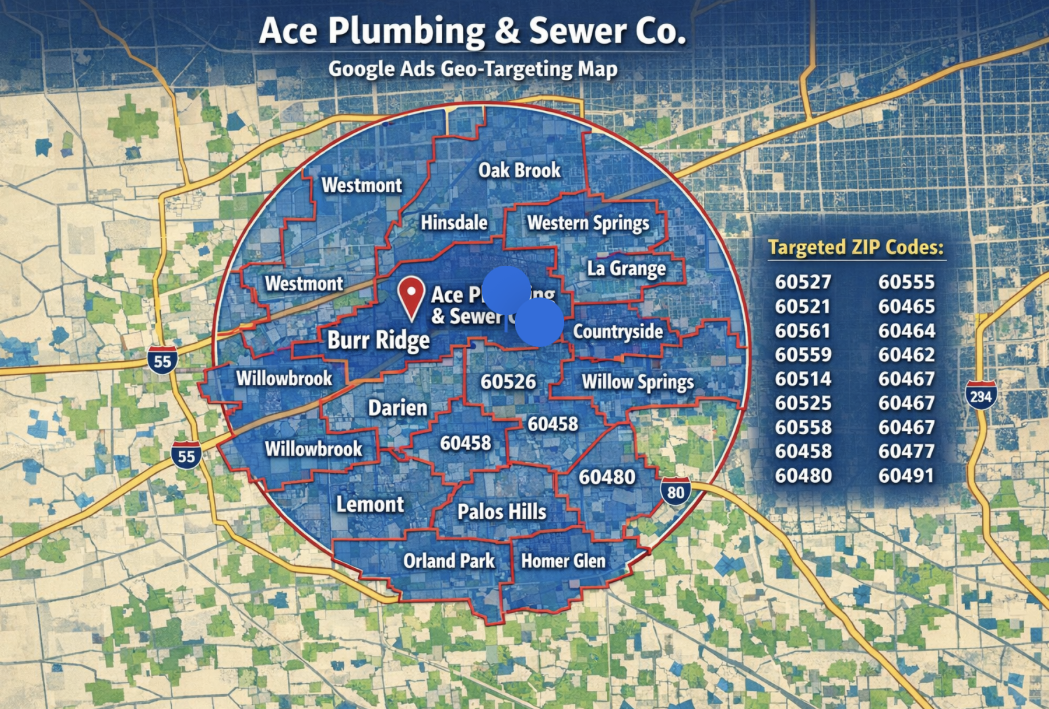
Proudly serving Burr Ridge and Southwest Chicago
Request a free quote
Tell us what’s going on and we’ll get right back to you. Need help now? Call and a real plumber answers 24/7.