
How to Install Sump Pump Discharge Pipe Outside
Trusted by homeowners across Burr Ridge and Chicago, IL
A sump pump discharge pipe outside is one of the most overlooked parts of your basement drainage system. Most homeowners focus on the pump itself and forget that where the water goes matters just as much.
At Ace Plumbing & Sewer, we’ve seen countless water damage problems that started with a poorly installed discharge pipe. The good news is that getting it right isn’t complicated-you just need to know what to do.
Understanding Sump Pump Discharge Systems
What Your Discharge Pipe Actually Does
Your sump pump discharge pipe is the escape route for water your pump removes from your basement. Without it, water has nowhere to go and backs up into your home. The pipe carries water from inside your sump pit through your foundation wall and out into the yard, directing it far enough away that it won’t seep back into your basement or damage your foundation. This sounds simple, but most homeowners get it wrong because they treat discharge pipe installation as an afterthought.

Nearly 60% of basements suffer from water leakage, with poor drainage and cracks in the foundation among the main culprits. The pipe diameter matters, the slope matters, the distance from your foundation matters, and where the water ends up matters. Get any one of these wrong and you’ll face foundation cracks, erosion, or water pooling that defeats the entire purpose of having a sump pump in the first place. Water damage repairs average over $10,000 according to FEMA guidance, so cutting corners here is expensive regret waiting to happen.
Why Installation Matters More Than You Think
A properly installed discharge pipe keeps water moving away from your home continuously. Water needs to flow downhill by gravity, which means your pipe must slope away from the foundation without dips or low spots where water can pool and freeze. In Burr Ridge and nearby areas like Hinsdale, Clarendon Hills, and Western Springs, winter freeze-thaw cycles are brutal on discharge systems. If water sits in your pipe during a freeze, ice buildup blocks the line and forces your sump pump to back up into your basement. Many homeowners also fail to route the pipe far enough from the foundation-the standard is 10 to 20 feet minimum, depending on local code. Discharging water within a few feet of your foundation means it seeps back down into the soil around your footings, which eventually causes the same water damage you were trying to prevent. Proper installation also means choosing the right pipe material and size. Indoor sections typically use 1.5-inch PVC up to your exterior wall, while outdoor sections benefit from 4-inch corrugated polyethylene pipe, which handles the volume better and costs less than PVC for long runs. The transition between these materials must be sealed correctly, and you need a clean-out fitting so future clogs can be cleared without digging up your yard.
Common Installation Mistakes That Cause Flooding
The most common mistake is burying the discharge pipe too shallow or without proper slope, which traps water and invites freezing. Homeowners in Willowbrook, Darien, and Countryside often bury lines without considering the frost line, which can extend around 40 inches in Illinois. If your line isn’t below the frost line and doesn’t slope continuously downward, winter will defeat it. Another frequent error is running the discharge line too close to the foundation or even discharging directly against the house, which sends water right back where it came from. Undersized pipe also causes problems-1.5-inch discharge lines work fine for short runs under 50 feet, but longer distances require 4-inch pipe or the pump works too hard and fails prematurely. Discharging into a sewer line or basement utility sink is illegal in most municipalities and voids your plumbing code compliance.

Some homeowners install freeze guards, thinking they prevent ice buildup, but these actually release water next to the foundation and cause the exact problem you’re trying to avoid. Finally, many people skip the check valve, which allows water to flow backward into your sump pit when the pump shuts off-this wastes energy and can damage your pump over time. A licensed plumber who knows local codes saves you from costly mistakes and ensures your system works when heavy rain or spring thaw hits. Understanding these common errors puts you ahead of most homeowners, but the real work begins when you’re ready to install the system correctly.
Planning Your Discharge Route and Materials
Selecting the Right Location for Water Discharge
Location determines whether your discharge system works for twenty years or fails in two seasons. Start by identifying the lowest point on your property that slopes away from your foundation-this is where your discharge line should terminate. The standard recommendation is 10 to 20 feet from the foundation, but try pushing for 20 feet whenever possible, especially in areas like Hinsdale, Clarendon Hills, and Western Springs where spring thaw and heavy rain strike predictably each year. If your yard doesn’t slope naturally, you’ll need to create one with grading or direct water into a storm drain if local code permits. Check with your municipality before installation; some areas like Chicago and Galesburg have specific restrictions on discharge locations, minimum distances from property lines, and rules against discharging into septic systems or streets. Once you’ve chosen your location, mark it clearly and measure the exact distance your pipe will travel-this determines whether you can use 1.5-inch PVC for the entire run or need to upgrade to 4-inch corrugated polyethylene pipe outside.
Choosing Pipe Materials and Sizing
For indoor sections from the sump pump to your exterior wall, 1.5-inch Schedule 40 PVC works fine and costs around $1–2 per foot. Outside, switch to 4-inch black corrugated polyethylene pipe, which handles volume better and runs $0.50–1 per foot, making it far cheaper for longer runs. The transition happens at your exterior wall using a cap with a 2-inch hole drilled through it-seal this joint with exterior-grade caulk to prevent leaks. Install a clean-out fitting where the 1.5-inch PVC meets the 4-inch pipe; this allows you to snake out clogs without excavation later. Your outdoor run must maintain continuous downward slope away from the house-no dips, no level sections, no bends that create low spots where water pools and freezes.
Installing the Indoor Discharge Connection
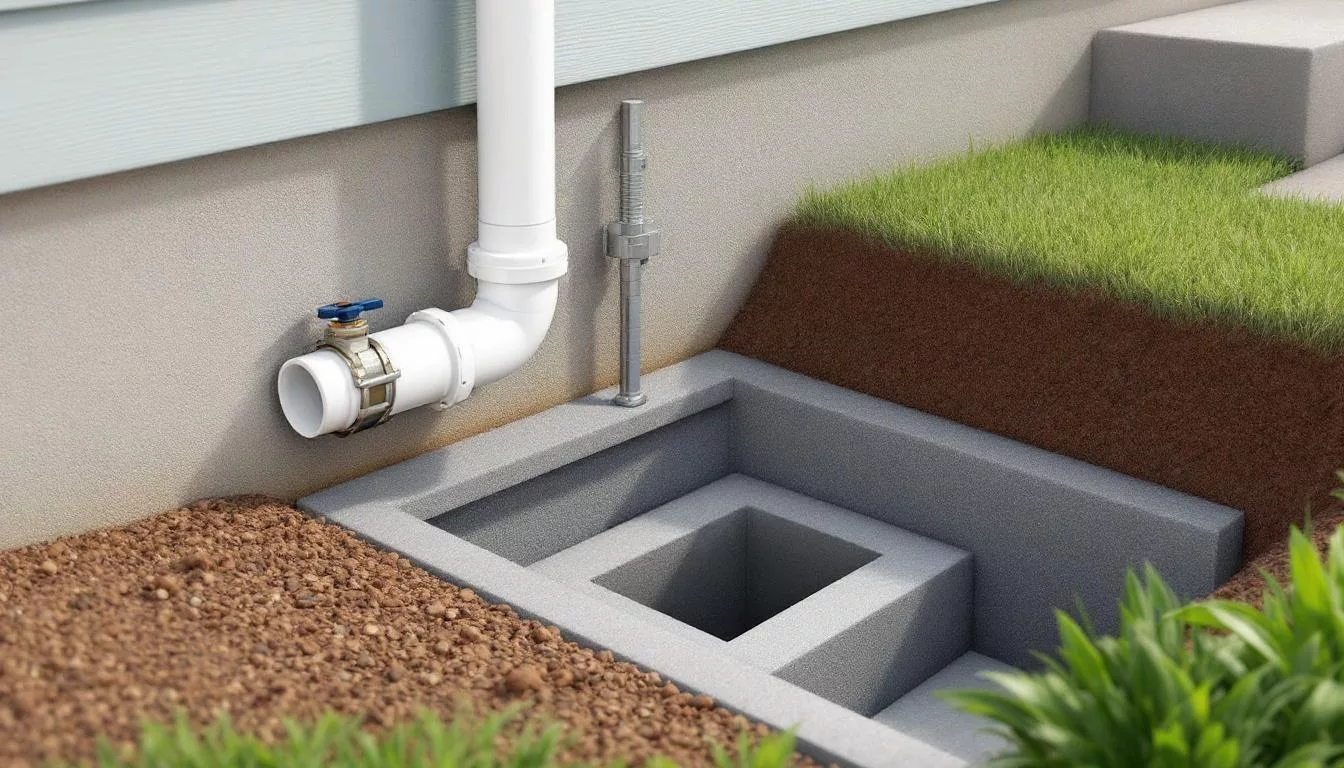
Begin installation at the sump pump discharge port with a short vertical PVC segment, then add a 90-degree elbow and run 1.5-inch PVC up through your rim joist and out through the exterior wall. Install a check valve in this indoor section to prevent backflow-water must move only one direction, away from your sump pit. Add a gate valve (manual shut-off) somewhere in the indoor run so you can isolate the pump for maintenance. Drill a hole through your rim joist and exterior siding large enough for the PVC to pass through, then seal around it with exterior caulk to prevent water and pests from entering.
Routing the Outdoor Discharge Line
Outside, your 1.5-inch PVC connects to the 4-inch corrugated pipe via that drilled cap, and the line must slope downward at least 1 inch of drop per 10 feet of horizontal run-steeper is better in freeze-prone areas like Burr Ridge, Willowbrook, and Darien. Insulate exposed PVC with foam pipe sleeves in winter-heavy regions; heating cables wrapped around outdoor sections provide extra protection in severe cold. At the discharge point, avoid leaving the pipe open where animals can enter; install a pop-up drain or screen cap instead. Bury the outdoor line below your local frost line if possible (around 40 inches in Illinois) to protect against freezing, but ensure it never dips below grade without sloping back up, as trapped water creates ice blockages. Keep your discharge line as short as practical; runs over 50 feet in 1.5-inch pipe force your pump to work harder and shorten its lifespan.
When Professional Installation Makes Sense
If you’re uncomfortable with concrete work, electrical connections, or routing pipes through your foundation, hiring a plumber prevents costly installation errors and ensures your system meets local code requirements. Proper installation protects your foundation and basement from water damage, but the real test comes when your system faces heavy rain or spring thaw-that’s when maintenance and monitoring separate systems that work from those that fail.
Keeping Your Discharge System Running Year-Round
Monthly Inspection Routine
Your discharge pipe does not maintain itself, and winter in Burr Ridge, Hinsdale, and Clarendon Hills will exploit every weakness you leave unaddressed. Walk your property every month and trace the entire discharge line from where it exits your foundation to the endpoint, checking for standing water, ice accumulation, debris blockage, or signs of erosion around the discharge point. If water pools near the outlet instead of flowing away, your slope has failed or settled-this needs immediate correction because pooled water refreezes and blocks the line. Clear away leaves, dirt, and snow from the discharge area, especially before winter hits; a clogged outlet forces your pump to back up into your basement within hours of the next heavy rain.

Test your pump monthly by pouring water into the sump pit and confirming the pump starts automatically and shuts off as the water level drops-this simple check catches float failures before they cost you thousands in water damage. Smart monitoring systems offer daily automated testing and send app alerts if your pump fails to run, which beats hoping your system works when you need it most.
Winter Protection Strategies
Freezing discharge pipes cause more winter flooding in the Midwest than any other single failure mode, so insulate exposed outdoor PVC with foam pipe insulation before November and consider heating cables for sections that face north or stay shaded year-round. Ensure your outdoor line maintains true downward slope with no flat spots or dips where water collects; even a single low point invites ice accumulation during freeze-thaw cycles common in Willowbrook, Darien, and Countryside.
If your line runs longer than 50 feet, upgrade to 4-inch corrugated pipe outside because 1.5-inch PVC creates excessive head pressure that forces your pump to work harder and fail sooner-this is pump physics, not theory. Bury the line below your local frost line (roughly 40 inches in Illinois) if possible, and if you must leave sections above ground, maintain at least 1 inch of downward slope per 10 feet of run, steeper in freeze-prone areas. Clear the discharge outlet annually before winter; if you see ice buildup, reduced flow, or water trickling instead of flowing freely, snake the line or call a licensed plumber to clear internal blockages that threaten your entire system.
Signs Your System Needs Professional Attention
Your discharge system needs professional attention if you notice water seeping back into your basement after the pump runs, which signals a failed check valve or backflow problem that wastes energy and damages your pump. If your pump runs constantly but water level in the pit never drops, your discharge line is completely blocked and water has nowhere to go-this is an emergency requiring immediate clearing.
Foundation cracks appearing near your discharge endpoint, soil erosion around the outlet, or water pooling persistently in your yard indicate your discharge location or slope is wrong and water is still seeping toward your foundation despite the pump. If you’ve buried your line and suspect a crack or collapse, a licensed plumber can use a camera inspection to identify the exact problem without excavation. Persistent odors near your discharge outlet suggest debris accumulation or stagnant water, which indicates blockage or improper slope.
When Pump Failure Signals Larger Problems
If your sump pump cycles on and off constantly without stopping, your check valve has failed and water is flowing backward into the pit-this shortens pump life significantly and needs repair immediately. Constant cycling also wastes electricity and indicates your discharge system cannot handle the water volume your pump produces, which may require upgrading pipe size or discharge location.
Schedule a professional inspection every two to three years, especially if your home sits in a flood-prone area or you’ve experienced previous basement water damage; a licensed plumber can identify slope problems, improper pipe sizing, or code violations that your visual inspection misses. These inspections catch small issues before they become expensive foundation repairs or basement flooding disasters.
Final Thoughts
Your sump pump discharge pipe outside protects your foundation and basement from water damage, but only if you install it correctly and maintain it consistently. Route water at least 10 to 20 feet from your foundation, maintain continuous downward slope without dips or low spots, and use properly sized pipe that handles your pump’s volume without forcing it to work harder than necessary. In Burr Ridge, Hinsdale, Clarendon Hills, and surrounding areas, winter freeze-thaw cycles will test every weakness in your system, so insulation and regular inspection before November are non-negotiable.
Monthly testing of your pump and visual checks of your discharge line catch problems early, when they cost nothing to fix, rather than waiting until water backs up into your basement and costs thousands in repairs. The most important decision you’ll make is whether to tackle this project yourself or hire a licensed plumber who knows local codes and can guarantee the work. If you’re uncertain about any step, hiring a professional prevents expensive mistakes that compromise your entire system.
Water damage exceeds $10,000 on average, and most of that damage traces back to poor drainage or failed discharge systems. Protecting your home means treating your sump pump discharge pipe outside as essential infrastructure, not an afterthought. Call us at (708) 204-8602 for a site visit and honest assessment of your basement waterproofing setup.
Proudly serving Burr Ridge and Southwest Chicago

Request a free quote
Tell us what’s going on and we’ll get right back to you. Need help now? Call and a real plumber answers 24/7.