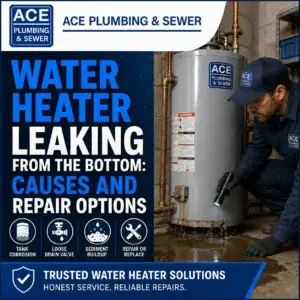
Ace Plumbing & Sewer repairs leaking water heaters in Burr Ridge, IL, and helps homeowners choose the right repair or replacement option.
Water collecting beneath a water heater is never something to ignore. A leak can begin with a worn valve or loose connection, but it can also signal internal tank corrosion or a serious pressure problem. Acting quickly can reduce the risk of damaged flooring, wet drywall, mold growth, and a sudden tank failure. The location and source of the water will determine whether the unit can be repaired or needs to be replaced.
What Causes Water to Collect Under a Water Heater?
Water beneath a tank does not always mean the tank itself is leaking. Moisture can travel down pipes, fittings, or the side of the unit before collecting at the bottom. A plumber must inspect the full system to determine where the leak begins.
Common causes include loose supply connections, a leaking drain valve, a faulty temperature and pressure relief valve, condensation, or corrosion inside the storage tank. Water can also come from nearby plumbing fixtures, floor drains, or HVAC equipment, making the source difficult to identify without a careful inspection.
Homeowners should avoid assuming the problem is minor simply because the puddle is small. A slow leak may continue for weeks and damage the surrounding area before the water heater stops working.
A Leaking Drain Valve May Be Repairable
The drain valve is located near the bottom of a traditional tank water heater. It is used to empty the tank during flushing, maintenance, or replacement. Over time, the valve can loosen, crack, or fail to close completely.
A small drip from the drain valve may sometimes be corrected by tightening the connection or replacing the valve. The tank must usually be drained before this repair can be completed safely. Attempting to remove the valve while the tank is full can release a large amount of hot water.
A damaged drain valve is often a repairable issue when the tank remains structurally sound. Professional water heater repair in Burr Ridge can confirm that the leak is limited to the valve and check for corrosion around the opening.
Temperature and Pressure Relief Valve Problems
The temperature and pressure relief valve protects the water heater from excessive heat and pressure. It is typically installed near the top or side of the tank, but its discharge pipe may run downward and release water near the floor.
Water near the bottom of the unit may appear to come from the tank when it is actually draining from this safety valve. The valve may leak because it is worn, defective, or reacting to pressure that is too high inside the plumbing system.
Replacing the valve may solve the problem, but the cause of the pressure increase must also be identified. A plumber may check the thermostat, water pressure, expansion tank, and related plumbing components. A leaking relief valve should never be plugged, capped, or disabled because it serves an essential safety function.
Loose Water Connections and Supply Line Leaks
Hot and cold water connections are located at the top of most water heaters. A loose fitting, corroded connector, or damaged supply line can allow water to run down the outside of the tank and collect at the base.
These leaks are often repairable if the tank itself is not damaged. The solution may involve tightening a fitting, replacing a flexible connector, repairing a shutoff valve, or resealing a threaded connection.
Signs of a supply line leak include moisture near the top of the tank, mineral deposits around fittings, rust streaks along the exterior, or dripping that becomes worse when hot water is being used. Prompt plumbing service can prevent the leak from spreading into walls, ceilings, or flooring.
Condensation That Looks Like a Tank Leak
Condensation can form when a cold tank is exposed to warm, humid air or when a gas water heater begins heating a large amount of cold water. Small droplets may run down the outside of the tank and create a temporary puddle.
This type of moisture may disappear once the unit reaches normal operating temperature. However, repeated or heavy condensation can indicate poor ventilation, excessive humidity, improper combustion, or a water heater that is not operating correctly.
Gas water heaters should be inspected if condensation is accompanied by soot, unusual odors, burner problems, or visible venting concerns. A professional can determine whether the moisture is harmless condensation or evidence of a more serious issue.
Internal Tank Corrosion Usually Requires Replacement
A leak coming directly through the bottom seam or metal tank often means the inner storage tank has corroded. Traditional water heaters contain an anode rod that helps protect the tank from rust, but the rod wears down over time.
Once corrosion creates a hole in the tank, the damage cannot usually be repaired safely. Sealants and temporary patches do not restore the structural integrity of the unit. The leak may become larger without warning and release many gallons of water.
Common signs of internal tank failure include:
- Water seeping from the lower seam
- Rust around the base of the unit
- Brown or orange hot water
- Frequent popping or rumbling noises
- Moisture that returns after valves are checked
- An older tank with repeated repair issues
A leaking storage tank generally requires water heater replacement. Fast action can limit water damage and reduce the chance of a complete rupture.
What Burr Ridge Homeowners Should Do After Finding a Leak
Homeowners should keep people and pets away from the wet area, especially if water is close to electrical connections. The water supply and energy source may need to be turned off, but only when the controls can be reached safely.
Electric water heaters involve high-voltage wiring, while gas models include fuel connections, burners, and venting components. Anyone who notices a gas odor should leave the area and contact the appropriate emergency service rather than attempting a repair.
The surrounding floor should be dried as soon as possible, and damaged materials should be inspected. A plumber can trace the leak, evaluate the tank, and explain whether a component repair or full replacement is the safer choice.
Choosing Between Water Heater Repair and Replacement
Repair may be practical when the leak comes from a drain valve, supply line, fitting, or replaceable pressure relief valve. The age and condition of the tank should still be considered before paying for service.
Replacement is usually the better option when the tank is leaking from an internal seam, has extensive corrosion, or has required several recent repairs. An aging water heater may continue developing problems even after one component is fixed.
A professional evaluation should consider the system’s age, repair history, efficiency, warranty status, and household hot water needs. The new unit must also be properly sized and installed with safe plumbing, venting, drainage, gas, or electrical connections.
Get the Help You Need From Ace Plumbing & Sewer
Get the help you need from Ace Plumbing & Sewer when you discover water beneath your water heater. Our team provides hot water heater repair, leak detection, valve replacement, supply line service, tank inspections, and complete water heater installation throughout Burr Ridge.
A fast inspection can determine whether the problem is a repairable fitting or a failed storage tank. Contact Ace Plumbing & Sewer to protect your home from water damage and restore safe, dependable hot water.