Water Heater Maintenance: Extend Your Hot Water System Lifespan
Trusted by homeowners across Burr Ridge and Chicago, IL
Your water heater works hard every day, but most homeowners ignore it until something breaks. At Ace Plumbing & Sewer, we’ve seen countless systems fail prematurely simply because water heater maintenance was skipped.
The good news? Regular upkeep can add years to your system’s life and keep your hot water flowing reliably. This guide covers the warning signs, essential tasks, and problems you can prevent.
What Warning Signs Tell You a Water Heater Is Failing
Temperature Swings Signal Sediment Buildup
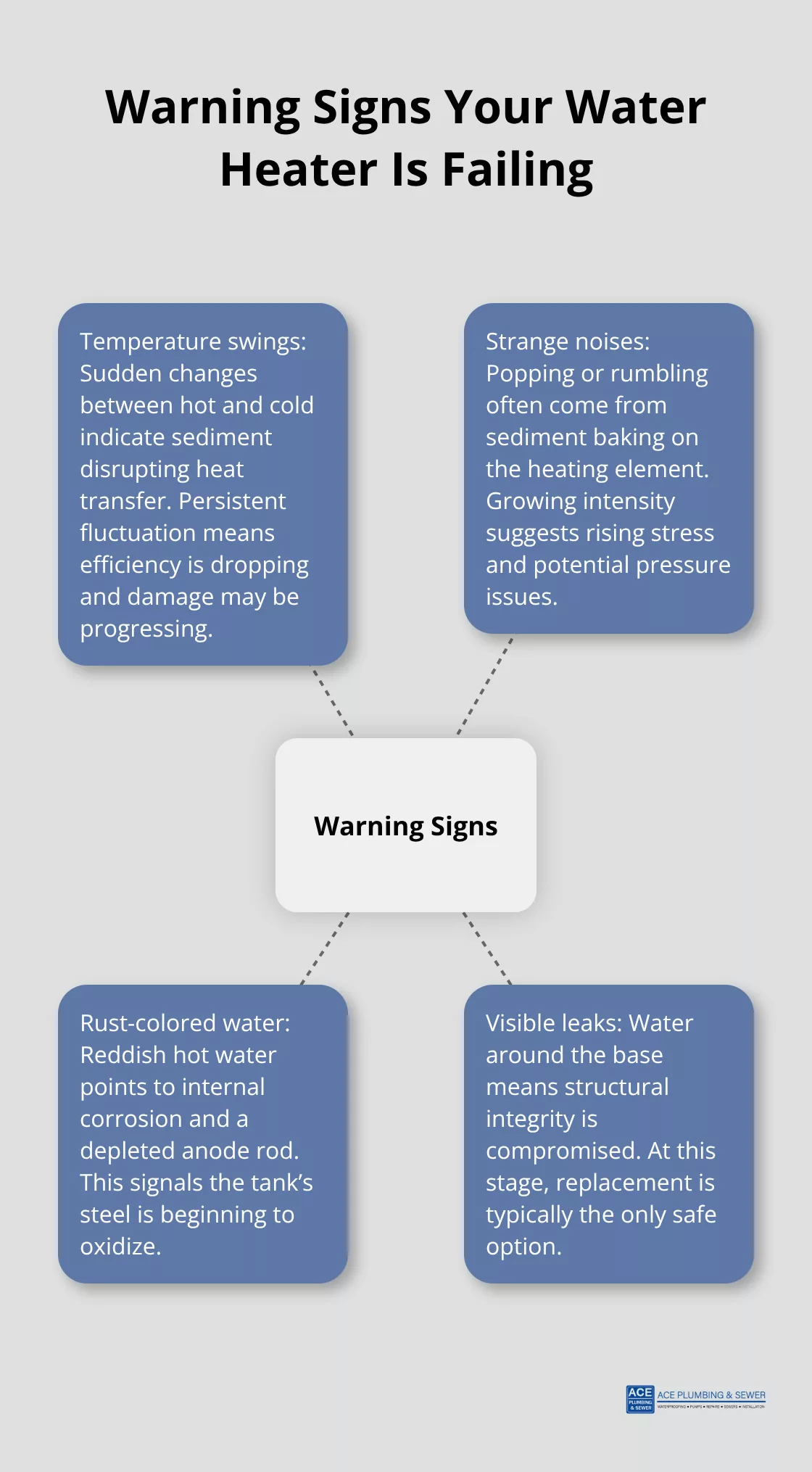
Temperature swings are the first red flag most homeowners notice, and they’re impossible to ignore. When your shower starts lukewarm or fluctuates between hot and cold without explanation, sediment buildup is usually the culprit. Over time, minerals from hard water settle at the tank bottom, creating uneven heating and small cracks in the interior lining. This reduces efficiency and shortens system lifespan significantly. If you’re in Burr Ridge, Hinsdale, or Clarendon Hills and experiencing temperature inconsistency, the problem won’t fix itself-it gets worse. A professional plumber can drain and flush your tank to restore performance, but waiting means paying more in energy bills and risking a complete failure.
Strange Noises Indicate Internal Damage
Strange noises deserve immediate attention because they signal internal damage. Popping, rumbling, or crackling sounds mean sediment is burning on the heating element or water is boiling inside the tank. This isn’t normal operation-it’s a warning that pressure is building and your system is stressed. These sounds typically intensify over weeks or months, and ignoring them accelerates tank failure.
Rust-Colored Water and Leaks Mean Corrosion Has Started
Rust-colored water or visible leaks around the base are equally serious and indicate corrosion has begun. Once corrosion starts, it spreads fast, and patching won’t stop it. If you see reddish water when you turn on hot water in your Darien, Willow Springs, or Western Springs home, the anode rod has likely corroded completely. The anode rod is designed to corrode instead of the tank itself, so when it fails, the tank’s steel begins oxidizing. Leaks mean the structural integrity is compromised, and replacement is your only real option at that point.
Why Annual Inspections Matter
Catching these problems before they become emergencies saves thousands in unexpected repairs and keeps your system running reliably for years. A professional inspection identifies corrosion early (when the anode rod still has life left) and spots sediment accumulation before temperature problems worsen. Most homeowners wait until a crisis hits, but by then the damage is extensive and costly.
How to Maintain Your Water Heater Like a Professional
Flush Your Tank Annually to Remove Sediment
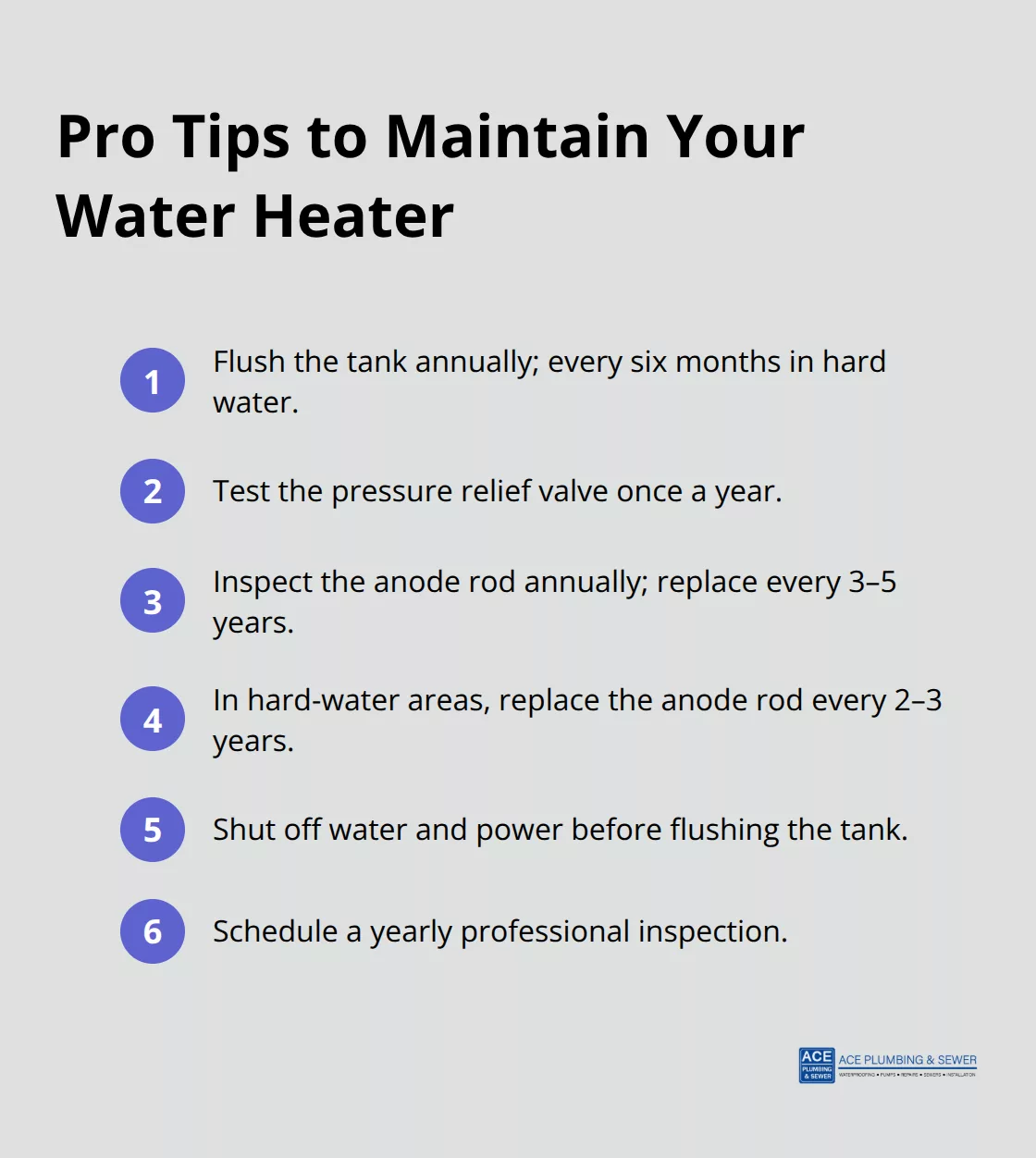
Tank flushing is non-negotiable if you want your water heater to reach its full lifespan. We at Ace Plumbing & Sewer recommend draining your tank at least once annually, though homes with hard water should flush every six months. During a flush, sediment that accumulates at the tank bottom gets removed, which directly improves heating efficiency and reduces energy waste. To flush your tank, shut off the water supply and power, attach a garden hose to the drain valve at the base, and let water flow until it runs clear. This takes 20-30 minutes and costs nothing except your time. If you live in Hinsdale, Clarendon Hills, or Darien and feel uncomfortable doing this yourself, a professional plumber can handle it quickly during a routine maintenance visit.
Test and Replace the Pressure Relief Valve
The pressure relief valve prevents dangerous pressure buildup inside the tank and needs testing annually to confirm it opens and closes properly. If it fails, pressure can exceed safe limits and cause catastrophic tank failure. Testing this valve takes only a few minutes-simply lift the lever slightly and listen for water discharge from the overflow pipe. If no water flows, the valve needs replacement immediately. A faulty pressure relief valve creates a serious safety hazard, so don’t postpone this inspection.
Inspect and Replace the Anode Rod Before Corrosion Spreads
The anode rod is a sacrificial metal rod designed to corrode instead of your tank’s steel walls (this protection is what keeps your tank intact). Most anode rods last 3-5 years depending on water quality, and inspecting it annually lets you replace it before the tank itself starts rusting. A corroded anode rod looks chalky or heavily pitted, and replacement takes 1-2 hours for a professional. In areas like Willow Springs, Western Springs, and Burr Ridge where hard water is common, anode rods may need replacing every 2-3 years instead of the standard 5-year window.
Skipping this step guarantees corrosion will eventually reach the tank, and once that happens, replacement becomes your only option.
Schedule Professional Inspections to Catch Problems Early
Annual inspections catch these problems early when fixes remain affordable and your system still has years of life remaining. A licensed professional identifies corrosion before it spreads, spots sediment accumulation before temperature problems worsen, and tests all safety components in one visit. This preventative approach costs far less than emergency repairs or premature tank replacement. Most homeowners wait until a crisis hits, but by then the damage is extensive and expensive.
The next section covers the specific problems that develop when maintenance gets skipped and how to recognize them before they force an emergency call.
What Destroys Water Heaters When Maintenance Stops
Sediment Accumulation Reduces Efficiency and Accelerates Aging
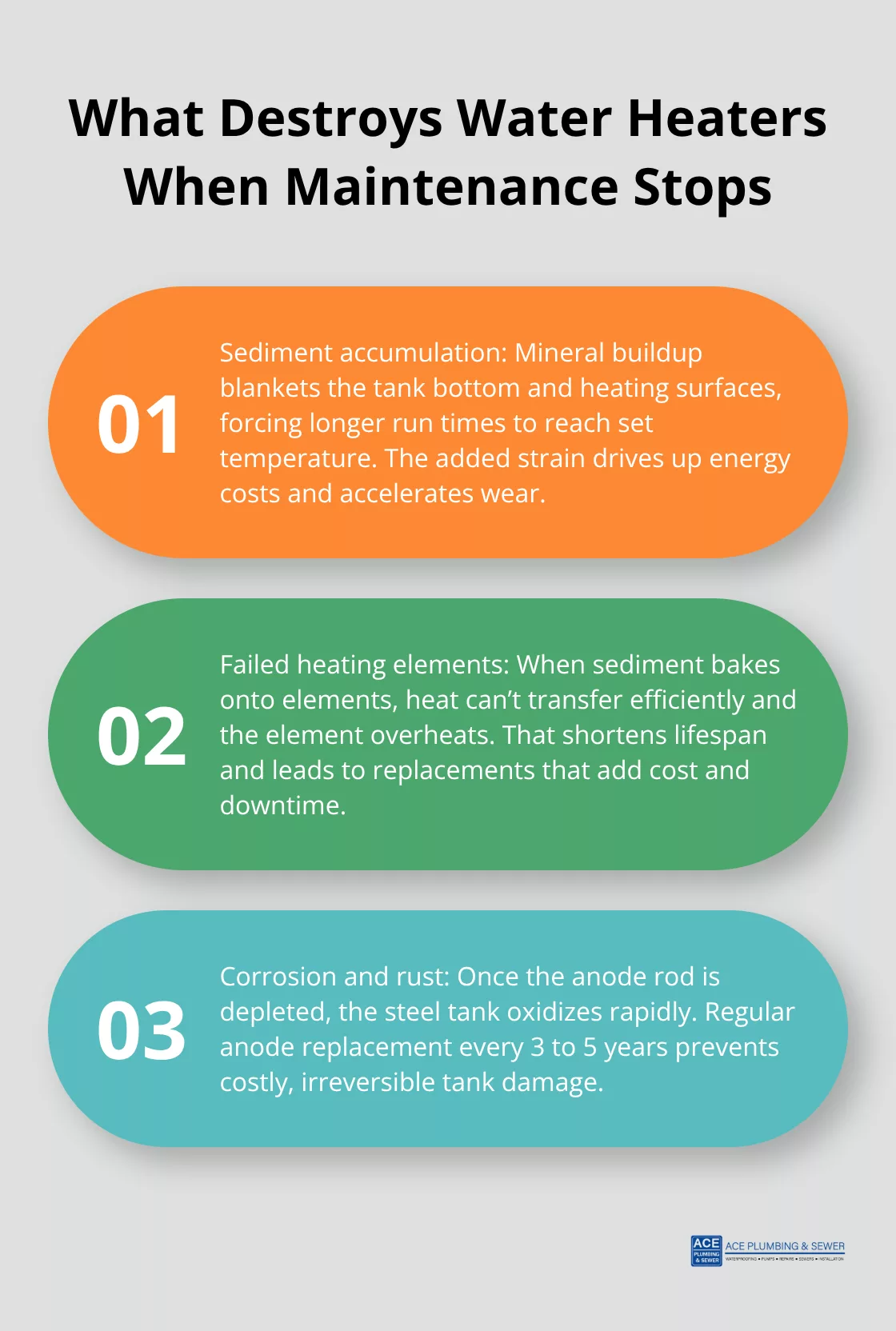
Sediment accumulation is the leading cause of premature water heater failure, and it’s entirely preventable. When hard water minerals settle at the tank bottom, they create an insulating layer that forces your heating element to work harder and longer to reach the same temperature. This extra strain reduces efficiency, meaning your energy bills climb while your system ages faster. In areas like Hinsdale, Clarendon Hills, and Willow Springs where hard water is common, sediment buildup happens aggressively. The minerals also trap moisture against the tank’s steel interior, creating pockets of rust that eventually perforate the tank wall. Annual flushing removes this sediment before it hardens into concrete-like deposits that require professional equipment to clear. Waiting until your water temperature drops means sediment has already compromised efficiency for months, wasting hundreds in unnecessary energy costs.
Failed Heating Elements in Electric Units
Failed heating elements in electric water heaters develop when sediment burns onto the element’s surface or corrosion eats through the metal itself. Electric units contain one or two heating elements submerged directly in the tank, and when sediment coats them, the element overheats trying to transfer heat through the insulating layer. This accelerates element failure, and replacement costs $150-300 plus labor for a professional service visit. The problem compounds because a struggling heating element consumes more electricity while delivering less hot water, creating a double penalty on your utility bills and system lifespan.
Corrosion and Rust Compromise Tank Integrity
Corrosion and rust inside the tank represent the final stage of neglect, and once it starts, replacement becomes your only real solution. The anode rod sacrifices itself to protect the tank’s steel walls, but when anode rod corrosion occurs, the tank itself begins oxidizing within months. Anode rods should be replaced every 3 to 5 years to prevent this damage. Rust-colored water flowing from your taps signals this process has advanced significantly, and structural failure typically follows within a year. Homes in Darien, Western Springs, and Burr Ridge experience this problem faster than areas with softer water, making regular anode rod inspection non-negotiable in these communities.
Why Prevention Costs Far Less Than Replacement
Prevention through annual maintenance costs under $200, while tank replacement runs $1,000-2,500 installed. The math is straightforward-protecting your investment through routine care saves thousands and keeps your system running reliably for years. Neglect transforms a manageable maintenance task into an emergency replacement that disrupts your home and strains your budget.
Final Thoughts
Your water heater’s lifespan depends entirely on the attention you give it today. We at Ace Plumbing & Sewer have watched systems fail at five years because owners skipped maintenance, and we’ve seen tanks run strong at fifteen years because homeowners stayed consistent with annual care. The difference isn’t luck-it’s prevention through water heater maintenance.
Water heater maintenance isn’t complicated or expensive. Tank flushing annually, pressure relief valve testing, and anode rod inspection take minimal time and cost far less than emergency replacement. These three tasks catch problems before they become catastrophic, keeping your system efficient and reliable for years longer than neglected units in Burr Ridge, Hinsdale, Darien, Willow Springs, Clarendon Hills, and Western Springs.
Annual maintenance costs under $200, while tank replacement runs $1,000–2,500 installed. Contact us at Ace Plumbing & Sewer today to schedule your water heater inspection and keep your system running strong for years ahead.
Proudly serving Burr Ridge and Southwest Chicago

Request a free quote
Tell us what’s going on and we’ll get right back to you. Need help now? Call and a real plumber answers 24/7.