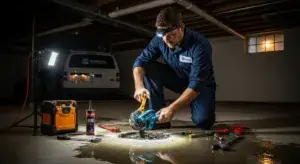
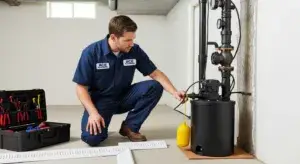
A grinder sump pump handles wastewater that standard pumps can’t manage, grinding solids before moving water away from your home. If your basement floods regularly or you’re dealing with sewage backup, this equipment becomes essential.
We at Ace Plumbing & Sewer know that picking the right grinder sump pump involves more than just price. The right choice depends on your home’s specific needs, local codes, and long-term reliability.
What Makes a Grinder Pump Different
How Grinder Pumps Handle Solids
A grinder sump pump works fundamentally differently than a standard sump pump because it grinds solids before moving water. Standard pumps move clear water out of your basement, but they clog or fail when they encounter toilet paper, food waste, or other debris. A grinder pump contains an internal grinding mechanism that breaks down solids before pumping wastewater away from your home. This distinction matters enormously if your basement has a toilet, sink, or shower that drains below the main sewer line-which is common in Burr Ridge and nearby areas like Indian Head Park and Willowbrook where older homes and challenging terrain create drainage problems.
When Your Home Needs a Grinder Pump
You need a grinder pump specifically when sewage or wastewater must travel upward to reach your municipal sewer line or septic system. If your basement bathroom or laundry area sits below the main line, gravity alone won’t move that water out. Standard pumps simply lack the capacity for this job. A quality grinder pump handles flows for typical residential installations, which matches the output of household fixtures.
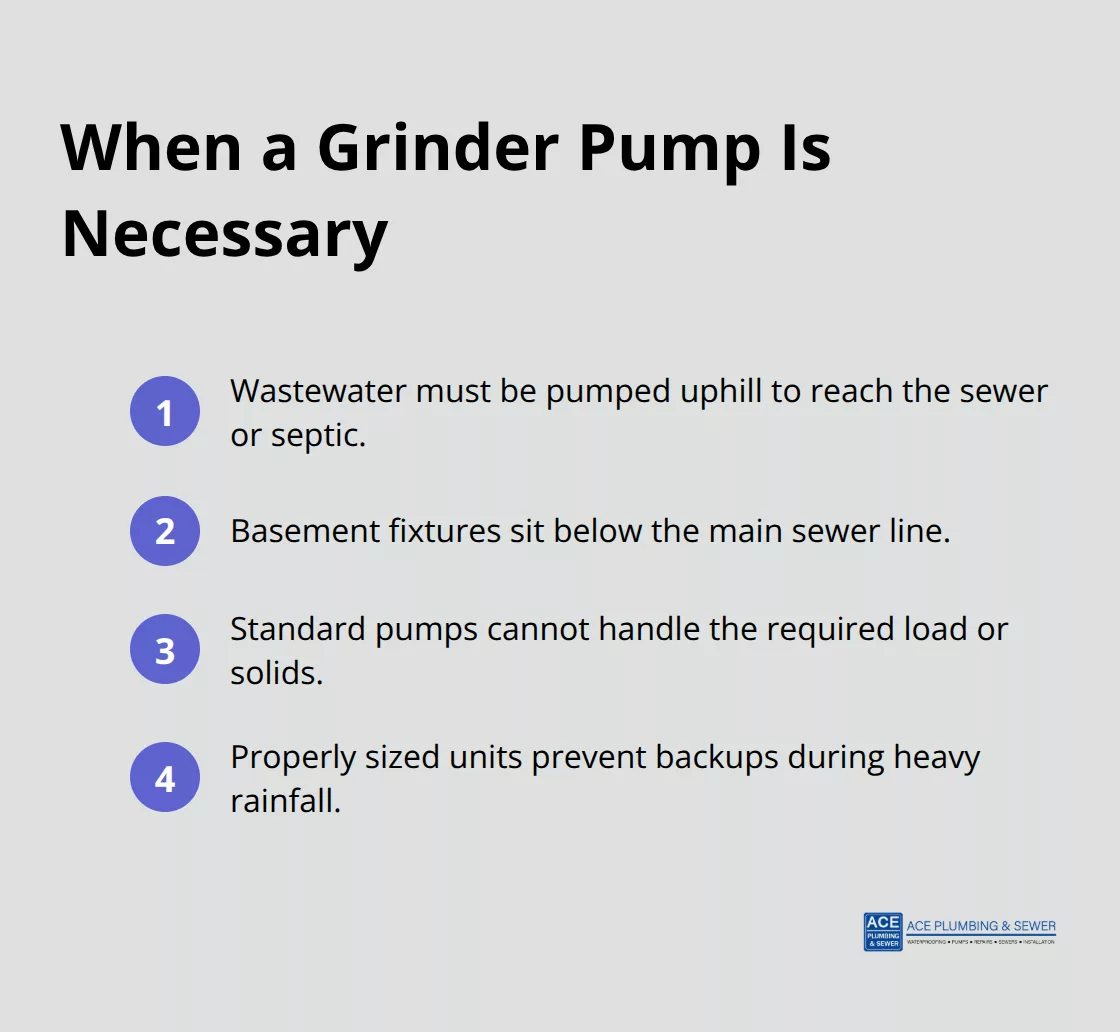
Heavy rainfall in the Chicago suburbs regularly overwhelms older drainage systems, and a properly sized grinder pump with adequate grinding capacity prevents backups that can damage your home and create health hazards.
Sizing Your Grinder Pump for Peak Performance
The right horsepower ensures the pump won’t struggle during peak flow periods. Your home’s elevation, the depth of your sump pit, and local plumbing codes all influence which grinder pump actually handles your home’s specific load rather than oversizing or undersizing based on guesswork. A licensed plumber assesses these factors to recommend equipment that matches your property’s unique drainage challenges. This assessment becomes especially important in areas like Canalport and Cicero, where water tables and soil conditions vary significantly from one neighborhood to the next.
What Features Matter Most in a Grinder Pump
Horsepower and Flow Rate for Your Home
Residential grinder pumps typically operate between 1/4 and 1/3 horsepower, producing flow rates of 35 to 60 gallons per minute for standard household applications. This capacity handles the combined output of multiple fixtures draining simultaneously-a bathroom, kitchen sink, and laundry running at once. Homes in areas like Lyons and Brookfield with deeper basements or higher water tables often benefit from 3/4 horsepower models that deliver stronger performance without strain. A licensed plumber measures your sump pit dimensions and water flow patterns to recommend whether standard residential capacity suffices or if your situation demands the extra power. Undersizing leaves you vulnerable to overflow during heavy rainfall, while oversizing wastes energy and money on unnecessary capacity.
Grinding Mechanisms and Solids Handling
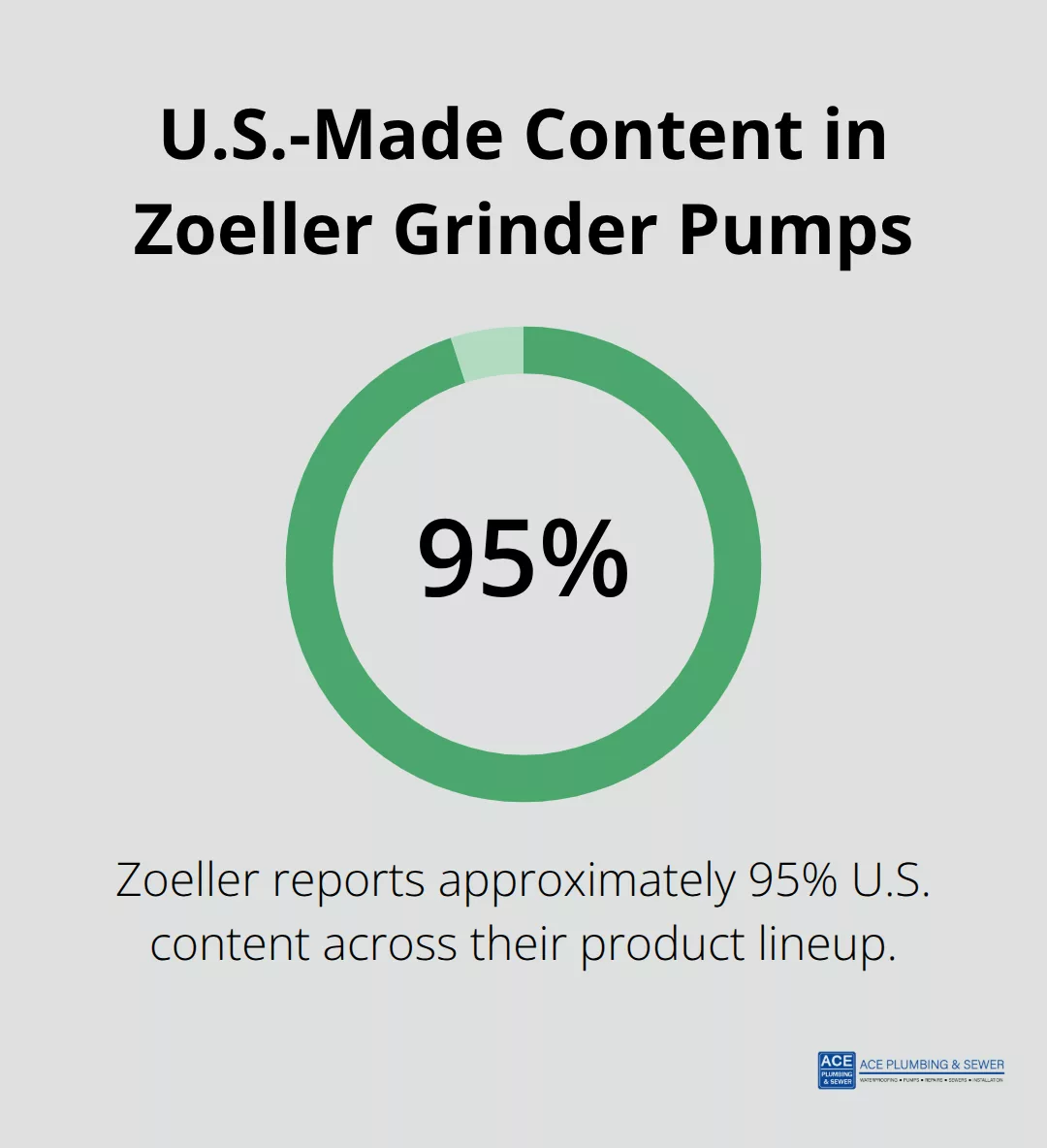
The grinding mechanism itself varies between models, with some using impeller-based systems and others employing true grinding teeth that pulverize solids more aggressively. Zoeller, a manufacturer with approximately 95 percent U.S. content in their products, offers grinder models like the M803 and M805 with different configurations to match your electrical setup and installation space. The choice between impeller and grinding-tooth designs affects how effectively the pump handles toilet paper, food waste, and other household solids.
Impeller systems work well for lighter debris loads, while grinding teeth provide superior performance in homes that generate heavier solids (such as those with multiple bathrooms or basement kitchens). Your specific household composition and drainage patterns determine which mechanism protects you best against clogs and failures.
Noise Levels and Vibration Control
Grinder pumps produce more noise than standard sump pumps because the grinding mechanism creates vibration and sound-typically ranging from 70 to 80 decibels depending on the model and installation method. Mounting the pump on a rubber isolation base and ensuring the discharge pipe has proper support reduces noise transmission to living areas above the basement. Homes in Canalport and Justice, where seasonal flooding occurs regularly, benefit from quieter models that won’t disturb sleep during storm events. The installation location matters significantly; a pump installed in a corner away from living spaces creates less disturbance than one positioned directly beneath a bedroom or family room.
Energy Efficiency and Operating Costs
Energy efficiency affects operating costs over the pump’s 10 to 15 year lifespan. Properly sized pumps eliminate energy waste, potentially saving over $9,000 annually per pump. In areas like Indian Head Park and Willowbrook where flooding occurs seasonally, choosing an efficient pump reduces your home’s environmental footprint. Automatic operation with a float switch eliminates manual activation, which most homeowners prefer because it responds immediately to rising water levels without intervention.
Backup Power and Storm Protection
Battery-backed or water-powered backup systems protect against outages during storms-exactly when you need pumping most. These backup options (whether battery-based or water-powered) activate automatically when the primary pump loses power, keeping your basement dry when the electrical grid fails. Heavy rainfall in the Chicago suburbs regularly causes power outages that coincide with peak flooding risk, making backup systems a practical investment rather than a luxury. Evaluate your specific noise tolerance, check your home’s electrical capacity to handle the motor draw, and compare efficiency ratings on product specification sheets before making a final selection. Once you understand these feature categories, the next step involves assessing how your home’s existing plumbing setup influences which grinder pump will perform reliably for years to come.
Installation Readiness and Professional Support
Assessing Your Home’s Plumbing Configuration
A grinder sump pump succeeds only when it integrates properly with your home’s existing water and sewage systems. We at Ace Plumbing & Sewer assess your plumbing setup first because the pump’s performance depends on this foundation. Your sump pit dimensions matter enormously-most residential installations require at least 24 inches of water in the bottom of the pit to allow adequate pump run time. The depth of your sump pit, the elevation of your main sewer line relative to your basement fixtures, and existing discharge piping all influence whether a standard 1/4 horsepower pump suffices or whether you need the extra capacity of a 3/4 horsepower model.
Camera inspections of your sewer line reveal hidden clogs or structural damage that could overwhelm a new pump’s discharge. Hard water conditions common in areas like Burr Ridge, Canalport, Indian Head Park, Lyons, and Brookfield cause mineral buildup that reduces pump longevity, so water quality testing identifies whether you need additional filtration ahead of the pump intake. This assessment prevents costly failures after installation.
Permit Requirements Across Western Chicago Suburbs
Western Chicago suburbs enforce specific permit requirements that vary by municipality. Burr Ridge, Indian Head Park, Lyons, and Brookfield each maintain different electrical and plumbing codes for grinder pump installations. Permits typically cost between $150 and $400 depending on your village, but skipping this step exposes you to code violations that complicate future home sales or insurance claims. Licensed installers handle permit applications and inspections, ensuring your system meets local standards without delays or rework.
Professional Installation Protects Your Investment
Improper discharge piping placement can direct water back toward your foundation rather than away from it, and incorrect check valve orientation allows backflow that defeats the pump’s purpose entirely. Professional installation prevents these costly mistakes. Technicians secure discharge piping properly, install check valves on the discharge pipe just above the sump pump, and test the system before completion. This attention to detail separates reliable installations from failures that flood your basement during the next heavy rainfall.
Maintenance Contracts and Emergency Response
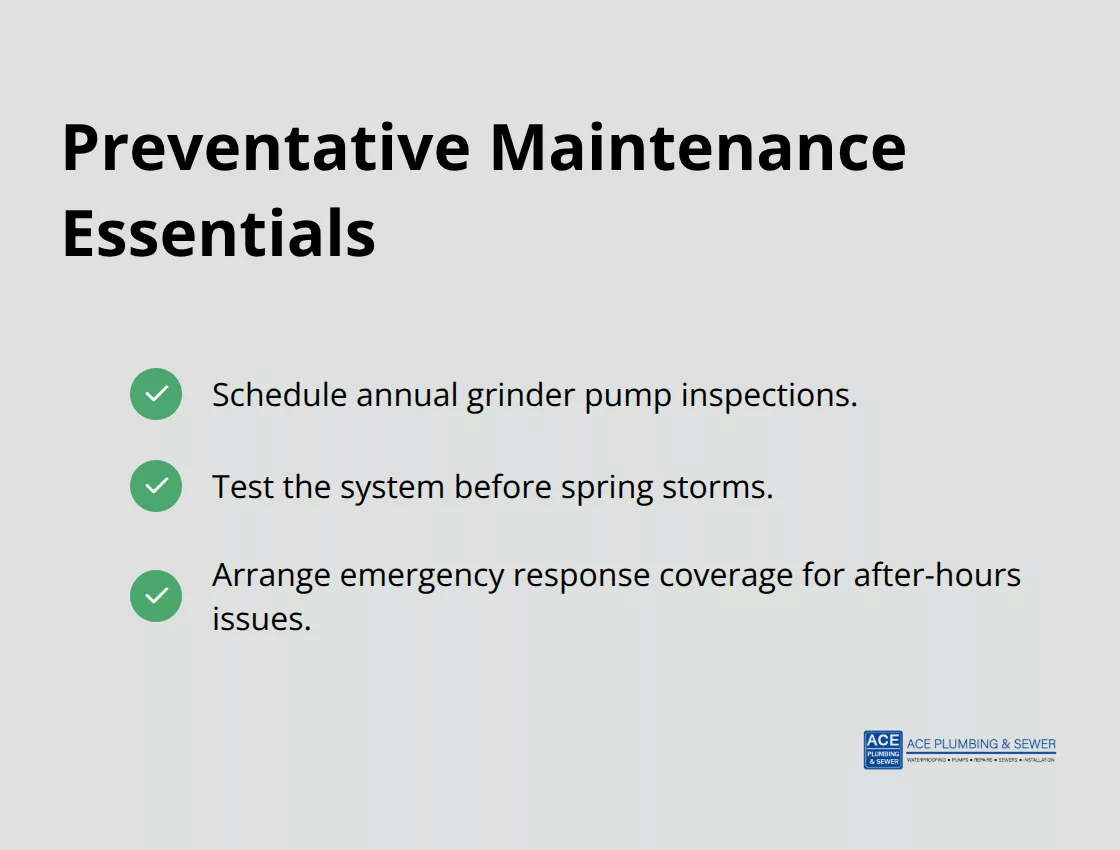
Float switch failures, clogged intake screens, and impeller wear develop gradually and often go unnoticed until they cause basement flooding during heavy rainfall. Maintenance contracts with licensed technicians catch these problems before they become emergencies. Annual inspections, seasonal testing before spring storms, and emergency response when pump issues arise outside business hours protect your home year-round.
We at Ace Plumbing & Sewer offer preventative service agreements that address these needs, keeping your system ready for the next downpour.
Final Thoughts
Matching horsepower and flow rate to your home’s actual drainage needs forms the foundation of selecting the right grinder sump pump. Energy efficiency matters over the pump’s 10 to 15 year lifespan, and backup power protection keeps your basement dry when storms knock out electrical service. Permit compliance and professional installation prevent costly mistakes that flood basements during heavy rainfall.
Homeowners in Burr Ridge, Indian Head Park, Lyons, Canalport, and Brookfield face similar drainage challenges from seasonal flooding and older sewer infrastructure. Your specific situation-basement elevation, water table depth, soil conditions, and local codes-determines which grinder sump pump actually protects your home. We at Ace Plumbing & Sewer have served the western Chicago suburbs since 1983, handling installations, maintenance contracts, and emergency response when pump failures occur outside business hours.
Contact The Ace Plumber today to schedule your grinder sump pump assessment and receive the expert guidance your home deserves.