Backflow Testing Hinsdale: Keeping Your Building Safe
Trusted by homeowners across Burr Ridge and Chicago, IL
Contaminated water entering your building’s supply line is a serious threat that most property owners overlook. Backflow testing in Hinsdale isn’t optional-it’s a legal requirement that protects your tenants, customers, and staff from waterborne pathogens.
We at Ace Plumbing & Sewer have tested hundreds of buildings across the area and found that many don’t realize their prevention devices have failed until it’s too late. This guide walks you through everything you need to know about backflow prevention and why regular testing matters for your building’s safety.
What Is Backflow and Why It Matters
Backflow occurs when contaminated water reverses direction and flows backward into your clean drinking water supply. This happens when pressure in your building’s plumbing system drops below the pressure in the municipal water line, or when pressure in your internal system exceeds the city’s supply pressure. In Hinsdale and nearby areas like La Grange, Clarendon Hills, and Western Springs, older buildings with aging infrastructure face higher backflow risk because their systems experience more pressure fluctuations. The EPA reports that cross-connections-the physical points where contaminated water can enter clean water lines-pose one of the most serious threats to public water supplies. A single unprotected cross-connection can contaminate an entire building’s water system and potentially affect the municipal supply serving thousands of residents across the western suburbs.
Health Risks Are Real and Immediate
Backflow contamination introduces pathogens, chemicals, pesticides, and sewage into drinking water. The CDC has documented cases where backflow incidents led to serious waterborne disease outbreaks affecting hundreds of people. In commercial settings (restaurants, medical facilities, manufacturing plants), the stakes are even higher because contamination spreads faster through larger systems and affects more people. Property owners in Hinsdale, Countryside, and Oak Brook face legal liability if contaminated water reaches tenants, customers, or employees. Your building insurance may not cover damages from preventable backflow incidents, leaving you personally responsible for medical claims and property damage. The financial and reputational damage from a contamination event far exceeds the cost of proper device installation and testing. Municipalities take backflow compliance seriously because it protects public health at the source.
Illinois and Hinsdale Mandate Backflow Prevention
Illinois state code and Hinsdale municipal ordinances mandate backflow prevention devices on all buildings with potential cross-connections. This includes commercial properties, multi-unit residential buildings, irrigation systems, medical facilities, food service operations, and any building with chemicals or hazardous substances. Annual testing and certification are not optional-they’re required by law to maintain municipal compliance and avoid fines. Property owners who fail testing must fix the device immediately or face violations and potential shutdowns of water service. Testing must be performed by an ASSE-certified technician or state-licensed plumber, and results must be filed with the municipality. Hinsdale requires test reports within 30 days of testing, and many property managers miss this deadline simply because they lack a reliable system for tracking and submitting documentation. The cost of non-compliance (fines, legal fees, and emergency repairs) runs into thousands of dollars.
Professional Services Handle Compliance Automatically
Professional plumbing services in Hinsdale handle all paperwork and municipal registration automatically, removing the compliance burden from your shoulders. Certified technicians manage the entire process from testing through documentation, so your building stays compliant without lapses. This approach protects your property and your reputation while keeping your focus on operations rather than regulatory deadlines.
Understanding what backflow is and why it matters sets the foundation for protecting your building. The next step is learning how backflow prevention devices actually work and what happens during a professional inspection.
How Backflow Testing Actually Works
Backflow prevention devices operate on a simple principle: they allow water to flow in only one direction through your building’s supply line. The most common device in Hinsdale and nearby areas like La Grange, Clarendon Hills, and Western Springs is the Reduced Pressure Zone (RPZ) valve, which uses two check valves and a relief valve working together to block any backward flow of contaminated water. When pressure inside your building exceeds municipal pressure, the relief valve opens and drains excess water to a safe location rather than allowing it to backflow into the city supply. Double Check Valve Assemblies work similarly but with less complexity, making them suitable for lower-risk applications like irrigation systems or small commercial buildings. Each device type has specific pressure ratings and flow capacities, which is why a certified technician must assess your building’s actual water demand and cross-connection risks before recommending the right equipment.
What Happens During a Professional Inspection
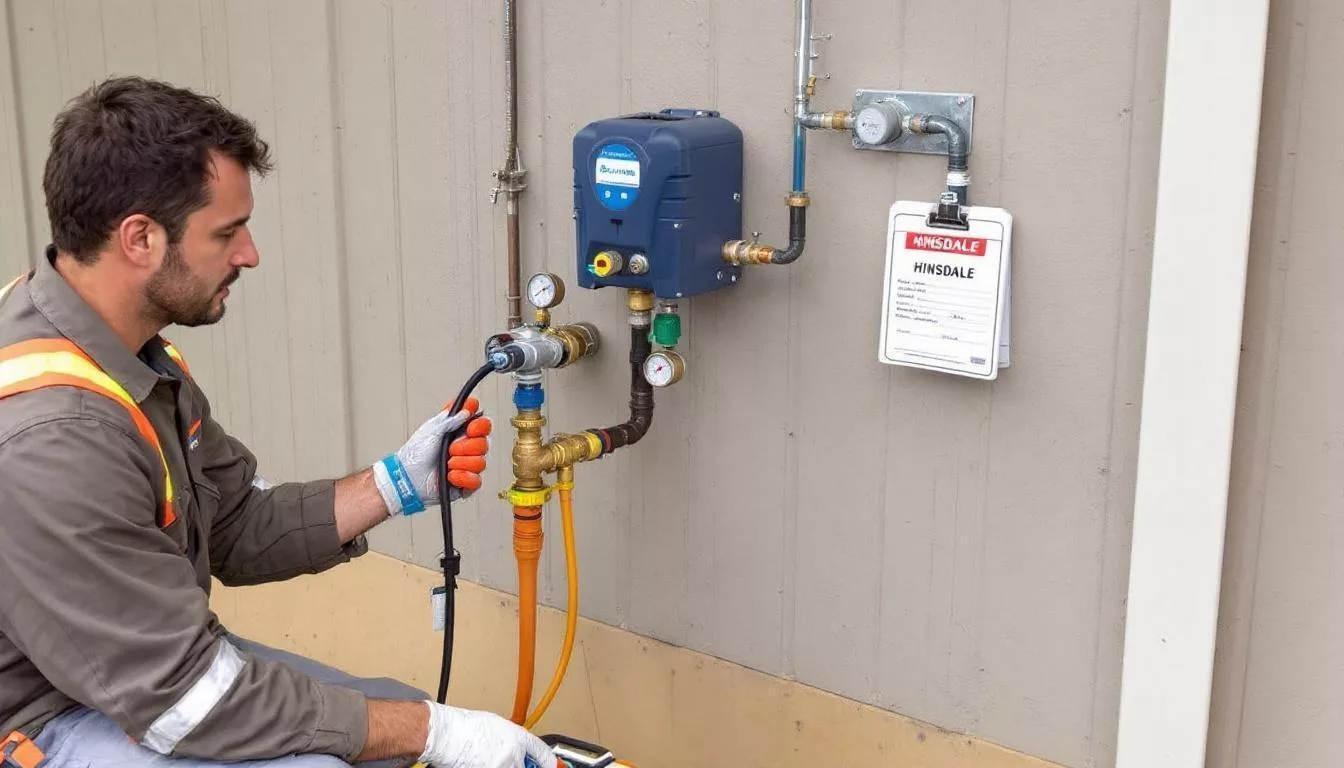
A backflow test involves connecting specialized test kits to test ports on your device to measure pressure differentials and valve response under controlled conditions. The technician introduces a small amount of water into the relief valve outlet to confirm it opens properly, then closes isolation valves to simulate pressure changes that would trigger backflow. If the device fails any step, the technician documents the failure mode and recommends immediate repair or replacement to restore protection. The entire procedure is recorded in a detailed test report that must be submitted to Hinsdale within 30 days to maintain compliance. Many property owners in Burr Ridge and surrounding communities like Hodgkins and Hickory Hills assume their devices work fine because they haven’t caused obvious problems, but devices can fail silently without any visible signs. Annual testing catches these failures before they contaminate your water supply and expose your building to liability.
Why Annual Testing Isn’t Negotiable
Illinois code requires backflow testing every 12 months regardless of whether your device appears functional, because pressure seals degrade over time and check valves lose their ability to hold back contamination. Testing must be performed by an ASSE-certified technician or state-licensed plumber holding an Illinois license. Certified professionals handle the complete testing process and file your certification with the municipality, eliminating the paperwork burden that causes many property managers to miss deadlines. Skipping a single year of testing puts your building out of compliance and opens the door to municipal fines that can reach hundreds of dollars per month, plus potential water service shutdowns if violations escalate. Property managers overseeing multiple buildings in areas like Oak Brook, Countryside, and La Grange benefit from centralized test record management and automated renewal reminders that prevent compliance gaps entirely.
Device Types Require Different Testing Approaches
Pressure Vacuum Breakers, Atmospheric Vacuum Breakers, and Spill-Resistant Vacuum Breakers each respond differently to test procedures, which is why a one-size-fits-all approach fails. Air Gap devices (the most reliable but least common) require visual inspection rather than pressure testing. RPZ valves demand the most rigorous testing because they protect the highest-risk cross-connections (medical facilities, food service, chemical storage). The technician selects test procedures based on your specific device type and your building’s risk classification. Incorrect testing procedures produce false results that either miss real failures or trigger unnecessary repairs.
What Happens Next With Your Test Results
Once testing is complete, your technician provides a detailed report showing pass or fail status, pressure readings, and any maintenance recommendations. If your device passes, the certification satisfies municipal requirements for another 12 months. If your device fails, you must repair or replace it immediately and schedule a retest to restore compliance. Test records become part of your building’s permanent compliance history and support your insurance coverage in case of water quality incidents. Staying ahead of testing deadlines protects your tenants, customers, and staff while keeping your property in good standing with local authorities.
Understanding how backflow devices work and what testing reveals sets the stage for recognizing common problems that develop in Hinsdale buildings over time.
Common Backflow Issues in Hinsdale Buildings
Commercial Properties Face the Highest Risk
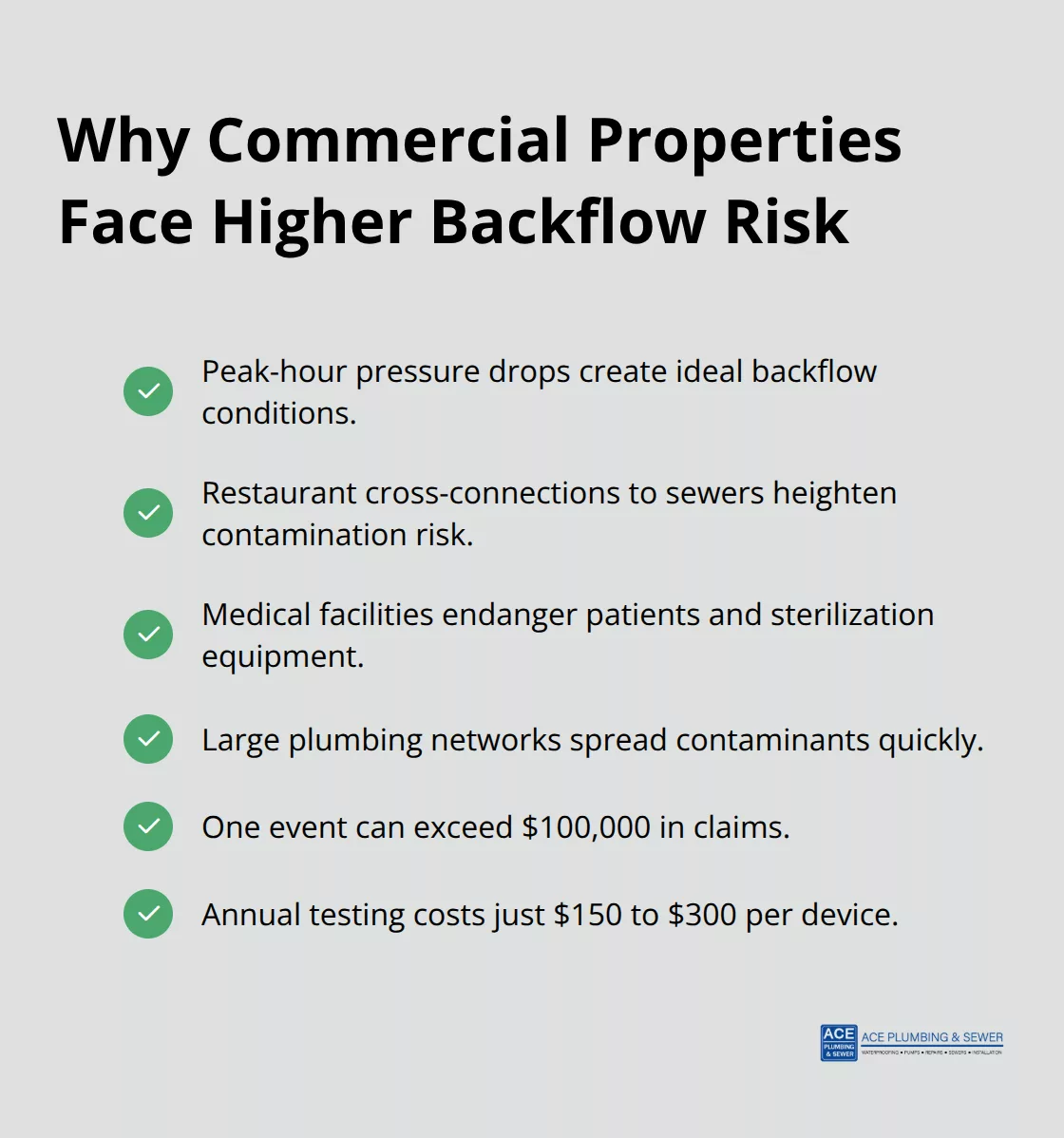
Restaurant kitchens, medical offices, and apartment complexes in Hinsdale face distinct backflow threats that differ sharply from single-family homes. Commercial properties with high water demand experience pressure drops during peak usage hours when dozens of fixtures run simultaneously, creating the exact conditions that trigger backflow. Restaurants present the highest risk because grease traps and floor drains connect directly to sewer lines, making them direct conduits for contamination if backflow occurs. Medical facilities pose equally serious threats because contaminated water reaches vulnerable patients and contaminates sterilization equipment. One contamination event can trigger lawsuits exceeding $100,000 in medical claims alone, far exceeding annual testing costs of $150 to $300 per device.
Multi-Unit Residential Buildings in Clarendon Hills, La Grange, and Western Springs
Multi-unit residential buildings with aging supply lines suffer frequent pressure fluctuations due to corroded pipes and outdated valve systems that fail silently. Buildings constructed before 1980 rarely had proper backflow protection, meaning landlords must retrofit devices to meet current code requirements. A licensed professional can help you determine if your building requires a backflow preventer or multiple devices, or if you qualify for an exemption. Property managers who delay testing underestimate the liability exposure and face serious financial consequences. Pressure regulators on older systems fail unpredictably, sending pressure spikes through supply lines that can damage check valves inside backflow devices.
Aging Infrastructure Creates Constant Backflow Risk
Aging water infrastructure in Burr Ridge and nearby areas like Hodgkins and Hickory Hills creates constant backflow risk because cast iron pipes corrode internally, reducing water pressure and increasing the likelihood of backflow events. Water pressure that drops noticeably during morning or evening peak hours indicates the pressure fluctuations that cause backflow. Properties with irrigation systems or outdoor water connections face additional risk because landscape contractors often bypass backflow protection entirely, creating unprotected cross-connections that contaminate municipal supplies.
Multi-Property Portfolios Require Centralized Tracking
Multi-property owners managing buildings across Countryside, Oak Brook, and surrounding suburbs benefit from centralized compliance tracking that prevents testing lapses on individual properties. Missing even one annual test puts an entire property out of compliance and exposes owners to municipal fines. Automated renewal reminders and digital test record management eliminate the administrative burden that causes property managers to miss critical deadlines. Properties with multiple devices across different locations need a system that tracks each device’s testing schedule independently to maintain full compliance.
Final Thoughts
Your building’s water safety depends on consistent, professional backflow testing in Hinsdale. Annual testing catches device failures early, prevents costly contamination incidents, and demonstrates your commitment to tenant and customer safety across Hinsdale, La Grange, Clarendon Hills, Western Springs, Burr Ridge, Hodgkins, and Hickory Hills. The cost of annual testing runs $150 to $300 per device-a fraction of what you’ll spend on emergency repairs, medical claims, or municipal fines if contamination occurs.
We at Ace Plumbing & Sewer handle all testing, certification, and municipal paperwork, removing the complexity from your shoulders so you can focus on operations. Multi-property managers benefit from our centralized tracking systems that automatically remind you when testing is due, eliminating the administrative burden that causes compliance lapses. Digital test records provide documentation that satisfies insurance requirements and protects your building’s compliance history.
Contact us today to schedule your annual backflow test and protect your building from contamination. Our ASSE-certified technicians provide same-day scheduling and upfront pricing, plus automatic municipal registration that keeps your property compliant year-round. Call our 24/7 emergency line to book your appointment and take control of your building’s water safety.
Proudly serving Burr Ridge and Southwest Chicago
Request a free quote
Tell us what’s going on and we’ll get right back to you. Need help now? Call and a real plumber answers 24/7.