Sump Pump Services for Your Home Protection Needs
Trusted by homeowners across Burr Ridge and Chicago, IL
Basement flooding can happen fast, and without proper protection, water damage spreads quickly through your home. A working sump pump is your first line of defense against costly repairs and mold growth.
We at Ace Plumbing & Sewer help homeowners in Burr Ridge, Hinsdale, and Willowbrook protect their basements with reliable sump pump services. Whether you need installation, maintenance, or emergency repairs, we’ve got you covered.
Why Your Home Needs Active Water Protection
A sump pump isn’t optional if you live in areas prone to heavy rainfall, groundwater seepage, or snowmelt-it’s essential infrastructure. In the Chicago suburbs around Burr Ridge, Hinsdale, Hodgkins, and Westchester, spring and summer storms regularly bring inches of water that can overwhelm your basement in hours. Without a working pump, removing even a few inches of water takes two to three days, allowing moisture to soak deep into walls, floors, and foundations. That delay multiplies your damage costs significantly.
Water intrusion happens faster than you think
Your basement sits at the lowest point of your home, making it a natural collection point for water. During heavy rainfall, groundwater rises against your foundation walls and seeks entry through cracks, pores, and seams. A functioning sump pump actively removes this water before it penetrates your living space, directing it safely away from your home’s perimeter. The pump operates automatically, monitoring water levels and activating when thresholds are reached-you don’t need to monitor it constantly during storms.
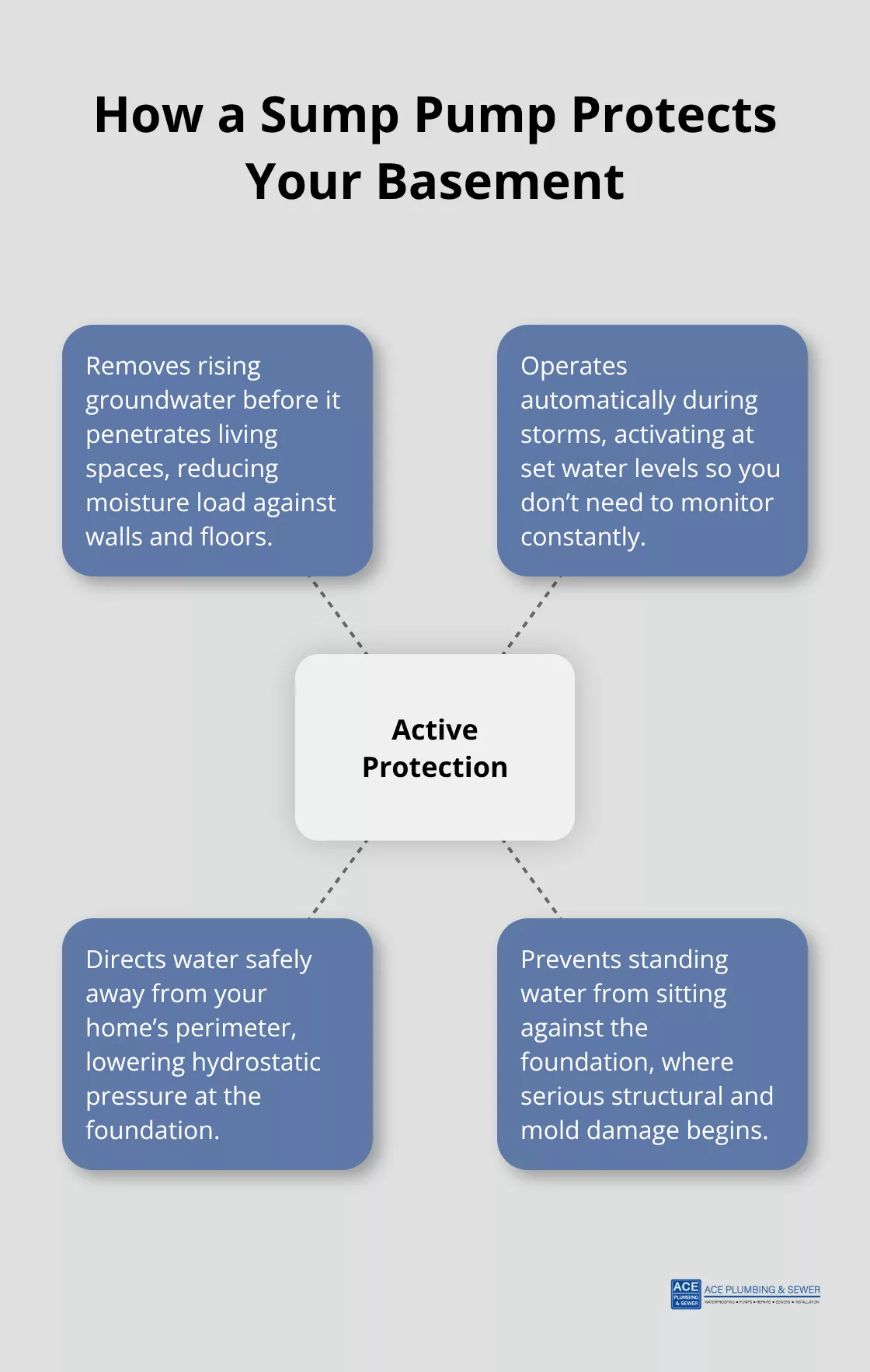
This active removal prevents water from sitting against your foundation, which is where serious damage begins.
Mold and moisture damage start fast
Mold can begin growing within 24 to 48 hours in damp basements. Once established, mold spores trigger respiratory issues and aggravate asthma symptoms, according to the EPA. A sump pump prevents the damp conditions that invite mold colonization by keeping your basement dry. This protection extends beyond health concerns-moisture-damaged drywall, insulation, and flooring require expensive replacement, and the structural integrity of your home depends on keeping water away from the foundation itself.
Foundation protection is long-term
Excess groundwater around your foundation during wet seasons causes soil expansion and foundation movement. In winter, frozen soil expands and presses against foundation walls with tremendous force, creating cracks that worsen over years. A sump pump removes groundwater before it can accumulate around your foundation, preventing this cycle of expansion and contraction. Additionally, standing water near electrical systems increases fire risk-sump pumps eliminate this hazard by controlling moisture levels.
What happens when you wait
Water damage costs escalate quickly when you delay action. Flood cleanup for two feet of gray water runs about $3,000 to $10,000, not counting repairs to floors or walls. Foundation cracks spread over time, and mold remediation becomes exponentially more expensive once it colonizes your home. The Ace Plumber serves homeowners throughout Burr Ridge, Hinsdale, Hodgkins, and nearby communities with sump pump installation, maintenance, and emergency repairs. Whether your current system needs evaluation or you’re installing protection for the first time, professional assessment identifies the right solution for your home’s specific needs.
What Goes Wrong With Sump Pumps
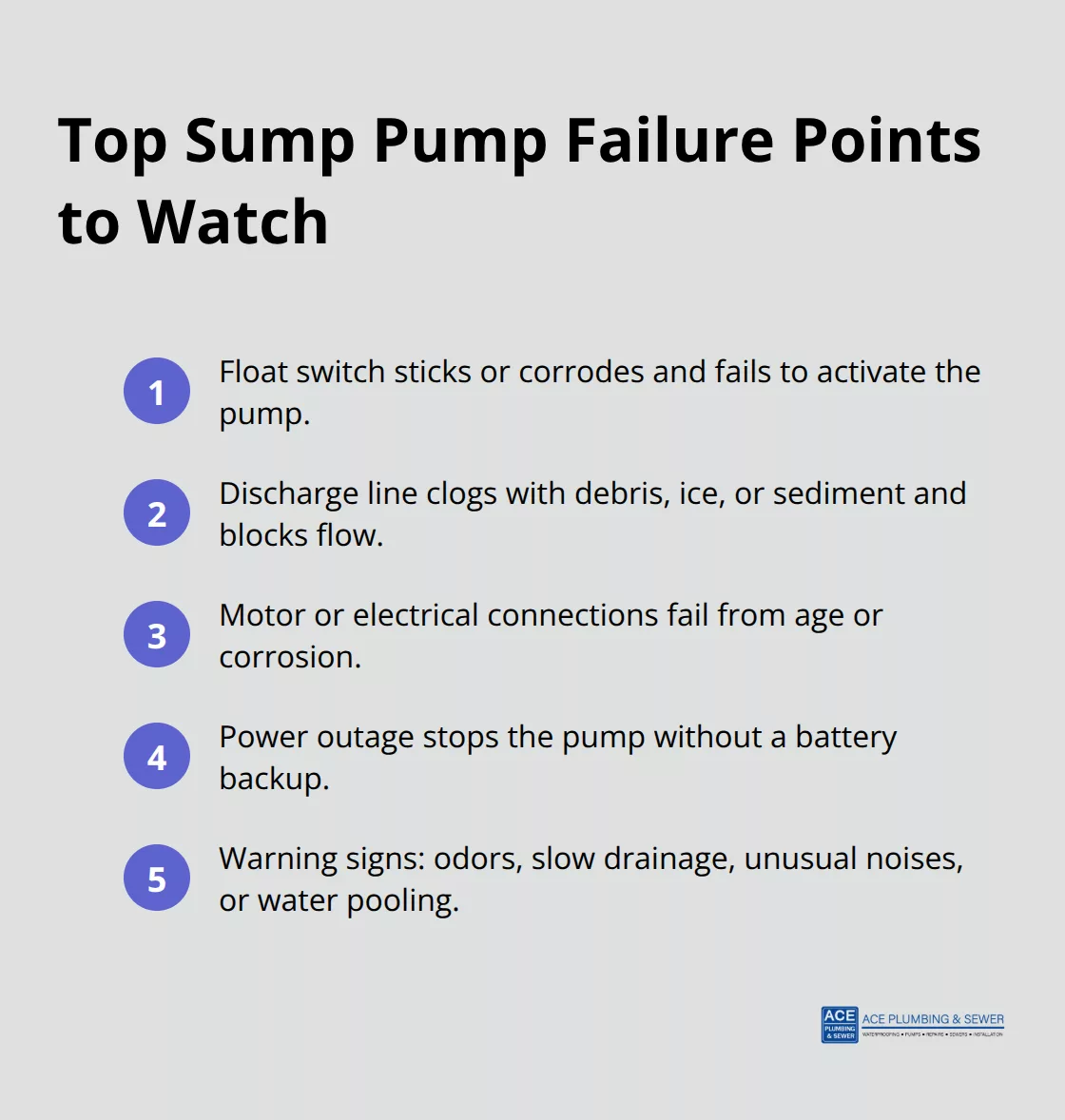
Your sump pump can fail without warning, and the timing is usually terrible-right when a storm arrives. Understanding the most common failure points helps you catch problems before water enters your basement.
The float switch stops working
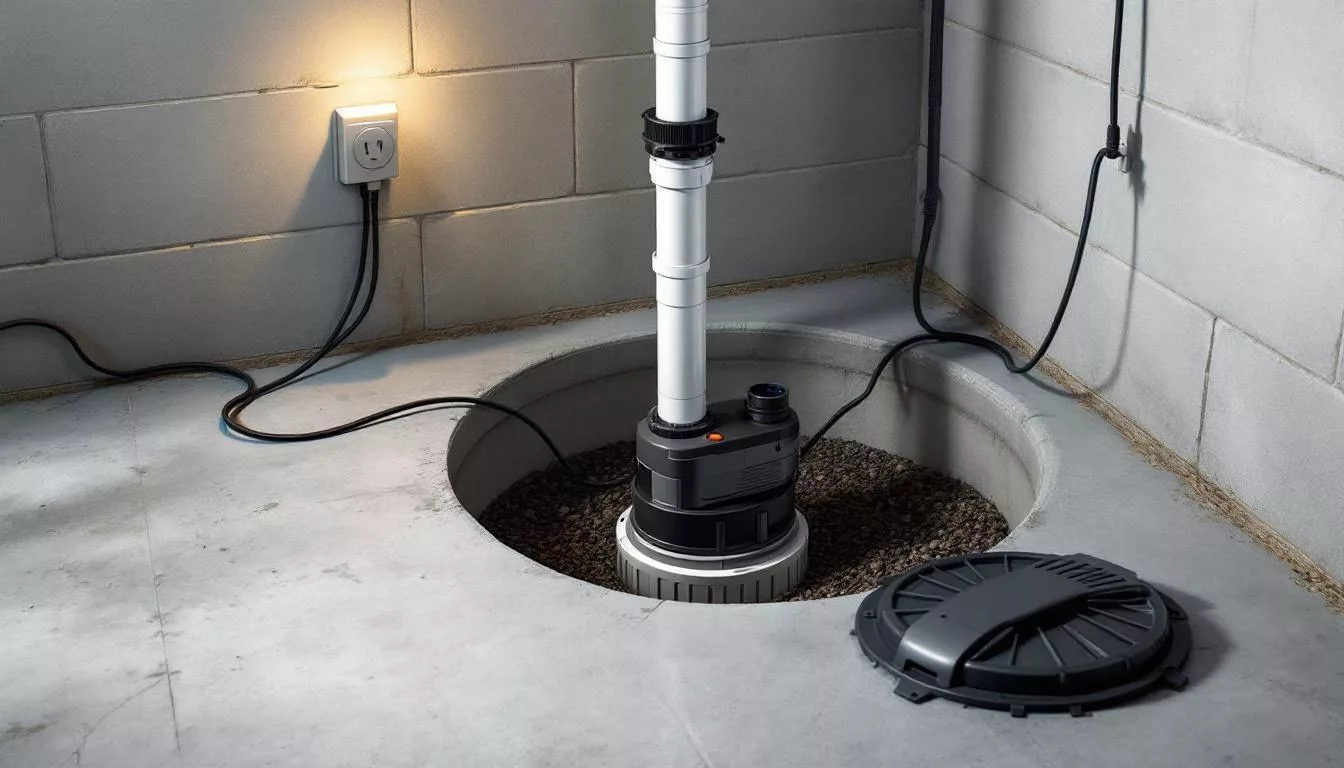
The float switch activates the pump when water rises, but over time this switch gets stuck or corrodes, preventing the pump from turning on even as water accumulates. This is the most common failure point across all sump pump systems. You can test the float switch yourself by pouring water slowly into the sump pit until the pump activates and discharges. If the pump fails to turn on, the float switch stops working likely needs replacement or cleaning.
Discharge lines clog and block water flow
Debris, ice, or sediment blocks the pipe that carries water away from your home, forcing the pump to work harder until it burns out. If your pump runs continuously or makes grinding noises, the discharge line is almost certainly blocked. Test this yourself by pouring water into the sump pit and watching whether water actually exits the discharge pipe. If water backs up into the pit instead of flowing out, you’ve found your problem. Clear the discharge line clog prevention immediately to restore proper drainage.
Motors fail from age and electrical stress
Motor failures happen when electrical connections corrode or when the pump simply ages past its useful life. Rust appearing on the pump housing, especially rust that won’t scrub away, signals aging and increased failure risk. Unusual noises like humming, clanging, or banging indicate the pump is struggling and needs professional evaluation.
Power loss stops protection during storms
When the grid goes down, your sump pump stops operating unless you have battery backup. A marina-style battery backup system keeps the pump running during outages, buying critical time before water intrusion begins. Test your backup system monthly by unplugging the main pump and confirming the backup activates.
Warning signs appear before failure
Odors in your basement-rotten or moldy smells-often indicate the pump isn’t removing water fast enough, allowing stagnant conditions to develop. Water pooling in the pit or slow drainage suggests the intake screen needs cleaning. Professional inspection identifies these issues before they cause flooding. Annual inspections before wet season arrives (ideally in early spring for the Chicago suburbs around Hinsdale, Hodgkins, and Westchester) catch problems early. During an inspection, a technician tests the float switch, cleans the intake screen at the pump base, verifies discharge line flow, and checks electrical connections. If repairs won’t solve the problem, replacement with a higher-capacity pump provides better protection during intense rainfall, and professional installation ensures correct sizing, proper pit preparation, and discharge routing that prevents water from seeping back toward your foundation.
Getting the Right Pump and Professional Installation
Size Matters-Choose Capacity Carefully
Selecting the wrong pump size guarantees sump pump failure when storms arrive. An undersized pump cannot handle heavy rainfall, forcing it to run continuously until the motor burns out. An oversized pump cycles on and off too frequently, wearing internal components prematurely. The correct sump pump capacity depends on your basement’s square footage, soil drainage characteristics, and local rainfall patterns. In the Chicago suburbs around Burr Ridge, Hinsdale, Hodgkins, and Westchester, spring storms regularly dump significant rainfall in a few hours, requiring pumps rated for high-volume discharge. A professional assessment identifies the right capacity for your home.
Installation Quality Prevents Hidden Failures
Installation quality matters equally-poor pit preparation, incorrect discharge routing, and improper electrical connections create failure points that sabotage even quality equipment. Correct sizing, proper pit setup, and discharge line routing prevent water from seeping back toward your foundation. Many homeowners attempt DIY installation and discover too late that their discharge line routes water toward the house instead of away, or that the pit wasn’t prepared with adequate drainage, causing the pump to sit in stagnant water and corrode prematurely.
Annual Inspections Catch Problems Early
Annual inspections before wet season-ideally in early spring for your area-catch problems before they cause flooding. During inspection, a technician tests the float switch, cleans the intake screen at the pump base, verifies discharge line flow reaches appropriate distances from your home, checks all electrical connections for corrosion, and inspects the pit itself for cracks or debris accumulation. If your pump approaches 10 years old, replacement planning begins now rather than during an emergency.
Maintenance Tasks Keep Systems Reliable
Battery backup systems require testing monthly and battery replacement every 2 to 3 years to maintain reliability during power outages. Discharge line maintenance prevents clogs by keeping the pipe clear of leaves, ice, and sediment-inspect the exterior discharge opening regularly and remove debris before storms arrive. A professional can install discharge line covers or grates that prevent debris blockage while maintaining water flow.
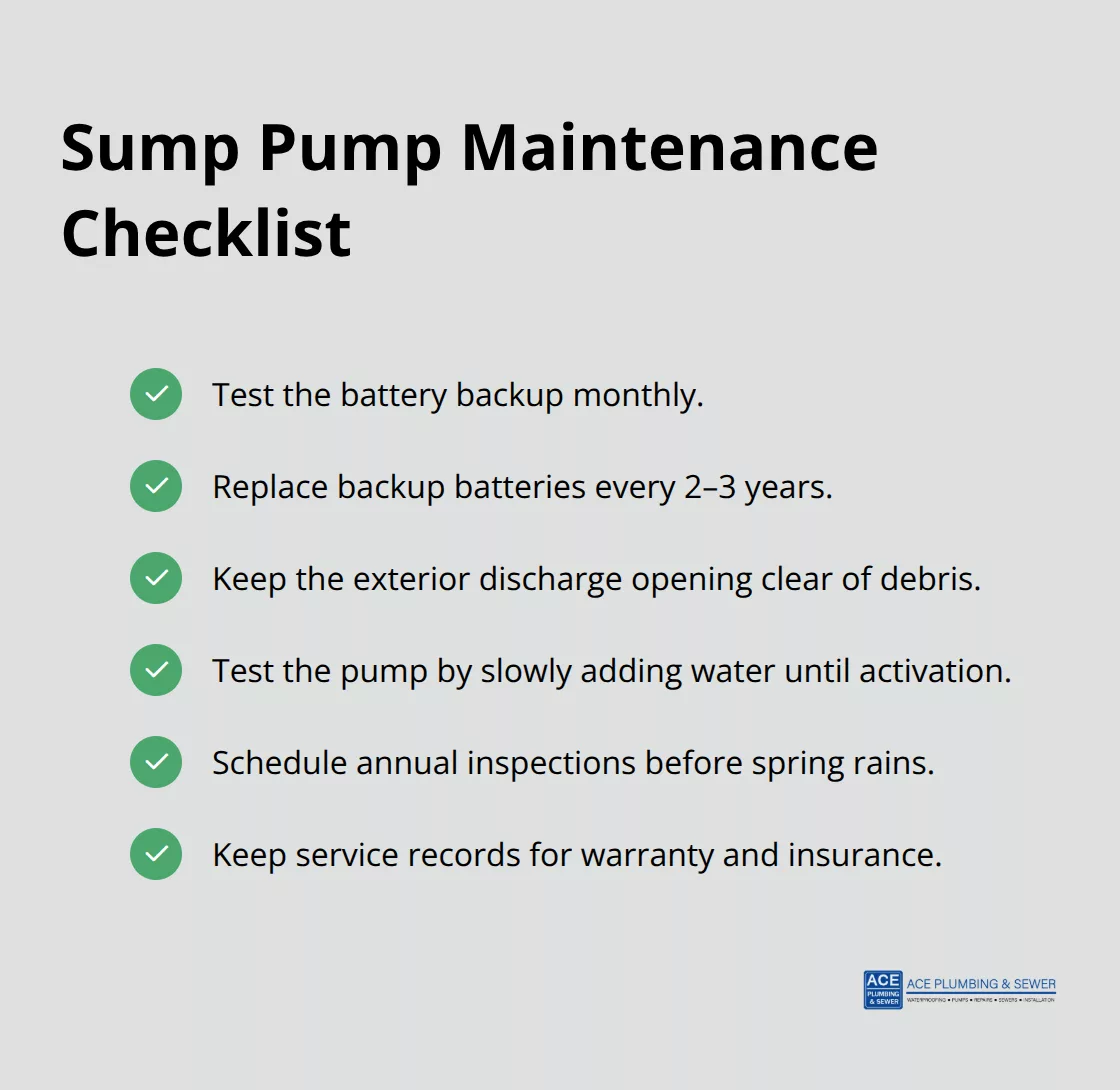
Testing the pump itself takes 10 minutes: pour water slowly into the sump pit until the pump activates and water discharges through the line. If the pump fails to activate or water backs up into the pit instead of flowing out, professional evaluation is needed immediately. Scheduling service before spring storms and maintaining records of inspections and repairs demonstrates diligence to your homeowner’s insurance company and protects your investment in basement protection.
Final Thoughts
Your basement’s protection depends on a sump pump that works reliably when storms arrive. We at Ace Plumbing & Sewer understand that waiting until water enters your home costs thousands in repairs, mold remediation, and foundation damage. A functioning sump pump prevents these disasters by removing water before it penetrates your basement, protecting your family’s health and your home’s structural integrity.
Sump pump failures happen without warning, and they happen during the worst possible moments-float switches corrode, discharge lines clog, motors age, and power outages disable standard pumps. Annual inspections catch these problems early, battery backups maintain protection during storms, and professional maintenance extends your system’s lifespan. Testing your pump takes minutes, but the protection it provides is invaluable.
We at Ace Plumbing & Sewer serve homeowners throughout Burr Ridge, Hinsdale, Hodgkins, and Westchester with sump pump services that keep basements dry and foundations protected. Whether you need installation of a new system, repairs to an existing pump, emergency response during a storm, or routine maintenance before wet season arrives, our licensed, bonded, and insured technicians deliver fast, professional solutions. Contact a plumber at The Ace Plumber today to schedule a professional inspection or discuss sump pump services for your home.
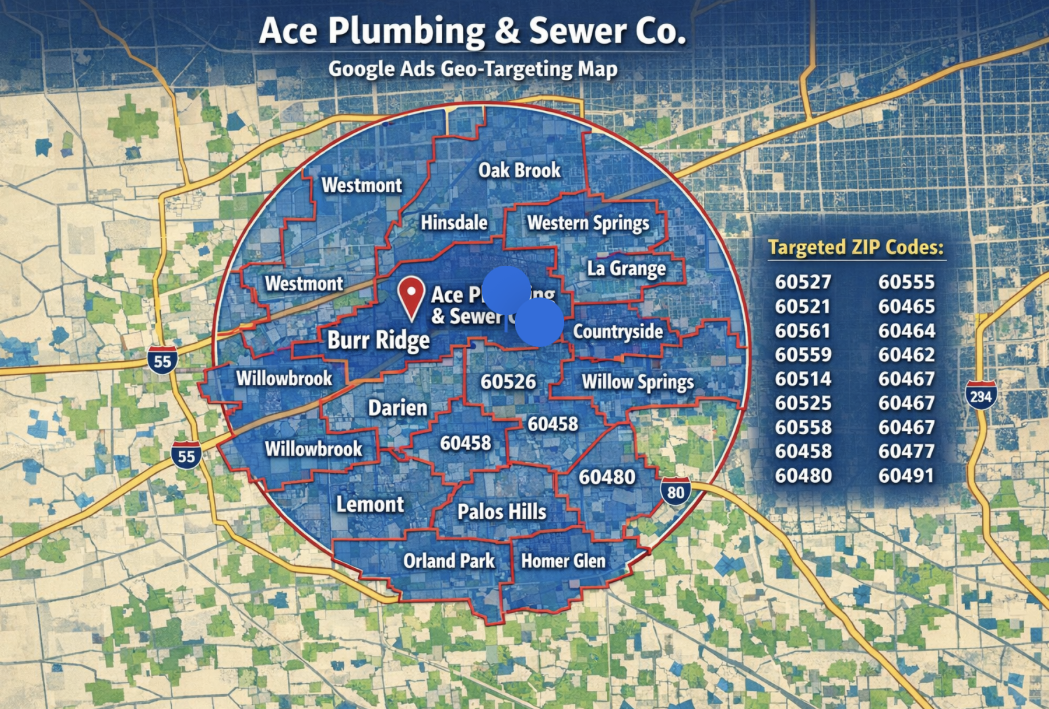
Proudly serving Burr Ridge and Southwest Chicago
Request a free quote
Tell us what’s going on and we’ll get right back to you. Need help now? Call and a real plumber answers 24/7.