Is your basement ready for the next big storm? A properly installed sump pump can be the difference between a dry home and a flooded disaster.
At Ace Plumbing & Sewer, we’ve seen firsthand how crucial sump pump installation is for protecting homes in Downers Grove and surrounding areas.
Let’s explore the essentials of sump pump systems and how to get them installed correctly to safeguard your property.
What’s a Sump Pump and Why Do You Need One?
The Basement’s First Line of Defense
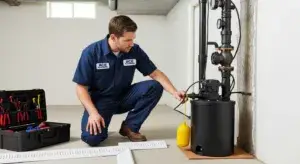
Sump pumps act as your basement’s primary shield against water damage. These devices sit in a pit at the lowest point of your basement and activate automatically when water levels rise, pumping excess water away from your home’s foundation.
How Sump Pumps Protect Your Home
When groundwater or heavy rains threaten to flood your basement, a sump pump springs into action. It pumps water out through a discharge pipe, typically directing it at least 10 feet away from your home’s foundation. This simple yet effective system can save homeowners thousands in potential water damage repairs.
Submersible vs. Pedestal Pumps
Two main types of sump pumps exist: submersible and pedestal. Submersible pumps sit inside the sump pit, fully submerged in water. They operate quietly and take up less space, making them ideal for finished basements. Pedestal pumps, on the other hand, have the motor mounted above the pit. While noisier, they offer easier access for maintenance and tend to last longer.
Red Flags: Time to Install a Sump Pump
If you’ve noticed any of these warning signs, it’s time to consider a sump pump installation:

Don’t wait for a major flood to take action. Even a small amount of water can cause significant damage to your home. A properly installed sump pump can prevent this costly scenario for homeowners in Burr Ridge and surrounding areas.
The Importance of Professional Installation
While DIY installation might seem tempting, professional installation ensures your sump pump system is correctly sized and installed for maximum effectiveness. Experts can assess your specific needs and install a system that will keep your basement dry for years to come.
As we move forward, let’s explore the sump pump installation process in detail, ensuring you understand each step involved in protecting your home from water damage.
How to Install a Sump Pump Correctly
Installing a sump pump requires careful planning and precise execution. Let’s explore the key steps to ensure your basement stays dry and protected.
Selecting the Ideal Sump Pit Location
The first step is to choose the right spot for your sump pit. This decision impacts the system’s effectiveness. The lowest point in your basement (where water naturally collects) is typically the best location. However, you must also consider accessibility for future maintenance and repairs. The pit should measure at least 24 inches deep and 18 inches wide to accommodate standard sump pumps.
Preparing the Sump Pit
Once you’ve selected the location, it’s time to prepare the pit. This process involves:

This labor-intensive task requires specific tools and expertise. The discharge pipe needs the correct angle to ensure proper water flow away from your home’s foundation.
Installing the Pump and Check Valve
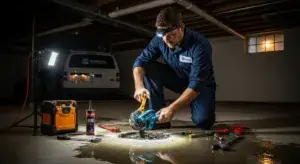
With the pit ready, it’s time to install the actual pump. Place the pump on a solid, level surface at the bottom of the pit. Ensure the float switch has enough clearance to move freely.
A check valve on the discharge pipe near the pump prevents water from flowing back into the pit once it’s pumped out. This valve protects the pump, increases pumping efficiency, reduces power consumption, and prolongs the life of your pump.
Connecting and Testing the System
The final step involves connecting the discharge pipe and testing the entire system. The discharge pipe should ideally direct water to grassy areas that slope outwards from your home or directly into a city storm drain.
After everything is connected, conduct a thorough test. Fill the pit with water to ensure the pump activates at the right level and effectively removes water. This test also verifies that the check valve works correctly and that there are no leaks in the system.
While this overview might make the process seem straightforward, sump pump installation is a complex task. It requires specific knowledge of plumbing systems, local building codes, and potential pitfalls. That’s why many homeowners trust professionals to handle their sump pump installations.
Now that we’ve covered the installation process, let’s look at common mistakes to avoid when installing a sump pump. These pitfalls can significantly impact your system’s effectiveness and longevity.
Sump Pump Installation Pitfalls
Sump pump installation requires precision and expertise. Small mistakes can lead to significant problems. Let’s explore common pitfalls and how to avoid them.

Undersized Pumps Increase Flood Risk
One frequent error is choosing a pump that’s too small for your home’s needs. Undersized pumps won’t keep up with water influx during heavy rains, potentially causing basement flooding. A 3/4 HP sump pump will be ideal for homes with deep basements or high water tables. Energy-efficient pumps might also be a consideration for some homeowners.
Improper Pit Construction Leads to System Failures
A poorly constructed sump pit can undermine your entire system. Pits that are too shallow or narrow can cause the pump to cycle on and off rapidly, wearing out the motor prematurely. The National Association of Home Builders suggests a minimum pit depth of 24 inches and a diameter of 18 inches for most residential applications. Lining the pit with gravel improves drainage and helps filter out debris that could damage your pump.
Lack of Backup Power Creates Vulnerability
Storms that cause flooding often knock out power, rendering your main pump useless when you need it most. A battery backup system is essential for maintaining protection during outages. Sump pumps play a critical role in protecting homes from sump water damage, particularly in areas susceptible to flooding or heavy rains.
Forgetting the Check Valve Reduces Efficiency
A check valve on the discharge pipe near the pump prevents water from flowing back into the pit once it’s pumped out. Without this valve, your pump will work harder than necessary, increasing wear and tear (and your energy bills). The check valve also protects the pump, increases pumping efficiency, and prolongs the life of your system.
Poor Discharge Pipe Placement Causes Water Recirculation
The discharge pipe should direct water away from your home’s foundation. If it’s placed too close to the house or doesn’t have proper slope, water can seep back into your basement. Try to position the discharge point at least 10 feet away from your home, and ensure it’s directed towards a downward slope or drainage system.
Final Thoughts
A properly installed sump pump protects your home from water damage and flooding. Professional sump pump installation ensures your system is correctly sized, properly installed, and equipped with essential features like backup power and check valves. At Ace Plumbing & Sewer, we bring over 40 years of experience to every sump pump installation job in Downers Grove, Burr Ridge, and surrounding areas.
Our team of skilled technicians understands the unique challenges faced by homeowners in our region. We assess your specific needs, recommend the best solution, and carry out a professional installation that gives you peace of mind. Don’t wait for the next big storm to test your basement’s defenses (take proactive steps to protect your home today).
Ready to safeguard your basement? Contact Ace Plumbing & Sewer at https://theaceplumber.com to schedule a consultation for sump pump installation. We will help you keep your basement dry and your home protected, no matter what Mother Nature throws your way.