How to Maintain Your Sump Pump for Optimal Performance
Trusted by homeowners across Burr Ridge and Chicago, IL
Your sump pump works hard to keep water out of your basement, but most homeowners ignore it until something goes wrong. Sump pump maintenance isn’t complicated, and it takes just a few minutes each month to prevent costly failures.
We at Ace Plumbing & Sewer have seen too many flooded basements that could have been avoided with basic upkeep. This guide walks you through everything you need to know to keep your system running smoothly, whether you’re in Burr Ridge, Darien, Hinsdale, or nearby areas.
Why Your Sump Pump Needs Regular Attention
Heavy Rain Brings Real Consequences
A sump pump that fails during a heavy rainstorm floods your basement within hours, causing tens of thousands of dollars in damage. We at Ace Plumbing & Sewer have responded to emergency calls from homeowners in Burr Ridge, Darien, Hinsdale, and nearby communities who ignored maintenance and paid the price. The reality is stark: a sump pump typically lasts 7 to 10 years with proper care, but without it, you’re looking at premature failure that leaves your home vulnerable.
Small Tasks Prevent Big Problems
Testing your system monthly takes about five minutes. Cleaning debris from the pit every three to six months prevents the pump from working overtime.

Checking the discharge pipe to confirm water flows away from your foundation stops backflow that refills the pit and forces the motor to cycle constantly. These small tasks directly determine whether your basement stays dry or becomes a disaster zone.
Maintenance Costs Far Less Than Repairs
Skipping maintenance means paying far more when things break. A single emergency repair during a storm, when every plumber in the area is overwhelmed, costs $500 to $1,500 just for the service call and temporary fix. Replacing a worn pump that fails completely runs $800 to $2,000 installed. Preventative work costs almost nothing-a battery backup system protects you during power outages that often accompany heavy rain. A water alarm that alerts you to rising water levels or pump failure costs under $200 and catches problems before they become catastrophic.
Smart Homeowners Act Before Disaster Strikes
The math is obvious: spend a few dollars and minutes now, or spend thousands later. Homeowners who treat sump pump maintenance as a regular plumbing task (checking it seasonally and before storms) avoid the panic calls and flooded basements that plague neighborhoods across Willow Springs, Clarendon Hills, and Western Springs when heavy rainfall hits. Understanding what maintenance looks like is the first step-next, we’ll walk through the specific tasks that keep your system running strong.
What Maintenance Steps Keep Your System Running
Test Your Float Switch and Check Valve Monthly
Testing your float switch and check valve monthly stops most sump pump failures before they happen. Perform a basic water test by filling the basin and monitoring the pump’s activation and shutoff cycles to verify stable operation. If the pump doesn’t start, won’t stop, or cycles constantly, the float switch is likely stuck or the check valve is leaking backward into the pit. A stuck float catches debris and jams, preventing activation when water rises during storms. The check valve should have an arrow pointing away from the pump; if water flows backward through it, your pump runs continuously trying to empty a pit that keeps refilling itself. Monthly testing catches these issues before a rainstorm forces an emergency call at midnight.
Inspect the Discharge Pipe and Clean the Pit
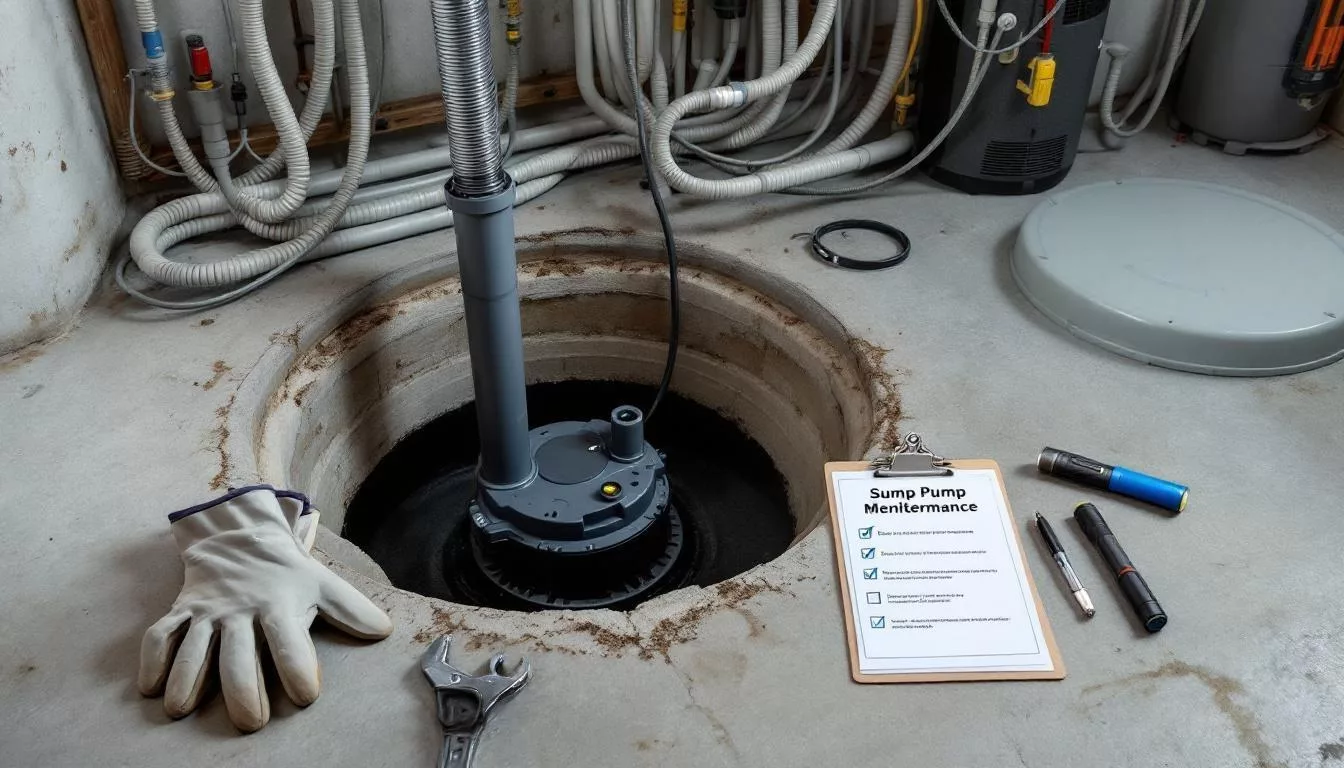
Inspect the discharge pipe while you’re testing-follow it from the pump outlet and confirm water actually flows away from your foundation. A pipe that’s too short, cracked, or clogged forces water back into the pit, defeating the entire system. Clean the intake screen and remove sediment from the sump pit every three to six months, especially in spring and fall when groundwater levels spike. Sediment buildup clogs the impeller and forces the motor to work harder, shortening its lifespan and increasing electricity costs. A high-pressure hose works best for cleaning; disconnect the pump first, flush the pit thoroughly, and check for cracks or corrosion in the basin itself.
Test Your Battery Backup System Quarterly
Battery backup systems demand quarterly attention because they only protect you if they actually work when power fails. Test your backup by unplugging the main pump and pouring water into the pit-the battery-powered unit should activate immediately. Backup batteries lose charge over time and typically need replacement every two to three years, so mark your calendar and swap them out before they fail. These regular checks ensure your system keeps running during the power outages that often accompany heavy storms in Burr Ridge, Darien, Hinsdale, and nearby communities.
Why These Tasks Matter for Your Home
These four maintenance tasks take about 30 minutes spread across the year and prevent costly emergency repair bills that hit homeowners when storms arrive. A sump pump that receives regular attention (monthly testing, seasonal cleaning, and quarterly battery checks) stays reliable for years longer than one that sits ignored. The next section covers what happens when something does go wrong-and how to spot trouble before it becomes a crisis.

Common Sump Pump Problems and How to Fix Them
Strange Noises Signal Internal Damage
Strange noises from your sump pump aren’t just annoying-they’re warning signs that something inside is breaking down. Grinding sounds indicate the impeller is hitting debris or the bearings are wearing out, which means the motor will fail within weeks if you don’t act. Rattling or vibrating noises suggest the pump isn’t mounted securely or internal components are loose, both problems that worsen quickly under stress.

A gurgling sound typically points to a clogged discharge pipe or a failed check valve forcing water backward into the pit after the pump stops. Stop running the pump immediately when you hear these noises and call a professional-continuing to operate a failing pump risks catastrophic damage that costs thousands to repair.
Weak Water Flow or No Discharge Requires Diagnosis
Weak water discharge or no flow at all points to three specific failures: a clogged impeller or intake screen, a blocked discharge pipe, or a failed check valve. Start by unplugging the pump and physically inspecting the intake screen for sediment, debris, or mineral buildup that restricts water entry-a high-pressure hose or vinegar soak removes most deposits without damage. Next, trace the discharge pipe from the pump outlet all the way to where water exits your foundation, looking for kinks, cracks, or visible clogs that prevent flow. If water doesn’t exit the pipe during a test, the blockage is inside the line and requires professional clearing with specialized equipment.
Failed Check Valves Create Constant Cycling
A failed check valve allows water to flow backward into the pit after the pump shuts off, forcing the motor to cycle constantly and drain your electricity bill while accomplishing nothing. You’ll confirm a failed check valve by observing water trickling backward into the pit after the pump stops running. Replacing a check valve costs $150 to $300 installed and eliminates the problem completely-far cheaper than replacing an entire pump that burned out from constant cycling.
Winter Freezing Threatens Your Discharge Line
Frozen discharge lines in winter trap water inside the pipe, creating pressure that can crack the line or damage the pump itself. If you live in an area prone to freezing temperatures, inspect your discharge line before winter arrives and confirm it slopes away from your foundation with no low spots where water pools and freezes solid. Insulating the exposed pipe with foam pipe sleeves or heat tape prevents freezing in most cases. If your discharge line freezes despite prevention efforts, you need professional help to thaw it safely without damaging the pipe-a qualified contractor has the right equipment to restore flow without risk.
Final Thoughts
Maintaining your sump pump yourself handles the basics, but when installation, repairs, or emergency situations arise, you need professionals who understand these systems completely. We at Ace Plumbing & Sewer have served homeowners across Burr Ridge, Darien, Hinsdale, Willow Springs, Clarendon Hills, and Western Springs since 1983, building our reputation on fast response and reliable work. Our licensed, bonded, and insured team brings decades of experience to every sump pump maintenance project, handling complete installations with quality equipment that lasts.
We understand that sump pump problems often strike at the worst times, which is why we offer same-day emergency response for homeowners facing active flooding or system failures. Our upfront pricing means no surprises when the bill arrives, and we use American-made parts built to perform. Whether you need a new pump installed, your existing system serviced, or a battery backup system added for power outage protection, we handle it with the same professionalism we bring to every job.
Contact The Ace Plumber today to schedule your sump pump service or get answers to your questions. Call us at (708) 204-8602 or book online to get started with the plumbing experts your home deserves. Our team stands ready to help you protect your basement from water damage.
Proudly serving Burr Ridge and Southwest Chicago

Request a free quote
Tell us what’s going on and we’ll get right back to you. Need help now? Call and a real plumber answers 24/7.