Ejector Pump vs Sump Pump: Which Do You Need?
Trusted by homeowners across Burr Ridge and Chicago, IL
Water backing up in your basement or crawl space is a homeowner’s nightmare. At Ace Plumbing & Sewer, we know that understanding the difference between an ejector pump vs sump pump can save you thousands in water damage.
Both systems remove unwanted water, but they work in different situations and serve different purposes. The right choice depends entirely on your home’s drainage setup and needs.
How Sump Pumps Remove Water from Your Basement
Water backing up in your basement or crawl space is a homeowner’s nightmare. A sump pump sits at the lowest point of your basement or crawl space and does one job: remove groundwater before it damages your home. These devices collect groundwater in a pit and pump it away from your foundation. When water rises to a set level, a float switch triggers the pump to activate automatically. The pump then pushes that water through a discharge pipe and away from your foundation, typically toward your yard, storm drain, or dry well. This continuous cycle keeps your basement dry even during heavy rain or when your water table is high. Without it, that water would pool in your basement and lead to mold, structural damage, and thousands of dollars in repairs.
Where Sump Pumps Protect Your Home
Sump pump installation depends on your home’s water problems. If you live in Hodgkins, Clarendon Hills, Hinsdale, or other areas near Burr Ridge where groundwater intrusion is common, a sump pump is standard protection. Homes with high water tables, those located in flood-prone zones, or basements that show signs of moisture-damp walls, musty odors, visible water after rain-need this system. The pump sits in an unfinished basement corner, usually where water naturally collects, and the discharge line runs outside. Some homes have multiple sump pits if water intrusion occurs in different areas. If water enters your basement from the ground rather than from plumbing fixtures, a sump pump solves the problem. A licensed plumber can assess your home’s drainage patterns and determine the right placement.
Submersible and Pedestal Models Offer Different Advantages
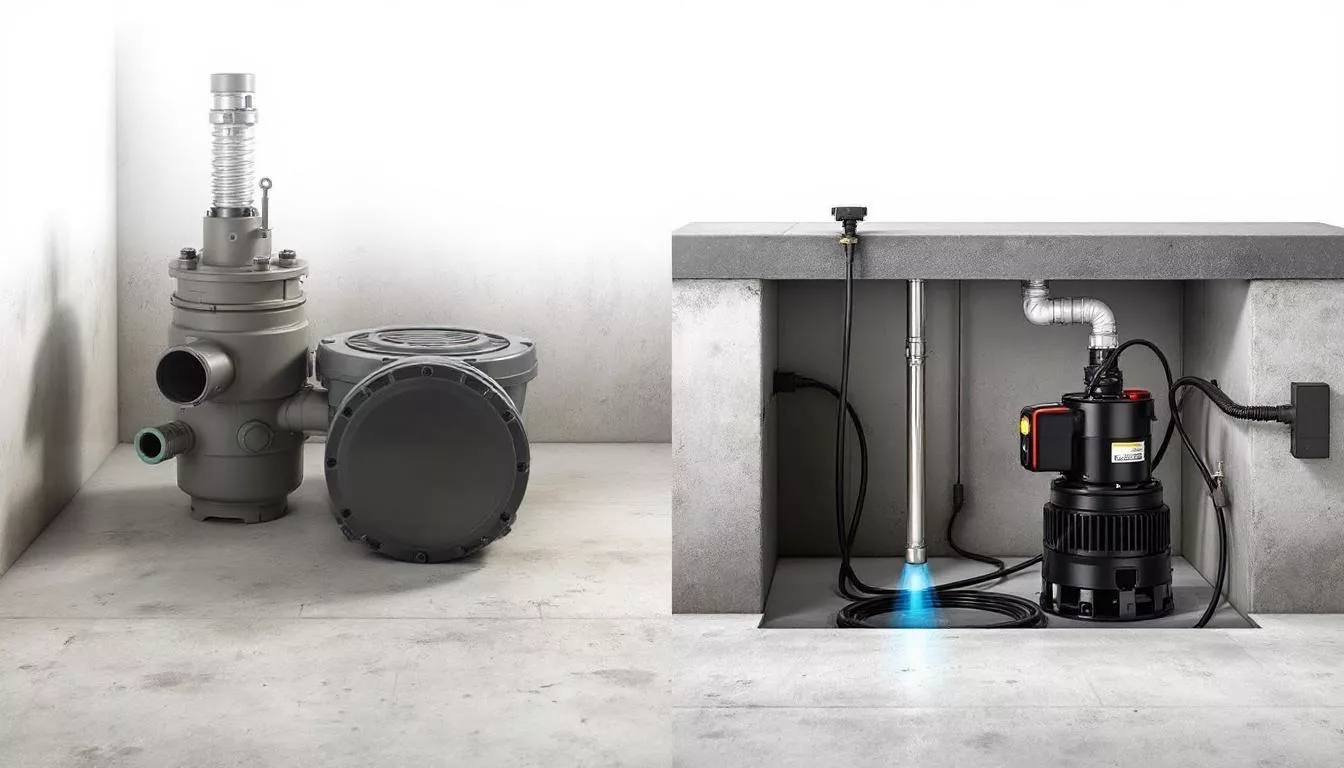
Two main sump pump types exist, and choosing between them affects cost, durability, and maintenance. Submersible pumps sit directly in the sump basin, submerged in water, and typically last 5 to 10 years with regular care. They’re quieter and take up less space, making them ideal for finished basements or tight corners. Pedestal pumps have a motor mounted above the basin on a stand, with only the intake submerged. These cost less upfront but are noisier and require more vertical clearance. Pedestal models typically last about 8 to 15 years because the motor stays dry, but they’re less common in modern installations.
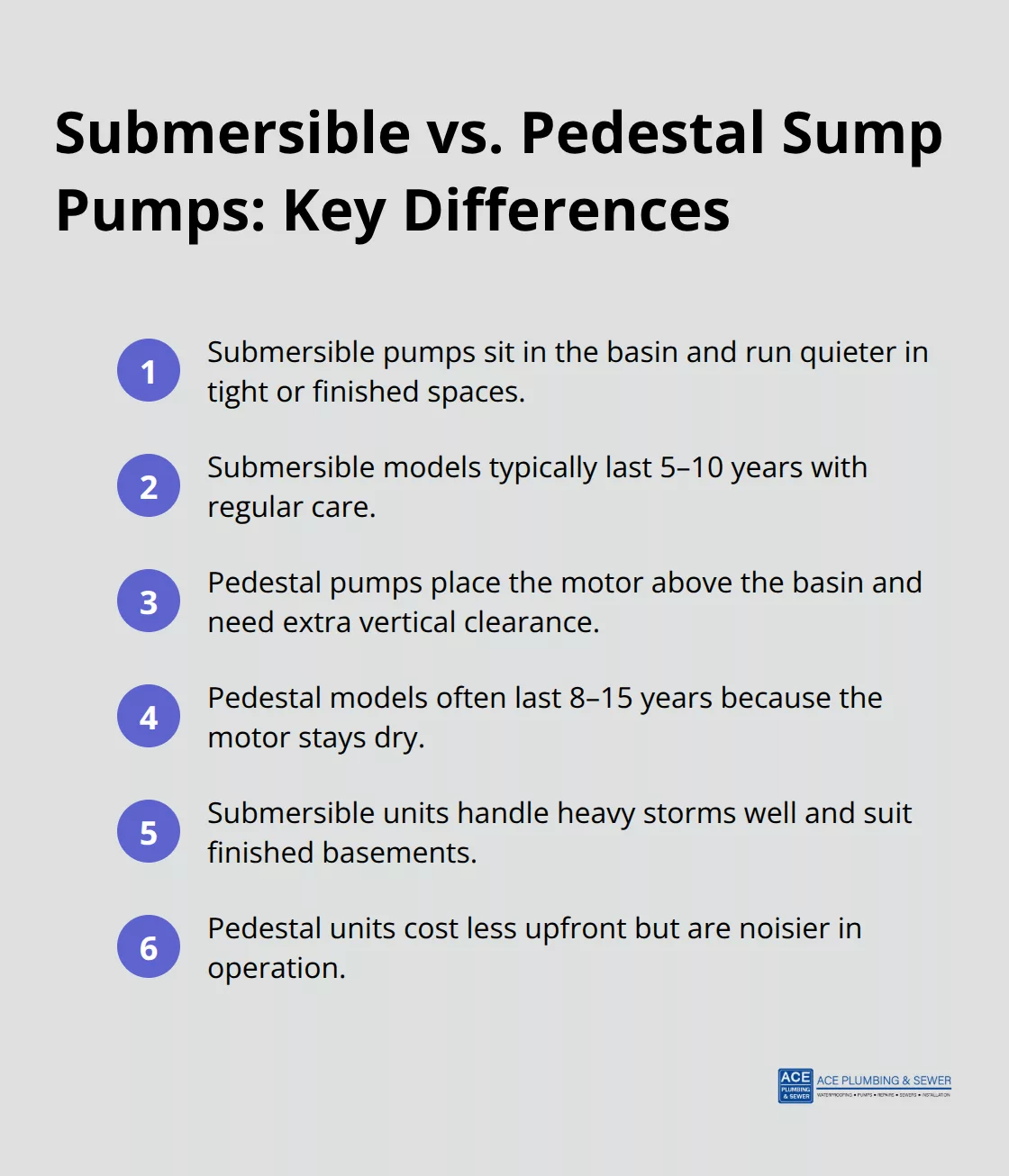
For most homeowners in Western Springs, Westmont, Bridgeview, and surrounding communities, submersible pumps deliver better performance because they handle capacity demands and perform reliably during heavy storms.
Installation Costs and Professional Setup
Installation labor typically ranges from $45 to $200 per hour, so the total project cost for a quality submersible system runs $1,200 to $2,500 (including the pump, basin, piping, and professional installation). A licensed plumber handles the digging, trenching, electrical work, and piping connections that DIY installation cannot safely address. The right pump size and placement matter-an undersized pump cycles constantly and wears out faster, while an oversized pump wastes energy. Professional installation also ensures proper discharge routing so water flows away from your foundation and never flows back toward your house. Once your sump pump is in place and working, you’ll need to understand what separates it from an ejector pump, which handles a completely different water problem.
What Ejector Pumps Actually Do
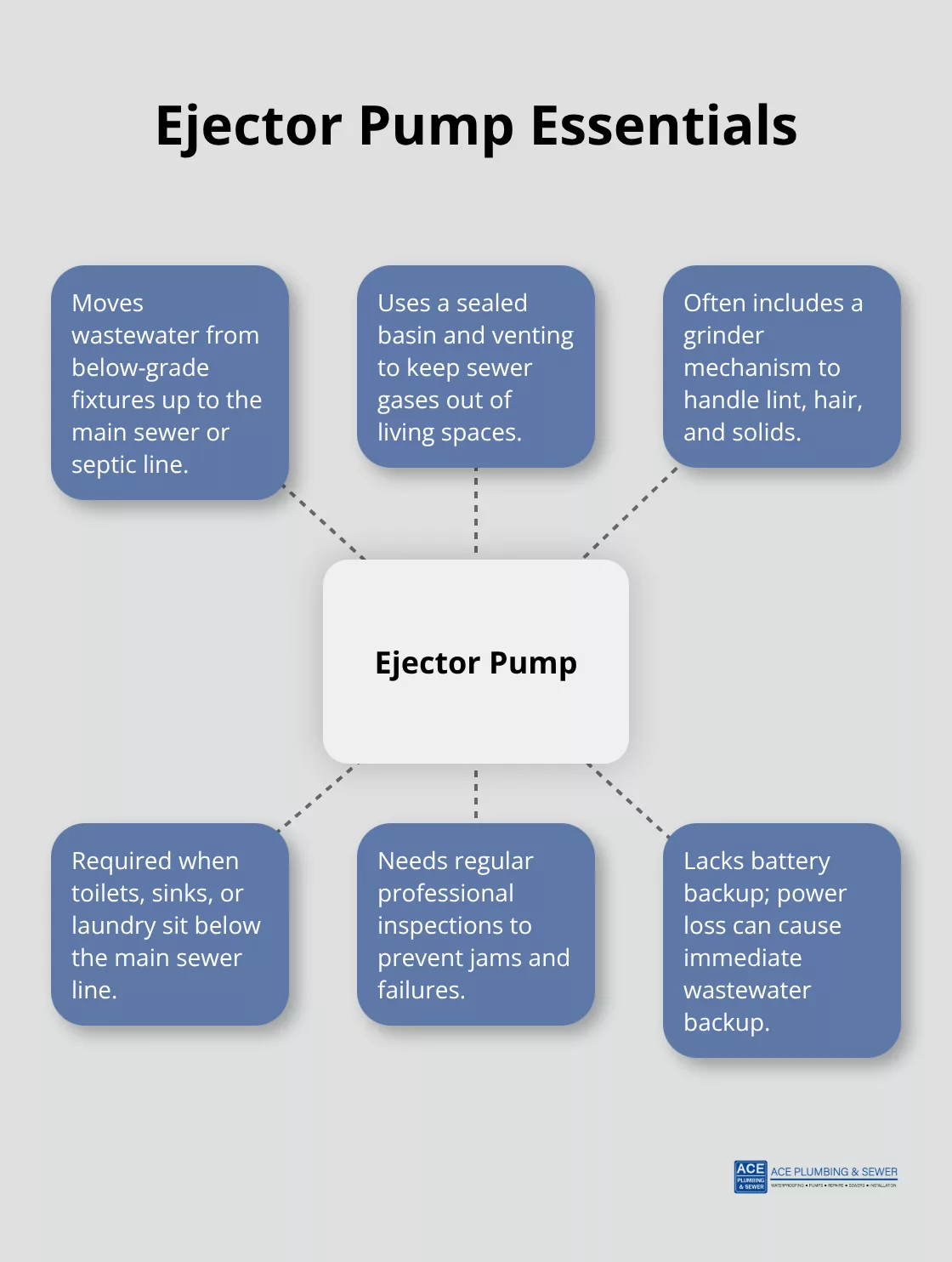
An ejector pump solves a completely different problem than a sump pump. If your basement has fixtures like a toilet, sink, or washing machine below your main sewer line, you need to understand this distinction. While a sump pump removes clean groundwater, a sewage ejector pump is a system that moves wastewater from lower-level plumbing fixtures to the main sewer or septic line. The pump sits in a sealed basin rather than an open pit, and it includes a grinder mechanism that breaks down solids before pumping.
How an Ejector Pump Operates
When wastewater from a basement bathroom or laundry fills the holding tank to a preset level, a float switch activates the pump, which then forces that waste through a discharge pipe into your home’s main sewer system. A vent pipe connected to the sealed basin allows sewer gases to escape safely outside, preventing foul odors from backing up into your living space. This is the critical difference: ejector pumps handle what sump pumps cannot.
If you live in Hodgkins, Hinsdale, Clarendon Hills, or other communities near Burr Ridge where finished basements with full plumbing are common, an ejector pump becomes necessary the moment you add a bathroom or laundry facility below the sewer line.
Lifespan and Installation Costs
A quality ejector pump typically lasts seven to ten years, depending on usage and maintenance habits. Wastewater with lint, hair, and solid waste creates more wear than the clean water a sump pump handles, so these systems demand more frequent professional attention. Installation costs typically run $1,500 to $3,500, with the pump itself ranging from $100 to $2,150 depending on capacity and features, plus labor at $50 to $200 per hour.
Critical Maintenance and Power Requirements
Unlike sump pumps, ejector pumps lack battery backup options, so a reliable electrical supply is non-negotiable-power loss during a storm means wastewater backs up into your fixtures. Regular maintenance includes checking the float switch for debris, clearing any clogs in the discharge line, inspecting the sealed lid for cracks, and scheduling annual professional inspections. Many homeowners treat an ejector pump like a sump pump by ignoring maintenance, then face costly failures when the grinder jams or the float sticks.
What Not to Flush Down Basement Fixtures
Never flush non-biodegradable items down basement fixtures served by an ejector pump, as wet wipes, feminine products, and paper towels will jam the grinder and require emergency service calls. These systems work hard to move waste uphill against gravity, and any obstruction forces the motor to work overtime. Lint from laundry, hair from showers, and solid waste all accumulate in the grinder chamber (even with regular cleaning). Treating your ejector pump with care extends its life and prevents the backup situations that leave your basement unusable. Understanding what your ejector pump can and cannot handle sets you up for reliable operation-and that knowledge directly impacts whether you need one pump, two pumps, or a completely different approach to your home’s drainage challenges.
Sump Pump vs Ejector Pump: Which Do You Need
Identify What Type of Water You’re Moving
The choice between a sump pump and an ejector pump comes down to one critical question: what type of water are you trying to move? If groundwater seeps into your basement from the surrounding soil, you need a sump pump. If you have plumbing fixtures like a toilet, sink, or washing machine below your main sewer line, you need an ejector pump. Getting this wrong wastes money and leaves your home vulnerable. A homeowner in Hodgkins or Clarendon Hills with a damp basement but no basement bathroom should install a sump pump, not an ejector pump. Conversely, finishing a basement bathroom in Hinsdale or Western Springs without an ejector pump means wastewater backs up into your fixtures.
Understand Why Using the Wrong Pump Fails
The real issue is that many homeowners try to use a sump pump for grey water from laundry or basement sinks, and it fails faster because lint and solids clog the intake and force the motor to work harder. An ejector pump, designed with a grinder mechanism, handles this waste without premature failure. If your basement shows damp walls and musty smells after heavy rain but has no fixtures below the sewer line, install a sump pump and budget $1,200 to $2,500 total. If you’re adding a full bathroom or laundry in a below-grade basement, budget $1,500 to $3,500 for an ejector pump system. Some homes actually need both: a sump pump to handle groundwater intrusion and a separate ejector pump to manage wastewater from basement plumbing. This dual approach costs more upfront but prevents the scenario where a single pump fails under conflicting demands and leaves you with either a flooded basement or backed-up sewage.
Maintain Sump Pumps With Basic Monthly Checks
A sump pump demands basic attention: test it monthly by pouring five gallons of water into the pit and confirming the float activates the pump, keep the basin clean of debris and sediment, and inspect the discharge pipe to ensure water flows away from your foundation. Most homeowners in Westmont, Bridgeview, and surrounding areas can handle these checks themselves, though you should have a licensed plumber perform a professional inspection annually, especially before storm season. Sump pump maintenance costs run $100 to $300 annually for professional checks. If you skip maintenance on either system, expect a failure within 2 to 4 years instead of the 7 to 10 year lifespan you’d otherwise get.
Maintain Ejector Pumps With Vigilant Monthly Care
An ejector pump requires far more vigilance because it handles wastewater constantly. Never flush non-biodegradable items down basement fixtures, check the float switch monthly for debris that prevents proper activation, listen for grinding noises that signal a jam, and schedule professional service at least once yearly to inspect the sealed lid for cracks and verify the vent pipe isn’t blocked. A cracked lid on an ejector pump allows sewer gas to escape into your living space, creating odors that prompt costly investigations. Ejector pump maintenance costs $200 to $500 annually because the grinder, float, and sealed basin require more detailed inspection.
Plan for Power Loss and Backup Systems
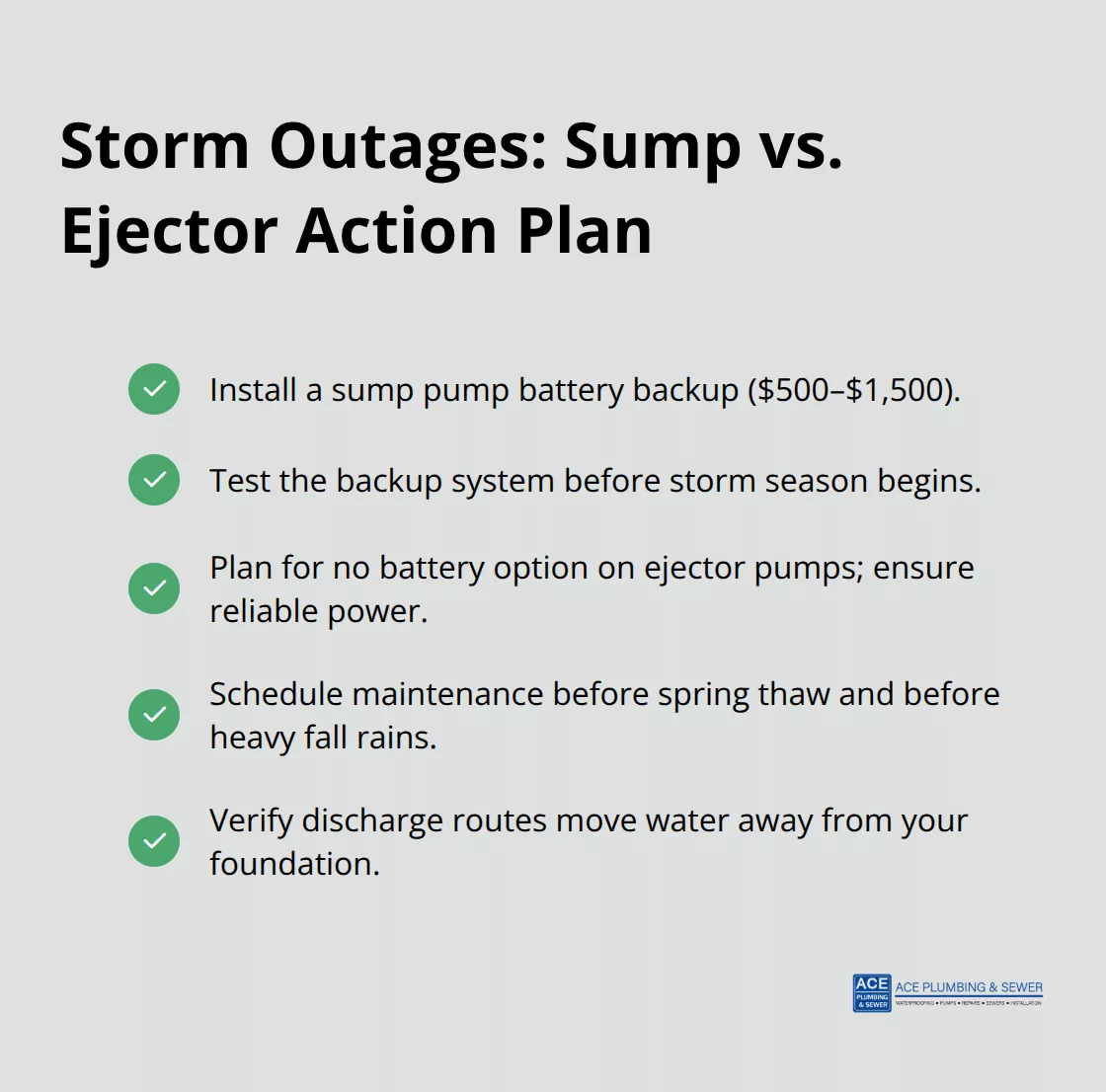
Power loss during a storm presents another critical difference: sump pumps with battery backup continue operating and keep your basement dry, while ejector pumps lack battery options and wastewater backs up immediately when power fails. Installing a backup power source for your sump pump costs $500 to $1,500 but prevents thousands in damage during the outages that accompany severe weather. Schedule maintenance before spring thaw and again before heavy fall rains, when both systems work hardest.
Final Thoughts
The ejector pump vs sump pump decision depends on what water problem your basement actually faces. A sump pump removes groundwater from rain and snowmelt, while an ejector pump handles wastewater from below-sewer-line fixtures like toilets and laundry. Installing the wrong system wastes money and leaves your home vulnerable to either flooding or sewage backup.
Assess your basement’s actual needs before making this investment. If you live in Hodgkins, Clarendon Hills, Hinsdale, Western Springs, Westmont, or Bridgeview and notice damp walls or pooled water after rain but have no basement plumbing fixtures, you need a sump pump ($1,200 to $2,500 installed). If you’re finishing a basement bathroom or adding laundry below the sewer line, an ejector pump becomes essential ($1,500 to $3,500 installed). Some homes require both systems working together to handle groundwater and wastewater separately, preventing either system from failing under conflicting demands.
We at Ace Plumbing & Sewer recommend consulting a licensed plumber who can evaluate your home’s drainage patterns, basement layout, and local codes to determine whether you need a sump pump, ejector pump, or both. Contact us today for a professional assessment and get your basement protection right the first time.
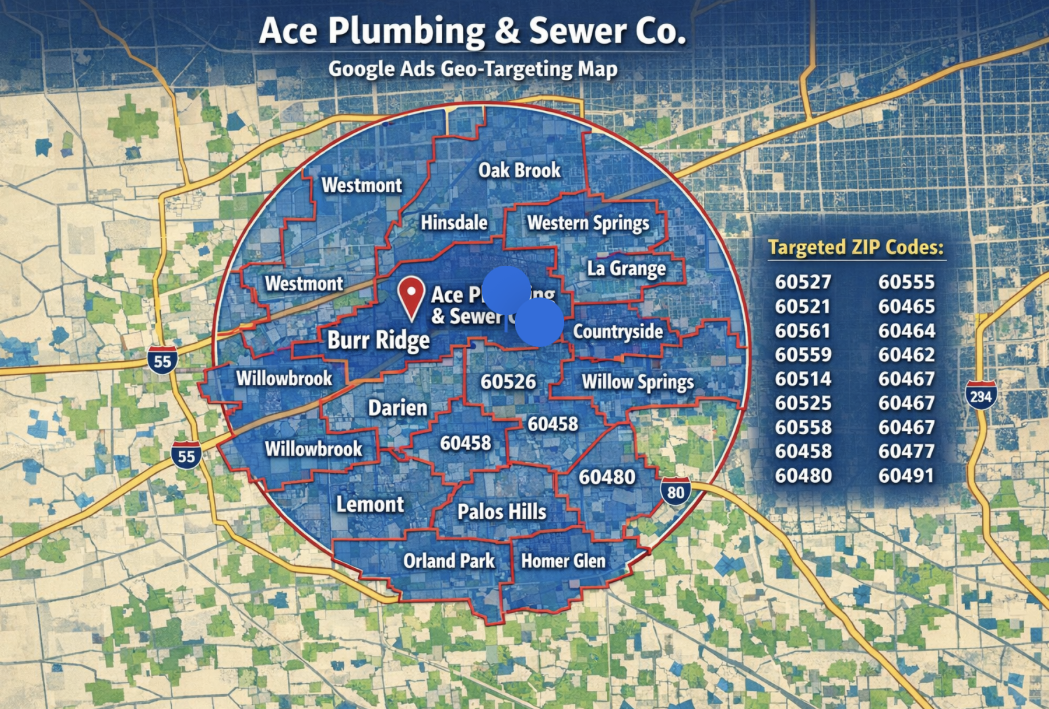
Proudly serving Burr Ridge and Southwest Chicago
Request a free quote
Tell us what’s going on and we’ll get right back to you. Need help now? Call and a real plumber answers 24/7.