Sump pumps are your home’s unsung heroes, silently protecting against water damage. At Ace Plumbing & Sewer, we’ve created this sump pump maintenance guide to help you keep your system in top shape.
Regular upkeep is key to preventing costly repairs and ensuring your pump works when you need it most. Let’s explore the essential steps to maintain your sump pump and safeguard your home from water-related disasters.
How Does a Sump Pump Protect Your Home?
The Basics of Sump Pump Operation
A sump pump acts as your home’s primary defense against water damage. These devices sit in a pit, typically located in the lowest part of your basement or crawl space. When groundwater levels rise, the pump activates automatically. It then pumps excess water out and away from your home’s foundation. This simple process prevents flooding, mold growth, and structural damage (potentially saving homeowners thousands in repair costs).
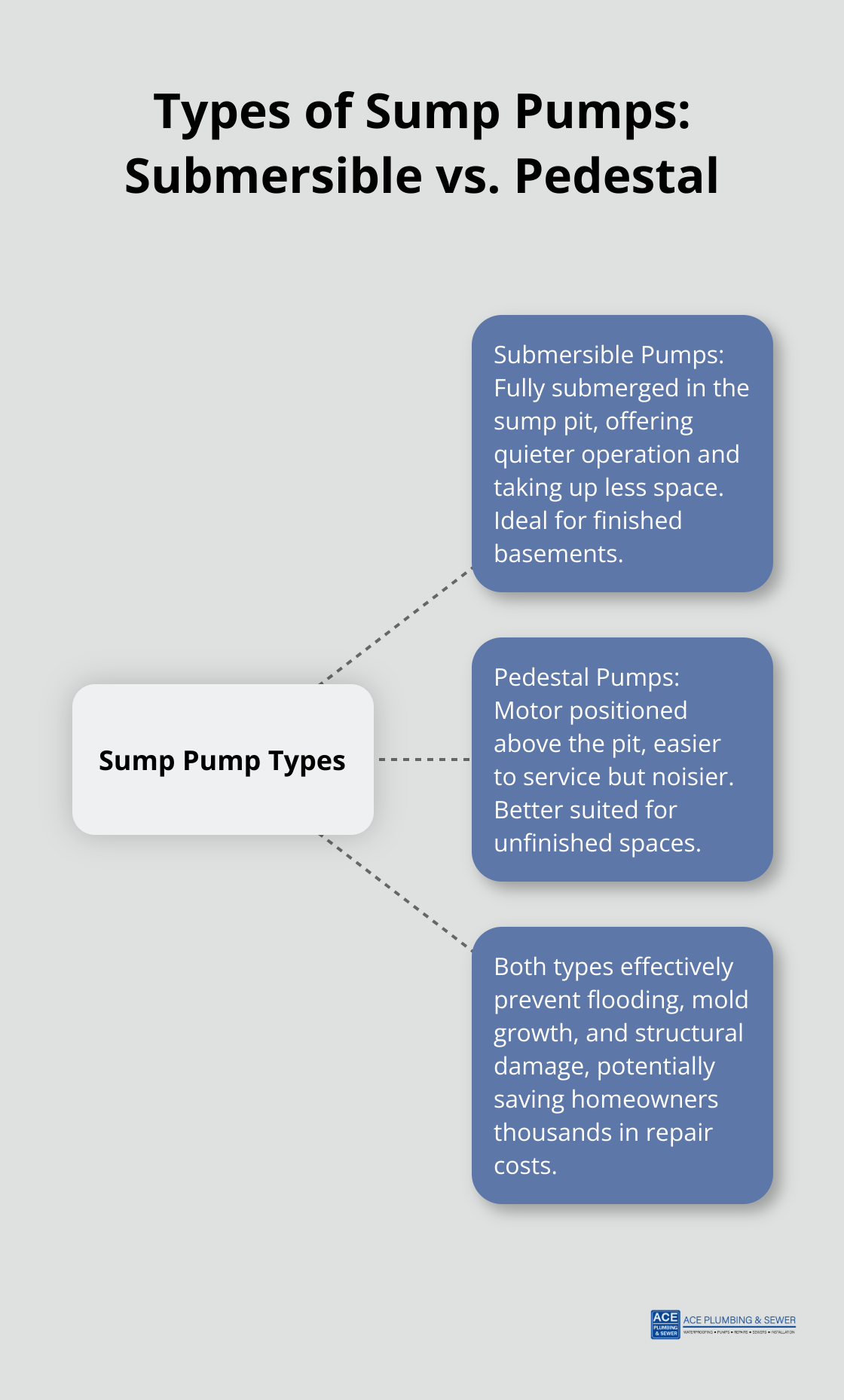
Types of Sump Pumps: Submersible vs. Pedestal
Two main types of sump pumps exist: submersible and pedestal.
Submersible pumps:
- Fully submerged in the sump pit
- Quieter operation
- Take up less space
- Ideal for finished basements
Pedestal pumps:
- Motor positioned above the pit
- Easier to service
- Noisier operation
- Better suited for unfinished spaces
Key Components of Your Sump Pump System
Understanding the parts of your sump pump helps you spot issues early. Here are the essential components:
- Float switch: Signals the pump to turn on and off
- Check valve: Prevents water from flowing back into the pit
- Discharge pipe: Carries water away from your home
Regular inspection of these components prevents unexpected failures. Many homeowners overlook their sump pumps until it’s too late. Don’t wait for a flood to discover your pump isn’t working.
The Importance of Regular Maintenance
Proper maintenance extends the life of your sump pump and ensures it functions when you need it most. Here are some key maintenance tasks:
- Clean the sump pit regularly (remove debris and sediment)
- Test the float switch monthly
- Inspect the discharge pipe for clogs or damage
- Check the backup power source (if applicable)
These simple steps can prevent costly water damage and give you peace of mind during heavy rains or snowmelt.
Now that you understand how sump pumps work and their importance, let’s explore the essential maintenance tasks in more detail. Regular upkeep will keep your system in top shape and protect your home from water-related disasters.
How to Keep Your Sump Pump in Top Shape
Maintaining your sump pump prevents water damage and costly repairs. At Ace Plumbing & Sewer, we recommend a thorough maintenance routine to ensure your pump operates efficiently when you need it most. Here’s how to keep your sump pump in peak condition:
Clean the Sump Pit and Pump
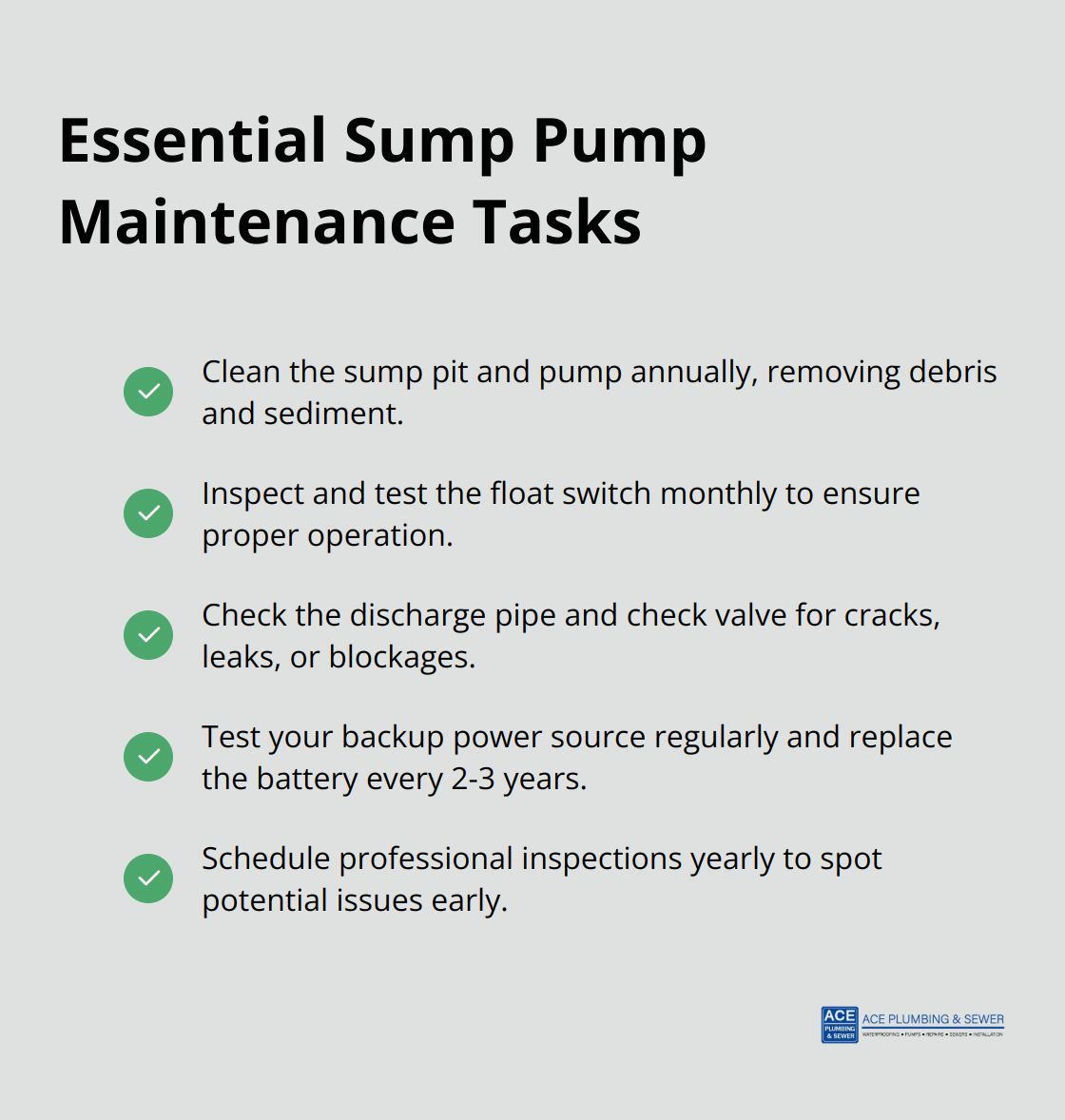
You should do a deep clean of your sump pump and pit every year. Unplug the pump and remove it from the pit. Scrub the pump thoroughly with a brush and mild detergent to remove any buildup. Clean out the sump pit, removing debris, sediment, and any standing water. This prevents clogs and extends the life of your pump.
Inspect and Test the Float Switch
The float switch controls proper pump operation. Ensure it moves freely without any obstructions. To test it, slowly pour water into the pit until the float rises and activates the pump. If it doesn’t turn on, the switch may need adjustment or replacement. Don’t hesitate to call a professional for expert assistance with float switch issues.
Check the Discharge Pipe and Check Valve
Examine the entire length of the discharge pipe for cracks, leaks, or blockages. In colder climates, insulate exposed portions to prevent freezing. The check valve stops water from flowing back into the pit. Test it by listening for a slight “clunk” when the pump shuts off. If you don’t hear this sound, the valve may be stuck open and require cleaning or replacement.
Test Your Backup Power Source
If you have a battery backup system, test it regularly. Disconnect the main power and pour water into the pit to ensure the backup activates. Check the battery’s charge and replace it every 2-3 years. For those without a backup, consider installing one to protect your home during power outages.
Schedule Professional Inspections
While these steps are important, some homeowners may feel uncomfortable performing them. Professional plumbers have the expertise to spot potential issues early and ensure your system remains reliable year-round. A professional inspection of your sump pump each year may help make sure it is working properly and prolong the pump’s lifespan.
Now that you know how to maintain your sump pump, let’s explore common problems you might encounter and how to solve them.
Troubleshooting Common Sump Pump Issues
Sump pumps can develop problems over time, but many issues are fixable with the right know-how. We at Ace Plumbing & Sewer have encountered numerous sump pump troubles. Here’s how to tackle some of the most frequent problems:
Pump Won’t Turn On or Off
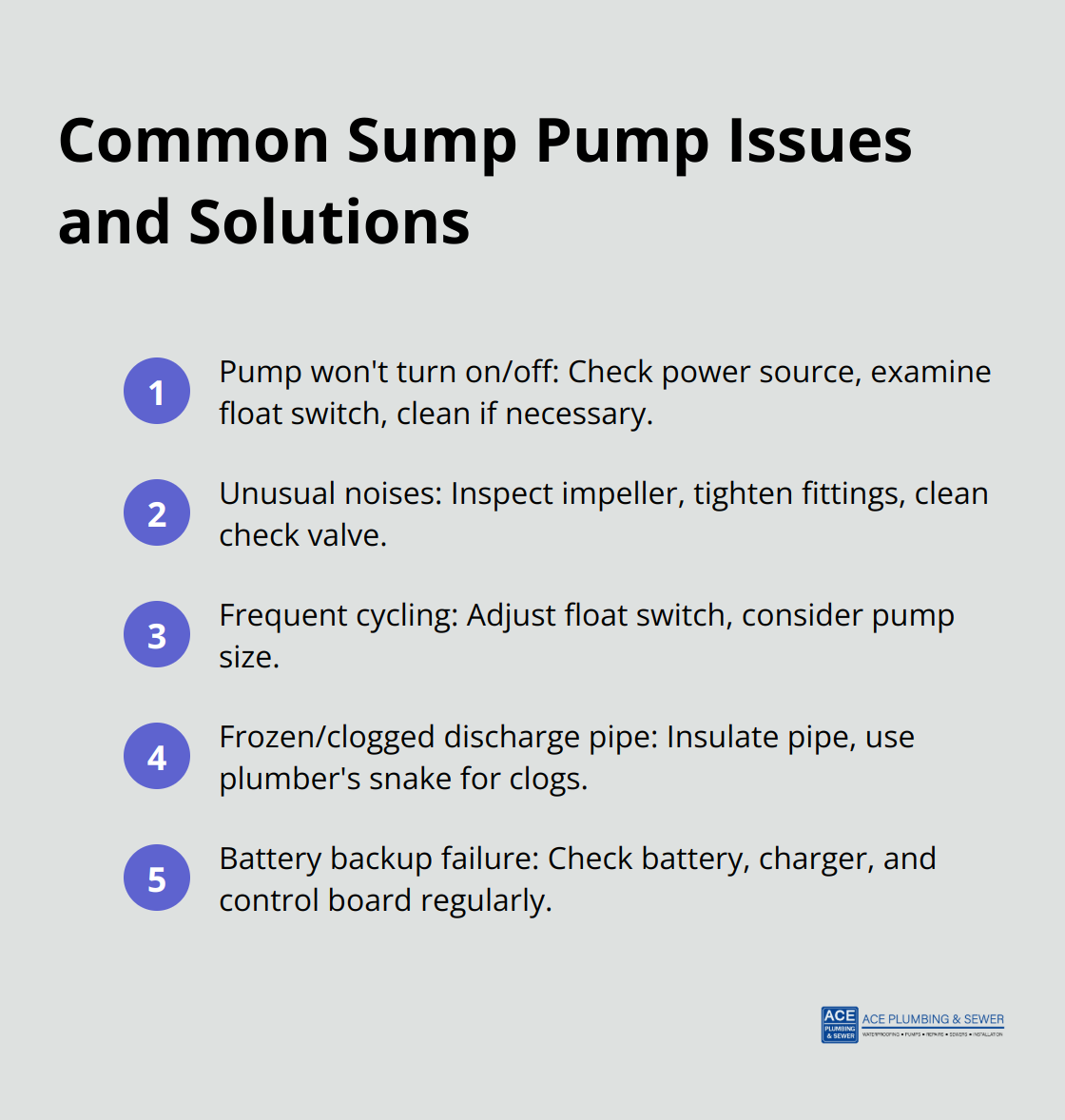
If your pump fails to activate, first check the power source. Ensure it’s plugged in and the circuit hasn’t tripped. Next, examine the float switch. Debris can prevent it from moving freely. Clean the switch and test it manually. If these steps don’t work, the pump motor might have failed. In this case, call a professional.
A pump that won’t turn off often indicates a stuck float switch or an overwhelmed system. Try adjusting the float’s position. If that doesn’t help, your pump might be undersized for your home’s water intake. Consider upgrading to a higher capacity model.
Unusual Noises or Vibrations
Strange sounds from your sump pump spell trouble. A grinding noise usually means the impeller is damaged. Rattling could indicate a loose mounting or debris in the pump. Gurgling often points to air in the system or a clogged check valve.
To address these issues:
- Inspect the impeller for damage or blockages
- Tighten any loose fittings or mountings
- Clean out the check valve
- If problems persist, consult a professional
Frequently Cycling Pump
A pump that turns on and off too often wastes energy and wears out faster. This problem typically stems from a faulty float switch or an incorrectly sized pump. Adjust the float switch to a higher level. If cycling continues, your pump might be too powerful for your water intake. Paradoxically, downsizing to a smaller pump can sometimes solve this issue.
Frozen or Clogged Discharge Pipe
In cold climates, frozen discharge pipes are a common headache. Some contractors install freeze guards as a safety measure in case your drainage line freezes. These are outlets that allow water to exit your discharge pipe. To prevent freezing, insulate exposed portions of the pipe and ensure it slopes away from your home. If it does freeze, use a heat gun or warm water to thaw it carefully.
For clogs, disconnect the pipe and use a plumber’s snake to clear the obstruction. Regular cleaning of the discharge pipe can prevent future blockages.
Battery Backup Failure
A dead backup battery leaves you vulnerable during power outages. If your battery backup sump pump isn’t pumping correctly, check the battery, charger, and control board. Test your backup system monthly and replace the battery every 2-3 years (keep terminals clean and check water levels in lead-acid batteries).
While DIY fixes can solve many sump pump issues, some problems require expert attention. If you’re unsure or uncomfortable with any repair, don’t hesitate to call a professional plumber. Our team at Ace Plumbing & Sewer has the tools and expertise to keep your sump pump running smoothly, protecting your home from water damage year-round.
Wrapping Up
Regular sump pump maintenance protects your home from water damage and costly repairs. Our sump pump maintenance guide helps you safeguard your property effectively. Professional inspections offer an extra layer of protection, as experts can spot potential problems early and prevent expensive water damage.
Proper upkeep extends the life of your sump pump and provides peace of mind during heavy rains or snowmelt. You actively prevent water-related disasters when you clean the pit, test the float switch, and inspect the discharge pipe regularly. This proactive approach protects your home and saves money in the long run.
Trust the professionals at Ace Plumbing & Sewer for expert sump pump services and maintenance. Our team of licensed plumbers specializes in commercial and residential plumbing solutions (including sump pump installations, repairs, and maintenance). We offer fast, reliable service to keep your property dry and secure, so schedule a professional inspection today to ensure your home stays protected all year long.