Water Heater Inspection Hinsdale: Essential Steps For Homeowners
Trusted by homeowners across Burr Ridge and Chicago, IL
Your water heater works hard every day, but most homeowners forget about it until something goes wrong. A water heater inspection in Hinsdale catches problems early, saving you from unexpected breakdowns and expensive repairs.
At Ace Plumbing & Sewer, we’ve seen how regular inspections extend the life of water heaters and keep your home’s hot water flowing reliably. This guide walks you through the warning signs, what happens during a professional inspection, and how often you should schedule one.
Warning Signs That Demand Immediate Attention
Rusty or Discolored Water From Your Taps
Rusty or discolored water flowing from your taps signals internal corrosion eating away at your water heater tank. This happens when the anode rod, which normally sacrifices itself to protect the tank, deteriorates or fails entirely. If you see orange, brown, or cloudy water specifically from the hot water side, your tank’s steel interior is exposed to rust. This isn’t just a cosmetic problem-it means your water heater is aging faster than normal, and replacement may be closer than you think.
Most water heaters last between 8 and 12 years, but corrosion cuts that timeline short. In Hinsdale and nearby areas like Clarendon Hills and Western Springs, hard water accelerates mineral buildup and corrosion, making annual inspections non-negotiable.
Strange Noises Coming From Your Tank
Strange noises coming from your water heater-rumbling, popping, or hissing sounds-indicate sediment accumulation at the tank bottom. As water heats, trapped sediment particles expand and create those unsettling sounds. This sediment layer acts as an insulator between the heating element and water, forcing your heater to work harder and consume more energy to reach the same temperature.
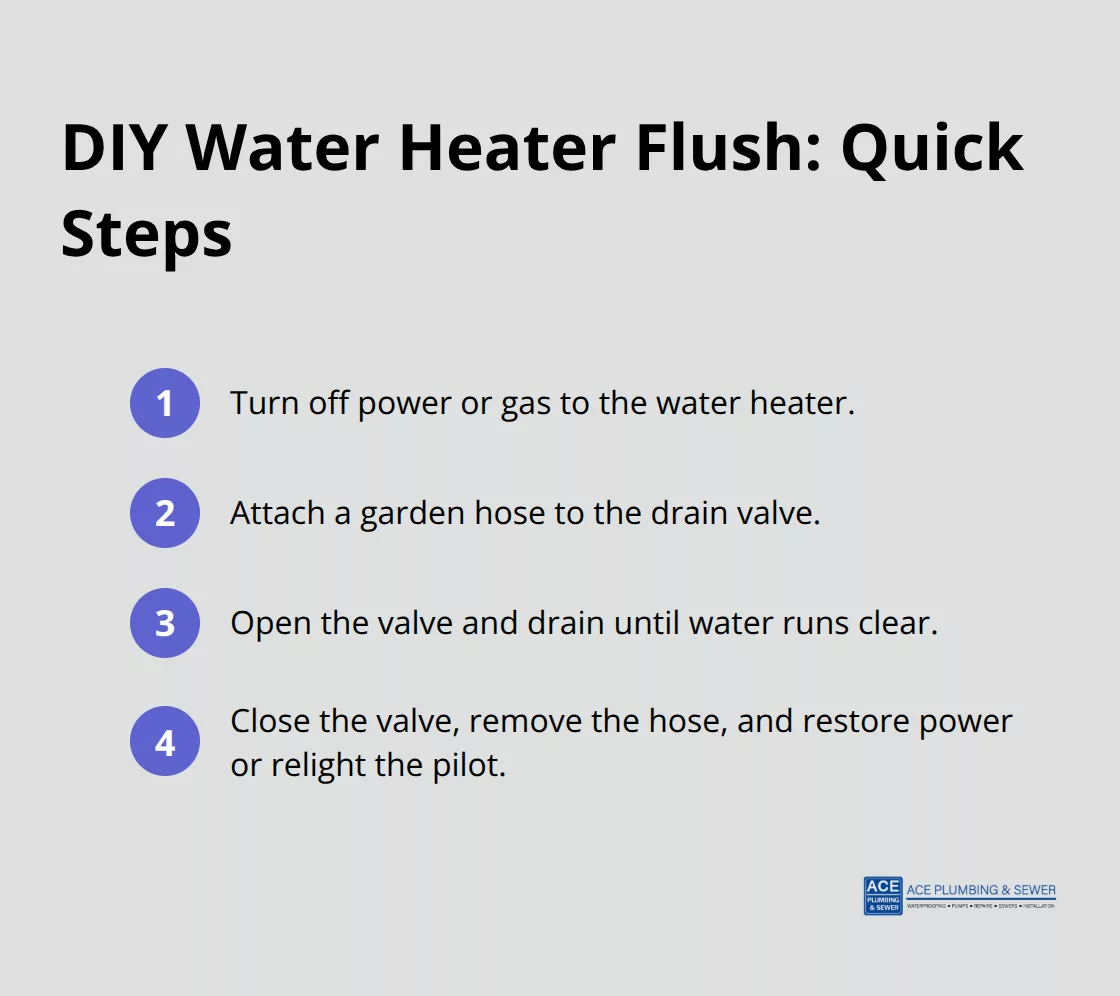
Flushing the tank every six months removes sediment and restores efficiency. If noises persist after flushing, internal damage may have already started. You can flush your water heater yourself by turning off the power supply, connecting a garden hose to the drain valve, opening the valve, and draining the tank until water runs clear.
Leaks Around the Base or Connections
Water leaks around your water heater demand immediate action. A leak indicates a failed valve, cracked tank, or corroded fitting-all reasons to shut off the water supply and contact a professional immediately. In homes across Hodgkins, Hinsdale, and surrounding suburbs, water damage in basements or finished spaces can cost thousands to repair, making prompt attention to leaks essential for protecting your property and your budget.
The longer you wait, the more water escapes and the greater the structural damage becomes. What starts as a small drip can quickly escalate into a costly emergency. Understanding what happens during a professional inspection helps you know exactly what to expect when you call for service.
What a Professional Inspection Reveals
Visual Examination of Tank and Connections
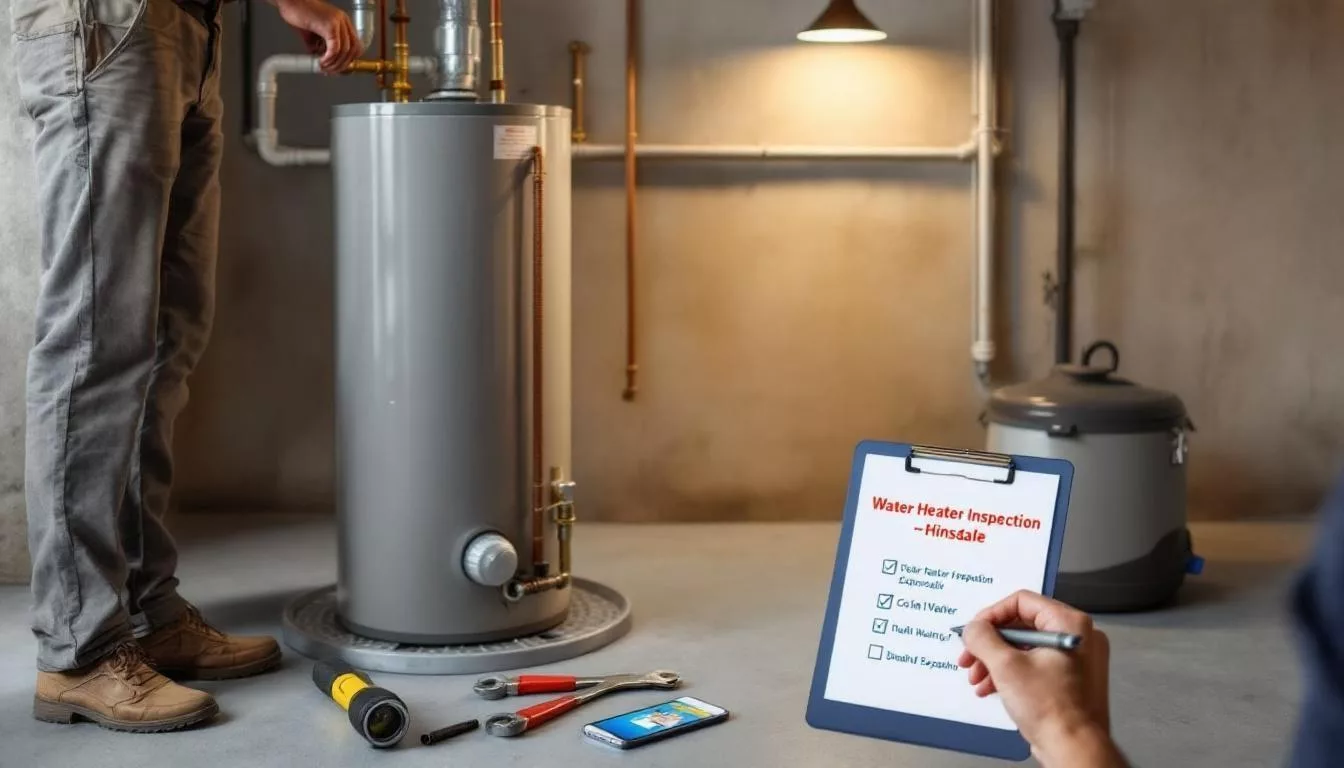
When we inspect your water heater, we check far more than surface rust. A thorough inspection starts with examining the tank exterior and all connection points. We look for visible corrosion, white mineral deposits around fittings, and any signs of water seepage that you might have missed. The tank’s base receives special attention because leaks often start where you cannot easily see them. We inspect the drain valve, inlet and outlet connections, and the gas line or electrical connections depending on your unit type.
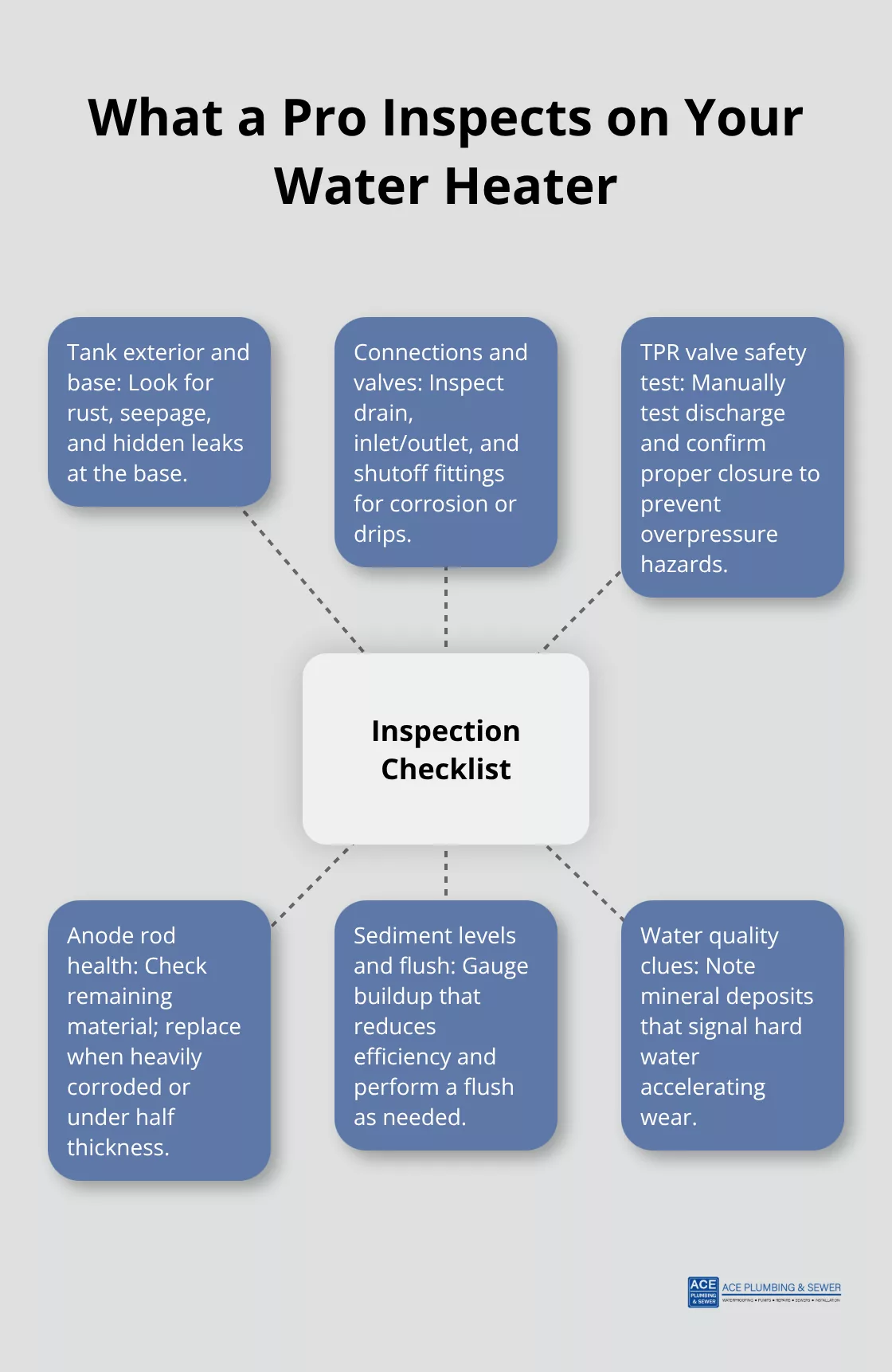
Hard water is common throughout Hinsdale, Clarendon Hills, Western Springs, and Hodgkins, so mineral buildup on fittings tells us whether your water quality is accelerating wear.
Testing the Temperature and Pressure Relief Valve
The Temperature and Pressure Relief valve represents the most critical safety component on your entire water heater. This valve releases water if the tank’s temperature or pressure exceeds safe limits, preventing a potential explosion. We manually trigger it to confirm water flows freely from the discharge line, then verify it closes properly. If the valve leaks or fails to respond, we replace it immediately because a faulty TPR valve puts your home at genuine risk. A functioning TPR valve stands between you and a potentially dangerous situation, making this test non-negotiable during every inspection.
Assessing the Anode Rod and Sediment Levels
We inspect the anode rod and check sediment levels inside the tank to measure your water heater’s remaining lifespan. A sacrificial anode rod is a long metal rod that hangs down from the top of the water heater and protects the steel tank walls from corrosion. If it shows heavy corrosion with less than half its original thickness, replacement happens that day. We also flush the tank to measure sediment accumulation, which directly affects heating efficiency and hot water output. This assessment gives you concrete data about whether flushing alone solves problems or whether replacement makes more financial sense.
What the Inspection Costs and Reveals
A professional inspection takes 45 minutes to an hour and costs significantly less than an emergency replacement or water damage repair. Homeowners in the western suburbs often discover during inspection that flushing alone solves noise problems or restores hot water pressure, while others learn that replacement represents the smarter choice than pouring money into a failing unit. The inspection provides concrete data to make that decision, rather than guessing or waiting for catastrophic failure. This is why scheduling your inspection before problems force your hand makes sense, especially in older homes where water heaters commonly exceed their expected lifespan. Once you understand what your water heater needs, the next step involves knowing how often to schedule these inspections to keep your system running smoothly.
How Often Should You Inspect Your Water Heater
Annual inspections keep your system running strong
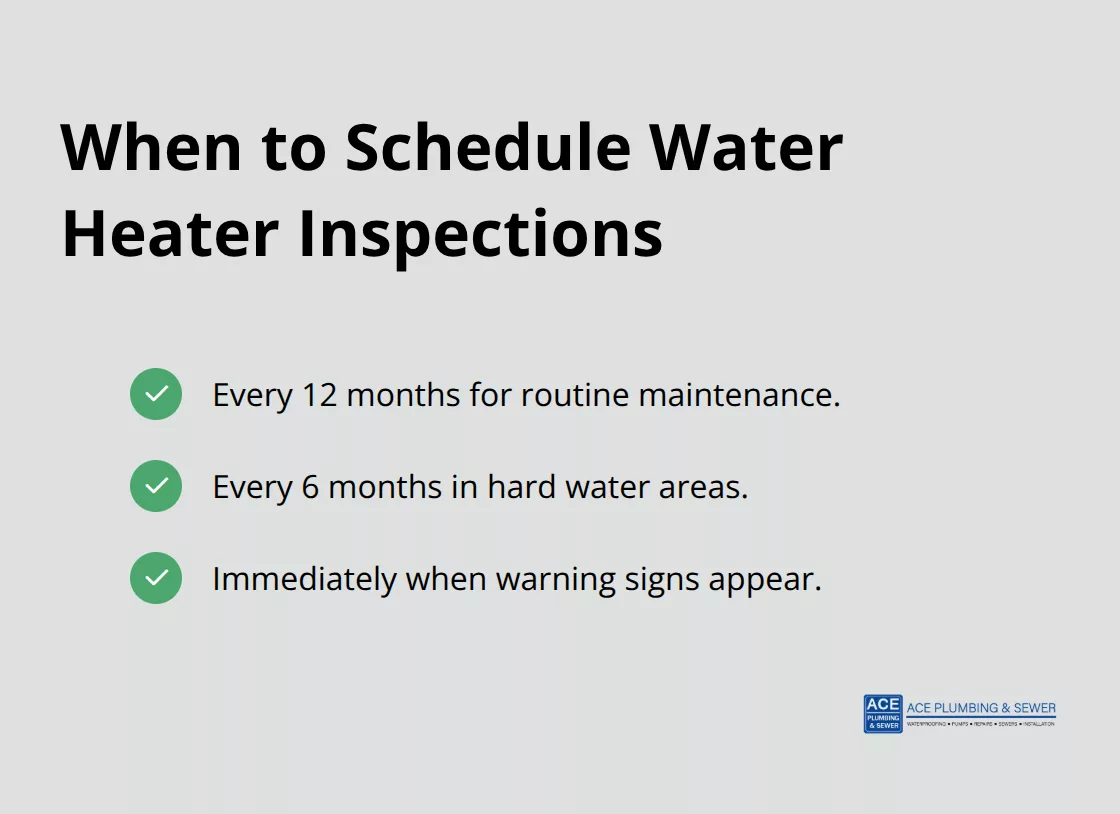
Annual inspections form the backbone of water heater maintenance, and we at Ace Plumbing & Sewer recommend scheduling one every 12 months to catch problems before they become expensive emergencies. Most water heaters last 8 to 12 years with proper care, but skipping inspections shortens that timeline significantly. During an annual inspection, a licensed plumber tests your Temperature and Pressure Relief valve, checks the anode rod for corrosion, measures sediment buildup, and confirms all connections remain tight and leak-free.
This single appointment costs far less than emergency repairs or water damage cleanup, especially in Hinsdale, Hodgkins, and Western Springs where finished basements make water damage particularly costly.
Hard water demands more frequent checks
Hard water is prevalent throughout the western suburbs including Clarendon Hills and Hinsdale, which accelerates mineral deposits inside your tank and demands more frequent attention than homes with softer water supplies. If you live in an area with hard water, move beyond annual inspections and schedule checks every six months instead. Hard water mineral buildup reduces heating efficiency, forces your water heater to work harder, and shortens its lifespan dramatically. You can identify hard water by white crusty deposits around faucet aerators, soap scum buildup in showers, or reduced water pressure from mineral accumulation in pipes.
Act Immediately When Warning Signs Appear
Schedule an immediate inspection whenever you notice rusty water, strange noises, temperature fluctuations, or unexplained spikes in your water bill, as these warning signs indicate problems that worsen rapidly without professional intervention. Waiting for problems to resolve themselves costs significantly more than addressing them during routine maintenance. Contact Ace Plumbing & Sewer at (708) 204-8602 to schedule your inspection today.
Final Thoughts
Water heater inspection in Hinsdale protects your home from costly emergencies and extends your system’s working life by years. The warning signs covered in this guide-rusty water, strange noises, and leaks-demand professional attention, and catching them early saves thousands in water damage repairs and replacement costs. We at Ace Plumbing & Sewer have served the western suburbs since 1983, and we’ve seen firsthand how homeowners who schedule regular inspections avoid the panic of sudden breakdowns during cold winters.
Annual inspections form the foundation of smart water heater maintenance, especially in areas like Hodgkins, Clarendon Hills, and Western Springs where hard water accelerates corrosion and sediment buildup. A professional inspection reveals problems invisible to the naked eye-a weakening anode rod, dangerous pressure relief valve failures, or sediment layers that steal your hot water and waste energy. These discoveries cost far less than emergency service calls or replacing a water heater that fails without warning.
Your water heater works silently in the background until it doesn’t, and that’s when homeowners face difficult choices between expensive repairs and full replacement. Contact us at (708) 204-8602 to schedule your water heater inspection with a licensed plumber today, and our technicians deliver fast, professional service across Hinsdale and the surrounding western suburbs with same-day emergency response when you need it most.
Proudly serving Burr Ridge and Southwest Chicago

Request a free quote
Tell us what’s going on and we’ll get right back to you. Need help now? Call and a real plumber answers 24/7.