Sump Pump Willow Springs: Prevent Basement Flooding Before Storm Season
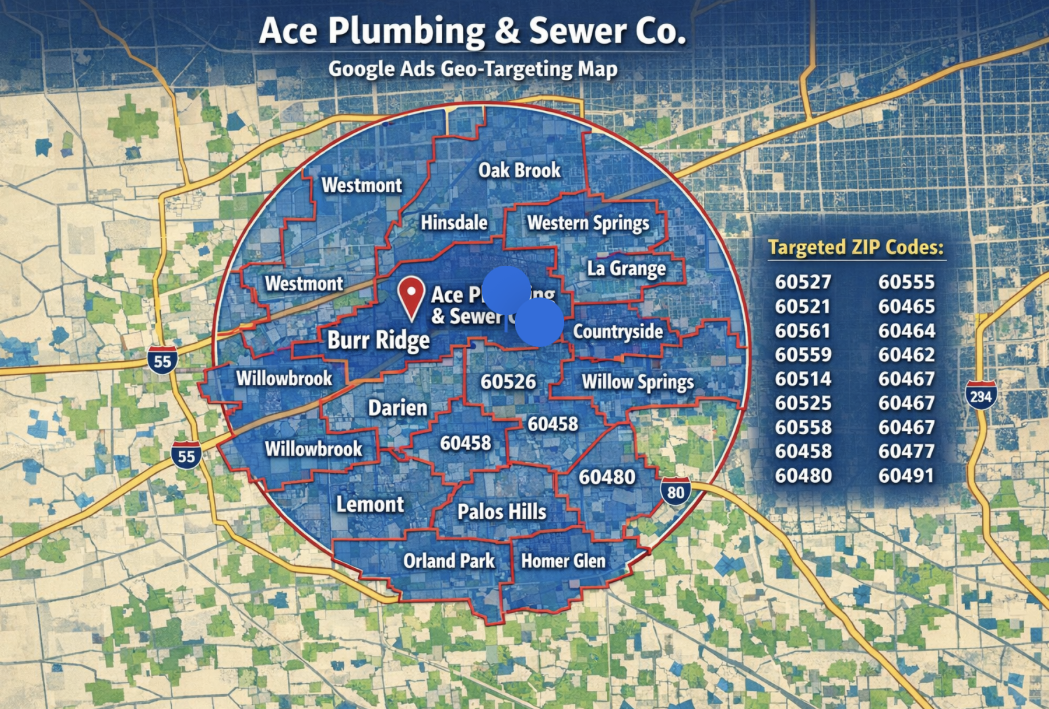
Trusted by homeowners across Burr Ridge and Chicago, IL
Basement flooding can happen fast, and once water starts seeping in, the damage spreads quickly. A sump pump Willow Springs homeowners install now could save thousands in repairs later.
At Ace Plumbing & Sewer, we’ve seen too many basements destroyed because property owners waited too long to act. This guide walks you through everything you need to know about protecting your home before storm season arrives.
How Your Basement Floods and Why a Sump Pump Stops It
What a Sump Pump Does
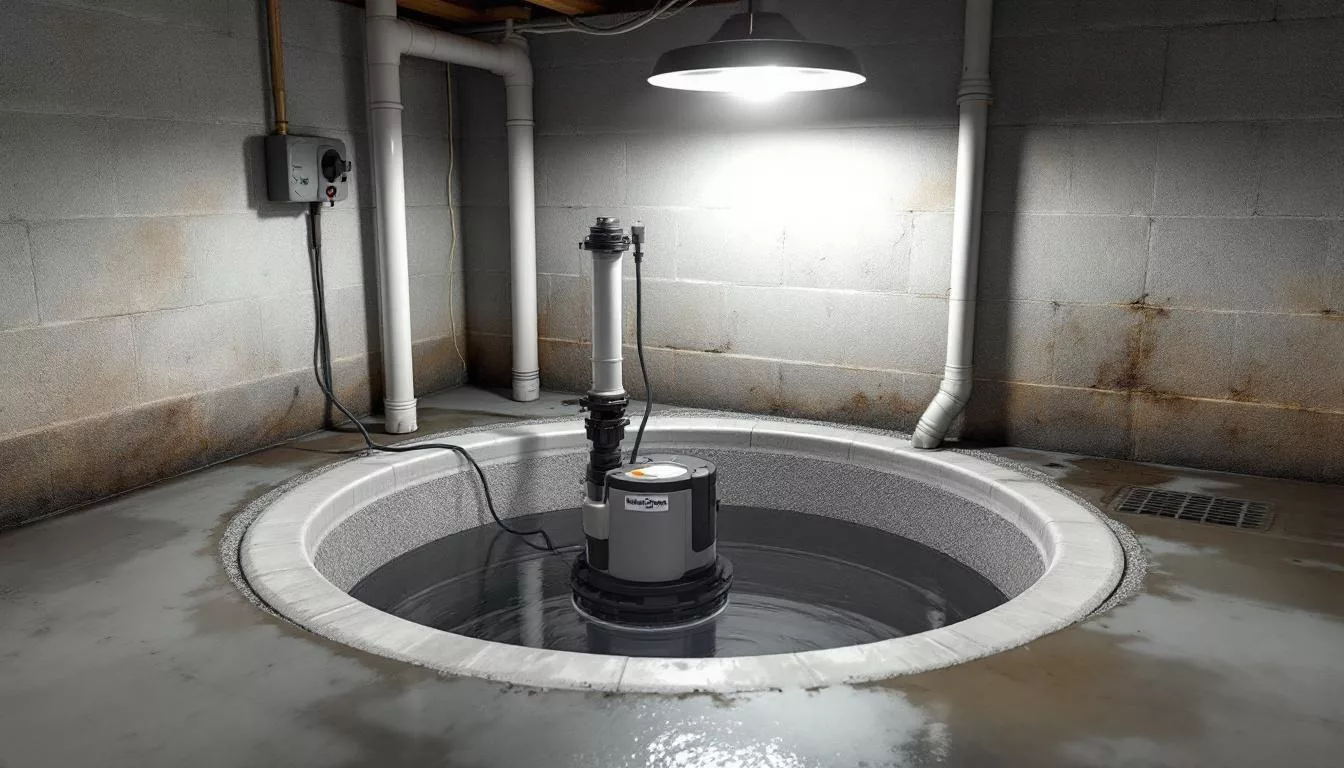
A sump pump collects water that pools in a basin beneath your basement floor, then pushes that water away from your home’s foundation through a discharge line. When water rises in the pit, a float switch triggers the pump to activate, and the motor forces water out through a check valve that prevents backflow. The entire process happens automatically, which is why a working sump pump is your first line of defense against water damage. Without one, water sits in your basement and seeps into walls, flooring, and belongings within hours.
Why Basements Flood in Willow Springs and Nearby Areas
Heavy rainfall in the Willow Springs area, combined with aging sewer systems, means basements flood regularly during spring and summer storms. According to iProperty Management data, 98 percent of basements experience some water damage over time, and 14.6 million U.S. homes face severe flooding risk. In the Chicago suburbs near Willow Springs-including Hinsdale, Darien, and Clarendon Hills-spring thunderstorms routinely deliver 2 to 4 inches of rain in a single afternoon, overwhelming municipal drainage systems designed decades ago.

Multiple Causes of Water Intrusion
Basement flooding happens for several specific reasons in this region. Heavy rainfall exceeds what catch basins and roof gutters can handle; some properties see water funneled into these systems regularly.
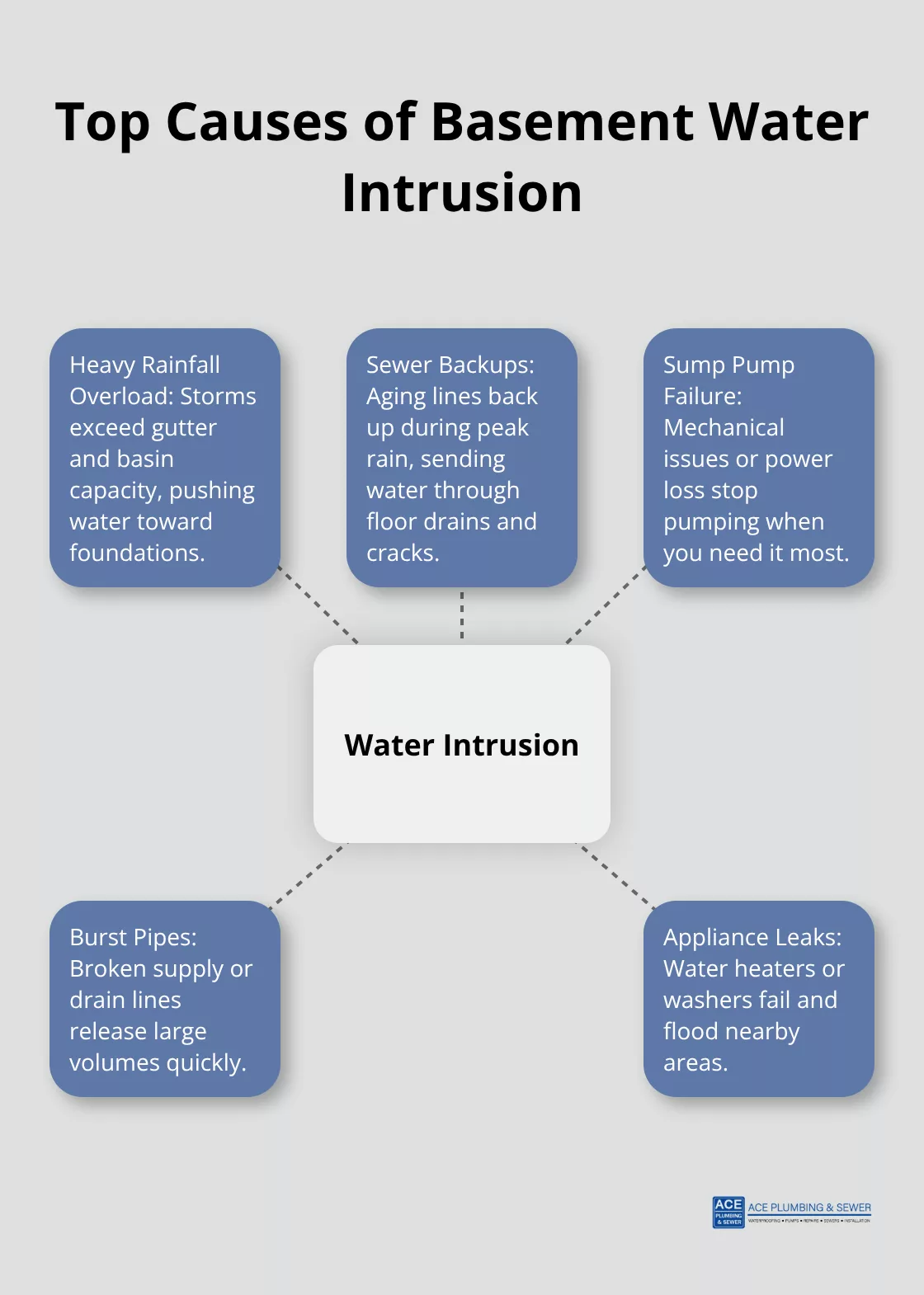
Aging sewer lines in older communities like Westmont and Hodgkins back up during peak rainfall, forcing water into basements through floor drains or foundation cracks. Burst pipes, failed sump pumps, and faulty appliances create sudden water intrusion that catches homeowners unprepared.
How a Sump Pump Protects Your Home
A sump pump prevents these disasters by moving water away from your foundation before it penetrates walls or causes structural damage. Storm season in Willow Springs and surrounding areas like Western Springs and Bridgeview demands that your system work perfectly when it matters most. Testing your pump monthly and maintaining it quarterly isn’t optional-it’s the difference between a dry basement and thousands in mold remediation, structural repair, and belongings replacement.
Getting Professional Help Ready
When you need professional installation or maintenance, an experienced plumber will size the pump correctly, ensure proper discharge placement, and install a sump pump battery backup so your system keeps working during outages. The Ace Plumber specializes in sump pump installation and flood control systems throughout the western suburbs, with the expertise to handle high-risk properties in your area. Your next step is identifying whether your current system needs repair, replacement, or a complete upgrade before storm season arrives.
When Your Sump Pump Fails You
Warning Signs That Demand Immediate Action
A sump pump fails to activate when water rises is worse than having no pump at all-it gives you false confidence right up until your basement floods. Unusual grinding, rattling, or squealing noises during operation signal bearing wear, impeller damage, or motor problems that worsen rapidly. A pump that runs but fails to discharge water suggests a clogged check valve or blocked discharge line is cracked or kinked; water backing up into the pit means your system isn’t moving water away from your foundation at all. If the float switch sticks or moves sluggishly, debris in the sump pit prevents activation, and the pump won’t start when water rises. Visible rust, corrosion, or cracks in the pump housing indicate motor failure is imminent.
Age and Lifespan Matter More Than You Think
Most residential sump pumps last seven to ten years before internal components wear out. If yours is older than that, replacement before storm season is far smarter than gambling on a breakdown during heavy rain. Homeowners in Willow Springs, Darien, Clarendon Hills, and Hinsdale who ignored aging pumps paid the price in water damage and mold remediation. The cost of a new plumber installation is a fraction of what you’ll spend fixing a flooded basement.
Monthly Testing Catches Problems Early
Test your pump monthly by pouring water directly into the sump pit until the float rises and the pump activates, then verify water discharges away from your foundation through the discharge line. Don’t just listen for noise-actually watch the water leave the pit and confirm the pump shuts off once the float drops. Perform this test on mild days, not during storms, so you catch problems before they matter. This five-minute task takes almost no time and reveals failures before heavy rain arrives.
Quarterly Maintenance Keeps Your System Working
Clean the sump pit quarterly to remove sediment, gravel, and debris that cause the float to stick or the pump to clog; a pit full of mud is a pit that won’t work when you need it. Inspect the check valve annually to confirm it opens and closes freely; a stuck valve forces the pump to work harder and cycle repeatedly even after water is removed. These simple maintenance steps prevent most common failures and extend your pump’s life significantly.
When to Call a Professional
Contact a licensed plumbing professional immediately if the pump fails to activate during your water test, if the discharge line becomes frozen or clogged, if you hear constant running without water moving, or if the motor won’t start at all. Ace Plumbing & Sewer handles sump pump repairs and replacements throughout the western suburbs and responds to emergency calls during storm season. The next step is understanding what happens when your system needs an upgrade-and how backup power systems protect your home when the grid fails.
Preparing Your Sump Pump for Storm Season
Test Your System Before Heavy Rain Arrives
Spring and summer storms in Willow Springs, Darien, Clarendon Hills, and Hinsdale demand that your sump pump operates flawlessly when heavy rain arrives. The difference between a dry basement and thousands in water damage comes down to preparation you complete right now, before storm season peaks. Start with a comprehensive inspection that checks every component of your system, then move to backup power solutions that keep your pump running during outages when you need protection most.
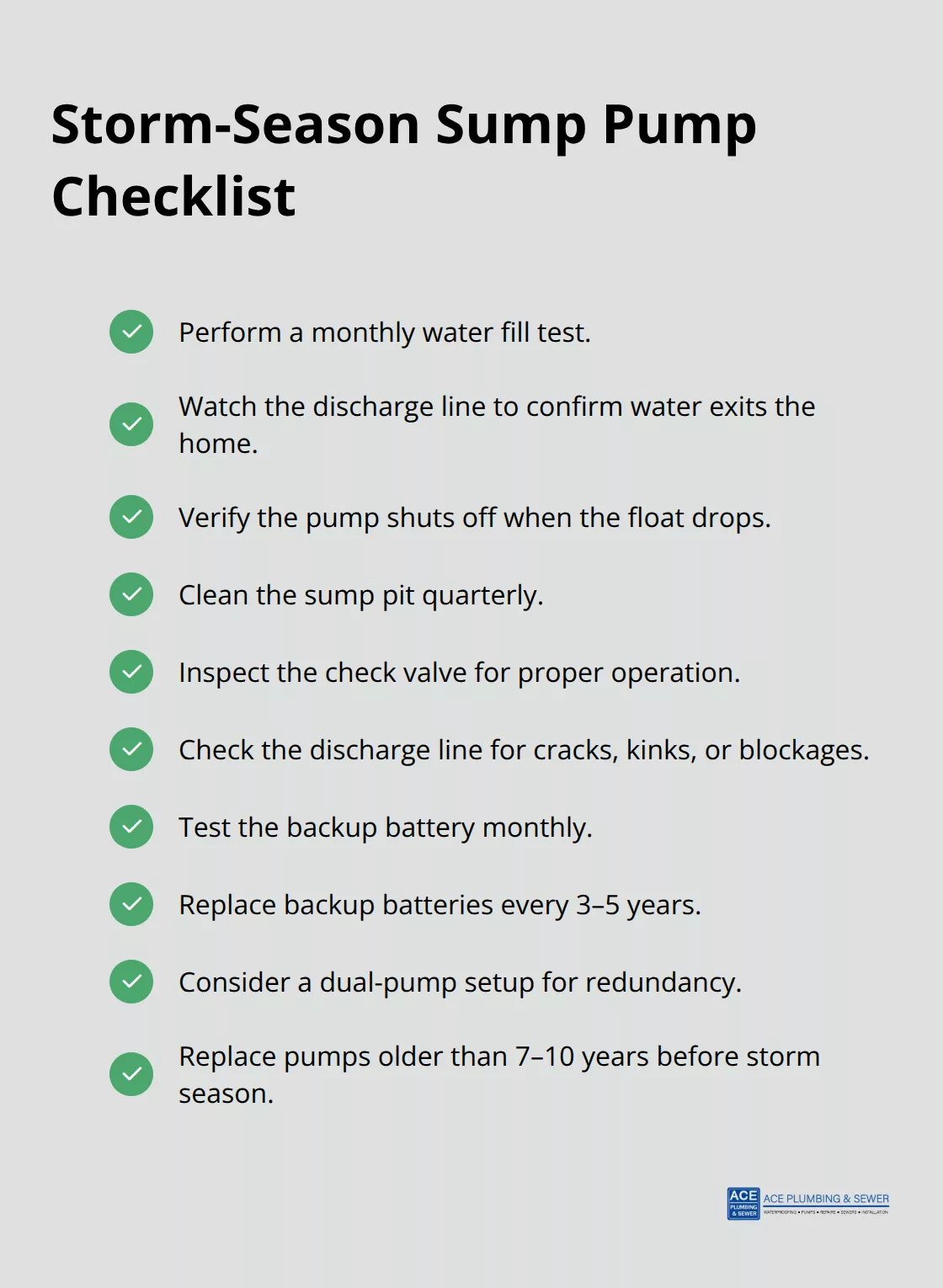
Test your pump with a water fill test on a mild day, not during rain. Pour water directly into the sump pit until the float rises and triggers activation, then watch the pump discharge water away from your foundation through the discharge line. This reveals whether your float switch moves freely, whether the pump motor starts reliably, and whether water actually exits the home. Next, inspect the discharge line itself for cracks, kinks, or blockages that prevent water from flowing away from your foundation. A discharge line that freezes in winter or clogs with debris becomes worthless when spring rains arrive.
Inspect Critical Components and Clean the Pit
Check that your check valve opens and closes freely; a stuck valve forces the pump to cycle repeatedly and wastes energy. Examine the sump pit for sediment, gravel, and debris that prevent the float from moving or clog the pump intake. Clean the pit thoroughly by removing all standing water and debris, then refill it with clean water for another test. Inspect the pump housing and motor for visible rust, corrosion, or cracks that indicate internal wear. If your pump is older than seven to ten years, replacement before storm season is far smarter than gambling on failure during heavy rain.
Install Battery Backup for Power Outages
Battery backup systems keep your pump running during power outages that often accompany severe storms. Most backup systems use a sealed lead-acid battery that powers a secondary pump or provides backup power to your primary pump when utility power fails. These systems activate automatically when the main power cuts out, maintaining pumping capacity depending on rainfall intensity and battery size. Install your backup system on a separate float switch so it activates only when water rises above the level your primary pump should have handled. This redundancy ensures water removal continues even if your main pump fails or the grid goes down.
Test your backup battery monthly to confirm it holds a charge and activates the secondary pump when triggered. Replace backup batteries every three to five years since they degrade over time and won’t provide emergency power when you need it most. For homes with finished basements or valuable storage, consider a dual-pump setup where two pumps share the workload and either can handle full capacity if the other fails.
Size and Position Your Pump Correctly
Residential sump pumps typically range from one-third to one-half horsepower, with capacity measured in gallons per minute. Calculate your pump size based on your basement area, local rainfall patterns, and soil drainage characteristics. The Chicago suburbs receive an average of 36 inches of rain annually, with spring months often delivering several inches in a single afternoon. A basement covering 1,000 square feet in Darien or Clarendon Hills needs a pump capable of handling rapid water accumulation during peak storms.
Install your sump pit away from the foundation wall and ensure it’s sized large enough that the float can move freely without hitting the pit walls or pump housing. Position the pit so the discharge line exits at least 4 to 6 feet from your foundation, directing water away from the home entirely. Improper discharge placement simply moves water from your basement to your foundation’s exterior, where it seeps back in during the next heavy rain. Install a check valve immediately after the pump discharge to prevent water from flowing backward into the pit when the pump shuts off. This simple component prevents your pump from refilling the pit repeatedly and wasting energy after storms pass.
Final Thoughts
Your basement protection starts now, before spring storms arrive in Willow Springs and surrounding areas like Darien, Clarendon Hills, and Hinsdale. A sump pump Willow Springs homeowners install today prevents the water damage, mold growth, and structural repairs that cost thousands later. The facts are clear: 98 percent of basements experience water damage over time, and 14.6 million U.S. homes face severe flooding risk.
Test your pump monthly by filling the sump pit with water and confirming the float activates and water discharges away from your foundation. Clean the pit quarterly to remove sediment and debris that prevent proper operation, and inspect your check valve, discharge line, and pump housing for signs of wear or damage.
Install a battery backup system so your pump keeps working during power outages when storms knock out the grid, and if your pump is older than seven to ten years, replacement before storm season is far smarter than gambling on failure during heavy rain.
Contact Ace Plumbing & Sewer today to schedule a sump pump inspection or get a quote on installation and backup power systems for your Willow Springs home. Our licensed team responds quickly to emergency calls and delivers solutions that protect your basement for years. Storm season waits for no one, and your basement protection can’t wait either.
Proudly serving Burr Ridge and Southwest Chicago
Request a free quote
Tell us what’s going on and we’ll get right back to you. Need help now? Call and a real plumber answers 24/7.