Sump Pump Installation Hinsdale: Protect Your Basement From Flooding
Trusted by homeowners across Burr Ridge and Chicago, IL
Basement flooding is one of the most expensive home emergencies homeowners in Hinsdale face today. Heavy rainfall, foundation cracks, and aging drainage systems create the perfect conditions for water damage that can cost thousands to repair.
A properly installed sump pump is your best defense against these problems. At Ace Plumbing & Sewer, we’ve helped countless homeowners in Hinsdale, Burr Ridge, Darien, and Western Springs protect their basements with professional sump pump installation that actually works.
Why Hinsdale Basements Flood More Than You’d Think
Heavy Rainfall Overwhelms Aging Infrastructure
Hinsdale homeowners face a real problem, not a theoretical one. The Chicago suburbs experience heavy rainfall events that regularly overwhelm older drainage infrastructure, and Hinsdale sits in a zone where groundwater pressure builds quickly during wet seasons. When that water hits your foundation, it doesn’t care about your basement finishing-it finds cracks, seeps through porous concrete, and fills your sump pit faster than most homeowners expect.
Drainage Systems Built for Yesterday’s Weather
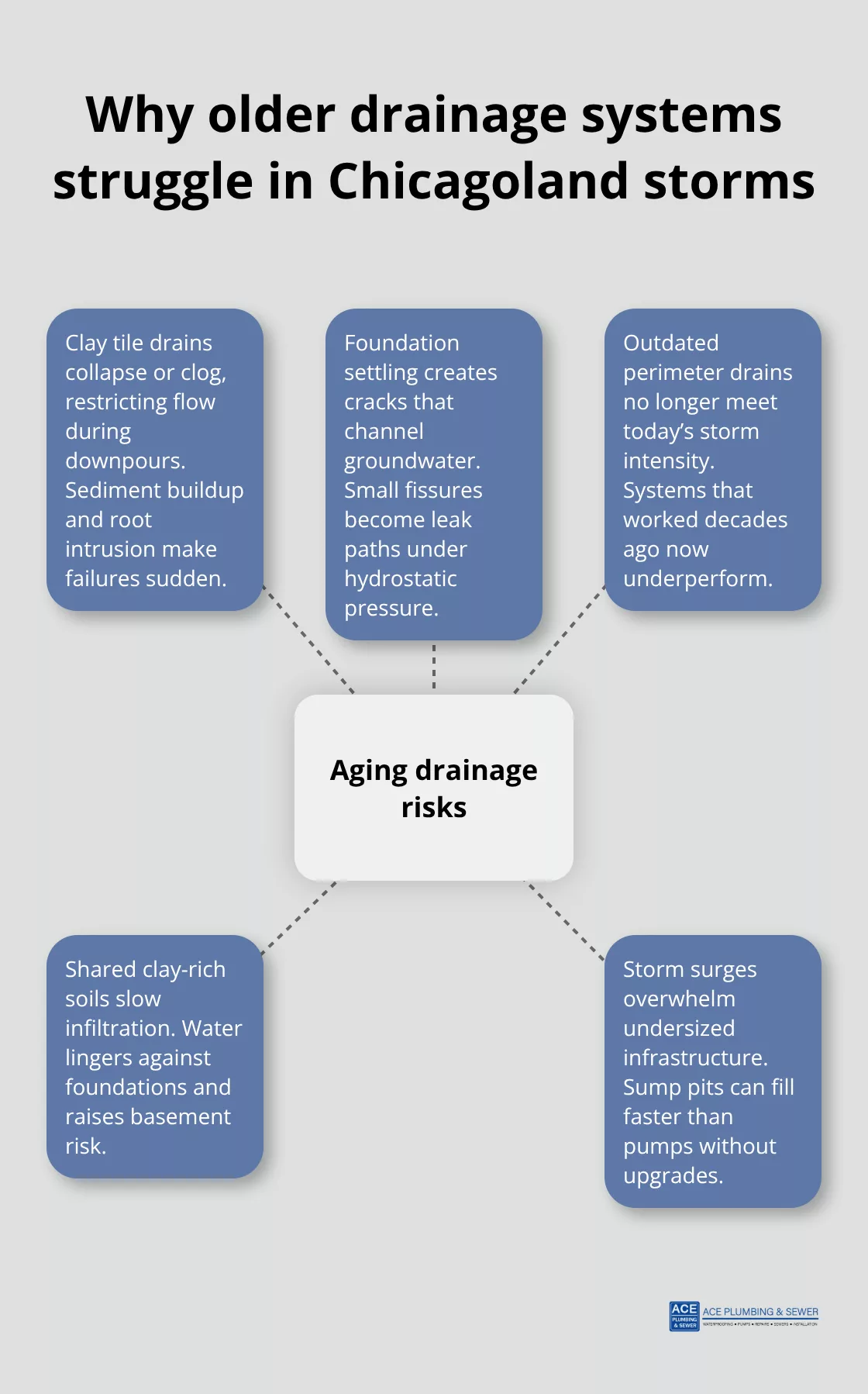
Many homes built before the 1980s in Hinsdale, Burr Ridge, and Western Springs were designed with drainage systems that simply cannot handle modern rainfall intensity. Old clay tile drains collapse or become clogged with sediment, foundation walls crack from decades of settling, and perimeter drainage systems that worked fifty years ago now fail silently until water appears on your basement floor. Homeowners in nearby Darien, Clarendon Hills, and La Grange face identical challenges because they share the same soil composition and aging infrastructure.
Foundation Cracks Signal Growing Risk
The real issue isn’t whether your basement will flood; it’s whether you’ll catch the problem before water damage becomes expensive. A foundation crack that weeps moisture today becomes a serious flood risk during spring thaw or after a heavy storm. Groundwater seepage through basement walls indicates that hydrostatic pressure already works against your foundation, and that pressure only increases during wet months. Poor drainage around older homes means rainwater pools against the foundation instead of flowing away, forcing water to find the easiest entry point-usually through cracks you cannot see from inside.
Why Professional Installation Matters
Sump pump installation isn’t optional in this region; it’s essential protection. The difference between a dry basement and thousands in water damage often comes down to having a properly sized and professionally installed sump pump system with backup power, especially in communities like Hickory Hills and Bridgeview where basement flooding claims spike during heavy rain seasons. A qualified plumber understands that water doesn’t wait, and neither should your response to the warning signs your basement is sending.
How Sump Pumps Actually Protect Your Basement
A sump pump collects groundwater that accumulates in a pit below your basement floor, then pumps it away from your home before it rises high enough to flood. Water naturally flows downward through soil toward the lowest point, which is why sump pits sit at basement floors or in crawl spaces. As groundwater enters the pit, a float switch or pressure sensor triggers the pump to activate and force water through discharge pipes that carry it away from your foundation and into your yard or storm drain system. The pump remains idle until water levels rise again, then cycles on and off throughout wet seasons. These pumps protect your foundation by preventing hydrostatic pressure buildup, keeping your basement dry even during heavy rainfall or spring thaw when groundwater pressure peaks. Without this system, that same water has nowhere to go except through foundation cracks, porous concrete, or seams in your basement walls.
Signs Your Basement Already Needs Protection
Wet spots on basement walls or floors signal that water damage is already happening. More reliable early indicators include a musty smell in your basement, which signals moisture intrusion even when no visible water appears, or efflorescence-the white chalky mineral deposits on concrete that form when water moves through the foundation. Water stains at a consistent height on basement walls mark the waterline from a previous flood.
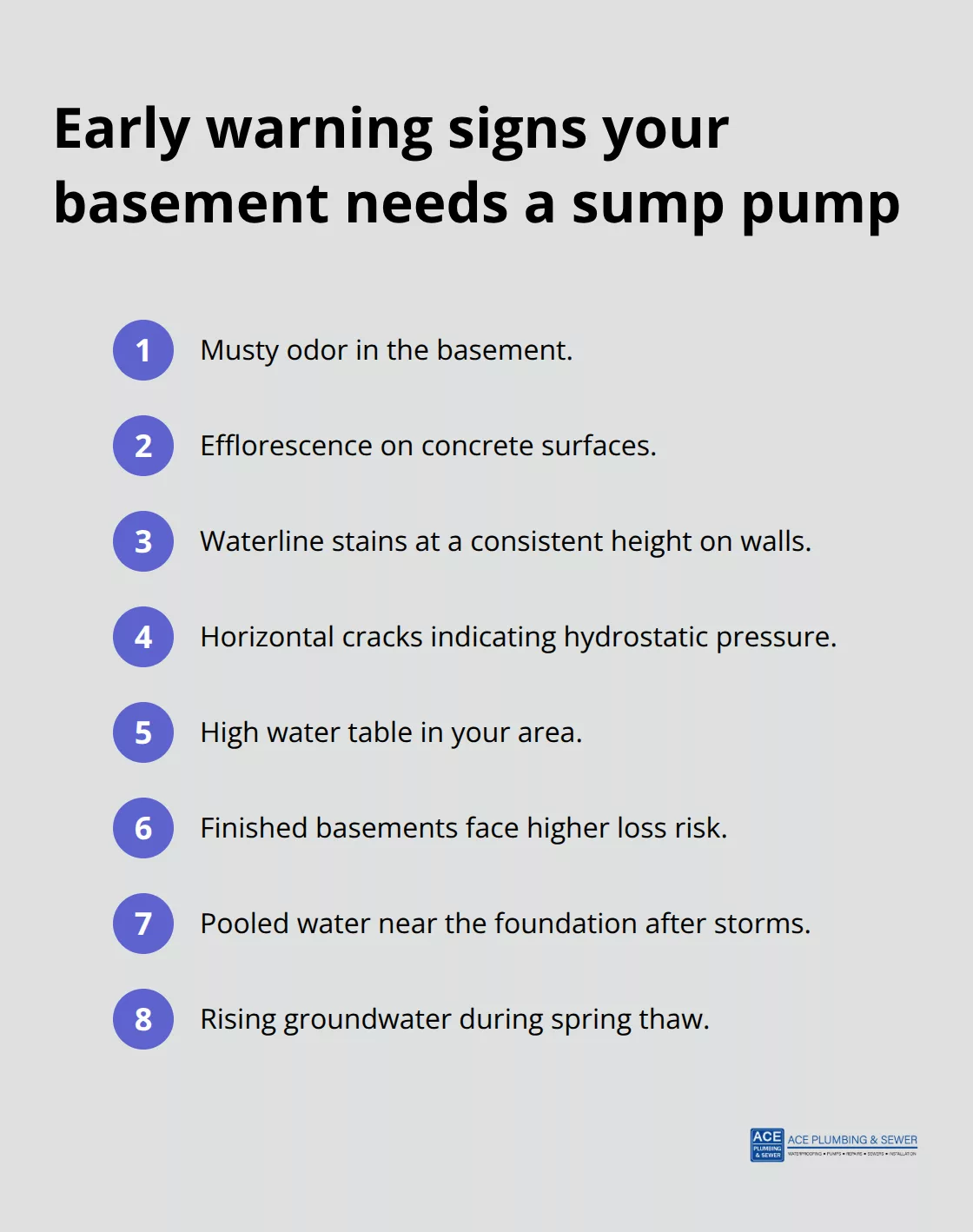
Horizontal cracks in foundation walls suggest water pressure and indicate hydrostatic force already working against your structure. A high water table in your area means groundwater sits close to the surface year-round, making basement flooding almost inevitable without protection. Homeowners in Hinsdale, Burr Ridge, and Clarendon Hills with finished basements face the highest risk because water damage destroys flooring, drywall, and personal belongings stored below grade.
Why Professional Installation Beats DIY
Some homeowners attempt DIY sump pump installation to save money, but this approach creates expensive problems. Improper pit sizing causes the pump to cycle too frequently and burn out prematurely, or it undersizes and fails during heavy rain when you need it most. Wrong discharge routing-such as pumping water back toward your foundation or into the sanitary sewer-violates municipal code and triggers fines from local water authorities. Illinois American Water explicitly prohibits connecting sump pumps to sanitary sewers because unauthorized connections overload public wastewater systems and cause widespread basement flooding in neighboring homes. A licensed plumber sizes the pump correctly based on your home’s square footage and groundwater conditions, positions the pit to intercept water before it reaches living areas, and routes discharge safely away from foundations.
Backup Power Systems Keep Your Pump Running
Professional installation includes backup power systems and battery backups that keep your pump running during power outages, which is when heavy storms often strike. A properly installed system comes with warranties covering parts and labor, while DIY installations leave you fully responsible if something fails. The cost difference between professional installation and a failed DIY project that floods your basement makes professional work the only sensible choice for homeowners in Darien, Western Springs, and La Grange who have serious money invested in their homes. When you need a plumbing contractor you can trust, The Ace Plumber delivers fast, professional sump pump installation with the expertise to handle your specific basement conditions.
Professional Sump Pump Installation in Hinsdale and Nearby Areas
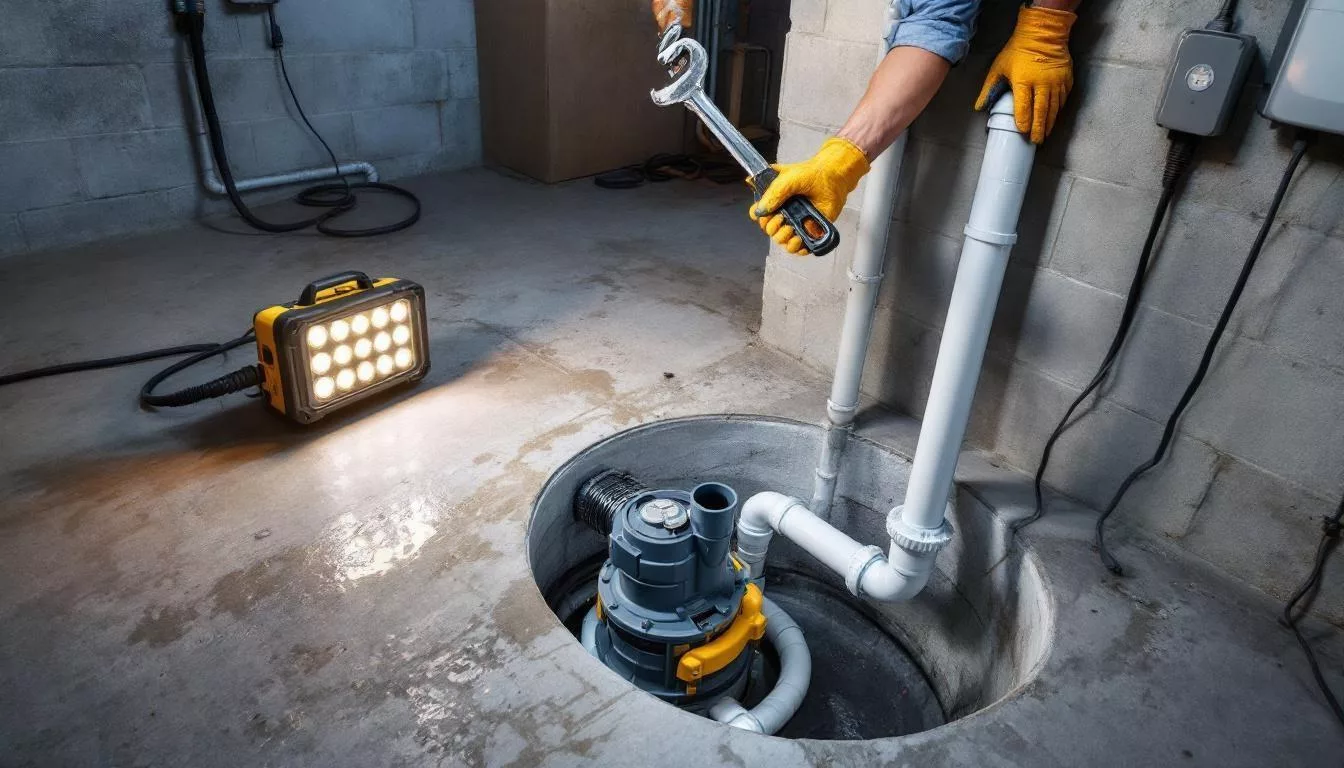
Professional sump pump installation in Hinsdale, Burr Ridge, and Western Springs starts with a site assessment that determines your home’s specific water problems. A technician evaluates your basement square footage, foundation condition, soil composition, and groundwater patterns to size the pump correctly. This matters because undersizing leaves you vulnerable during heavy rain, while oversizing causes the pump to cycle excessively and fail prematurely. The installation itself involves excavating a sump pit at the lowest point of your basement, typically 2 to 3 feet deep and sized to hold 18 to 24 gallons of water before the pump activates. The pit must sit below your basement floor to intercept groundwater before it spreads across the floor.
Once the pit is in place, the pump gets installed with a float switch or pressure sensor that triggers activation as water rises. The discharge pipe routes water at least 10 feet away from your foundation and never into the sanitary sewer, which Illinois law strictly prohibits. Many homeowners in Darien, Clarendon Hills, and La Grange add a check valve to the discharge line, preventing water from flowing backward into the pit when the pump shuts off. The entire process typically takes one day for a standard installation, though homes with complex drainage issues or multiple basement walls may require additional work.
Battery Backup Systems Protect Against Power Loss
Backup power systems are the difference between a dry basement and water damage during the exact moment you need protection most. Heavy storms that cause basement flooding frequently knock out power, leaving a standard electric pump useless when groundwater pressure peaks. A battery backup sump pump activates automatically when the main pump cannot keep up or when power fails, ensuring water removal continues around the clock. Quality backup systems use marine-grade batteries that provide 24 to 48 hours of operation depending on water volume and pump capacity.
The cost for a complete backup system typically ranges from $1,200 to $2,000 installed, a reasonable investment compared to the $10,000 to $50,000 cost of water damage to finished basements in Hickory Hills, Bridgeview, and neighboring areas. Some homeowners in Hinsdale also install generators that automatically power both the primary pump and household essentials during extended outages. A properly installed backup system includes a secondary discharge line separate from the main pump, preventing both pumps from overloading a single pipe during heavy rainfall.
Maintenance Keeps Your System Running Year-Round
Your sump pump requires testing at least twice yearly, ideally before spring thaw and before heavy fall rains when groundwater pressure peaks. Testing involves pouring water into the pit to verify the float switch activates, the pump runs, and water discharges properly away from the foundation. If the pump fails to activate or discharge water slowly, the discharge pipe may be frozen, clogged with sediment, or kinked.
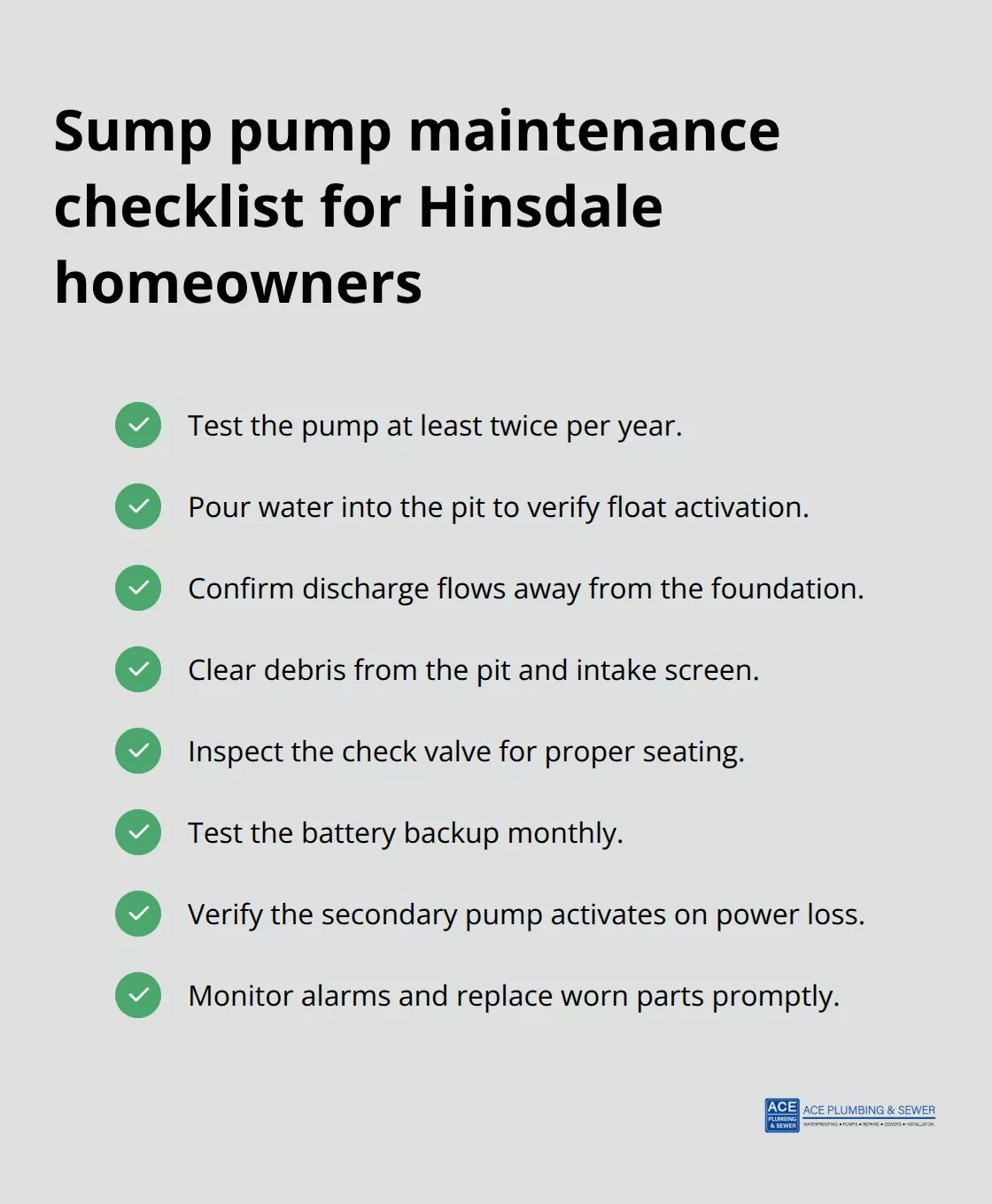
Annual inspection of the pit itself catches debris accumulation that can clog the pump intake screen.
Check valves need visual inspection to confirm they seat properly and prevent backflow. Battery backup systems require monthly testing to verify the battery charges fully and the secondary pump activates when needed. Neglecting this maintenance transforms an effective flood prevention system into expensive dead weight. Homeowners in Western Springs, Darien, and Clarendon Hills who skip testing often discover their pump failed months earlier when water damage appears.
Final Thoughts
Your basement represents one of your home’s most valuable assets, and protecting it from flooding requires more than hope. Sump pump installation in Hinsdale, Burr Ridge, and Western Springs is an investment that pays dividends every time heavy rain falls or spring thaw arrives. The difference between a dry basement and thousands in water damage comes down to having a system that works when you need it most, backed by professional expertise and reliable backup power.
We at Ace Plumbing & Sewer understand that basement flooding isn’t a problem you can ignore or delay. Our licensed, bonded, and insured team has served the western Chicago suburbs since 1983, delivering fast, professional solutions for homeowners in Darien, Clarendon Hills, La Grange, and nearby communities. We size your sump pump correctly based on your home’s specific conditions, install it to code, and keep your basement protected even during power outages.
Contact us today to schedule your free consultation and protect your home from water damage. Call (708) 204-8602 to discuss your basement conditions and receive a clear estimate for professional sump pump installation. Your home deserves protection from the ground up.
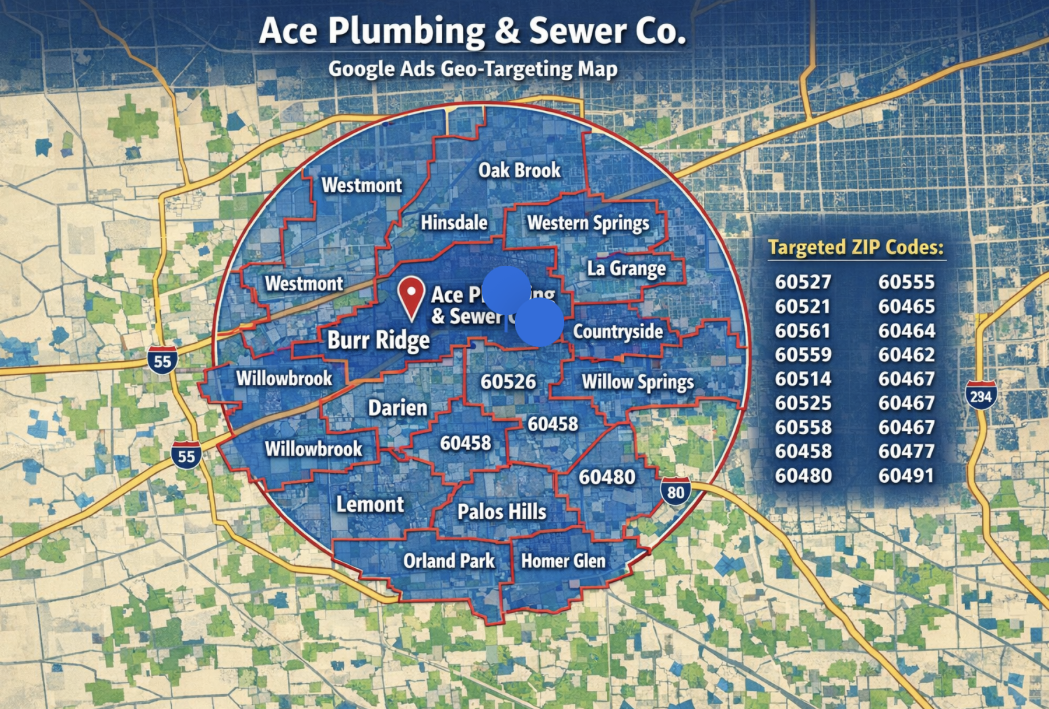
Proudly serving Burr Ridge and Southwest Chicago
Request a free quote
Tell us what’s going on and we’ll get right back to you. Need help now? Call and a real plumber answers 24/7.