
How to Choose the Best Sump Pump Discharge Ideas
Trusted by homeowners across Burr Ridge and Chicago, IL
Your sump pump discharge system is one of the most overlooked parts of basement protection. A poorly designed discharge setup can lead to water pooling near your foundation, damaged landscaping, and costly repairs down the road.
At Ace Plumbing & Sewer, we’ve seen firsthand how the right sump pump discharge ideas make the difference between a dry basement and a flooded one. This guide walks you through the options available to homeowners in Burr Ridge, Hinsdale, and nearby areas, so you can make an informed choice for your property.
What Discharge Methods Work Best for Your Foundation
Your sump pump moves water out of your basement, but where that water goes matters far more than most homeowners realize. We’ve watched homeowners in Burr Ridge, Hinsdale, Clarendon Hills, and La Grange make discharge mistakes that cost them thousands in foundation damage and landscape erosion. Water that pools near your foundation increases hydrostatic pressure, weakens soil, and creates cracks. According to the National Association of Realtors, basement flooding damage averages around $15,000 per incident-and many of those incidents trace back to poor discharge planning.
How Water Actually Leaves Your Home
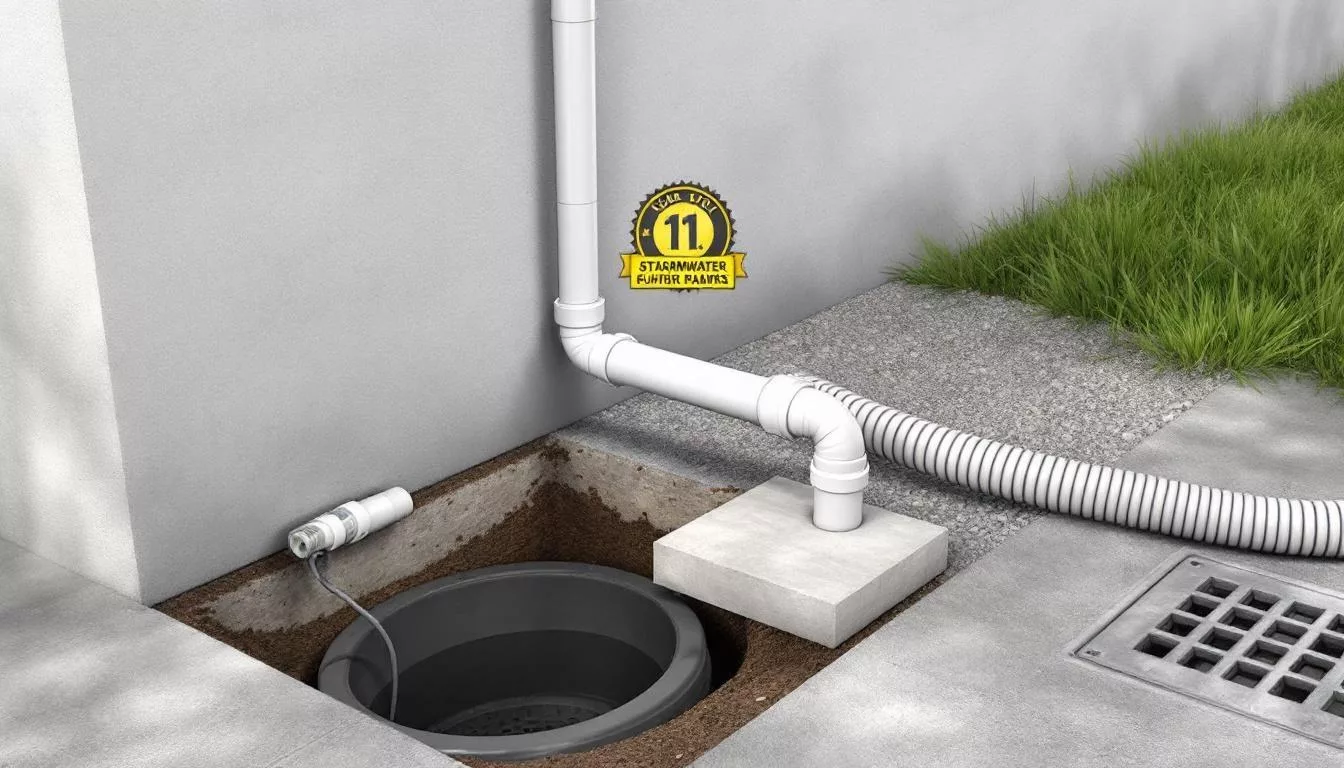
A sump pump pulls groundwater into a pit at your basement’s lowest point, then forces it through a discharge pipe. The pipe needs a slight downward slope-roughly 1 percent grade-so gravity helps water flow naturally and prevents standing water that clogs the line.

If your discharge sits flat or slopes upward, sediment from Illinois clay soil builds up inside the pipe, blocking flow and forcing water back into your basement. Many homeowners bury their discharge pipes without proper slope and discover too late that the system fails during heavy rain. Above-ground discharge lines avoid this problem entirely, though they’re less aesthetically pleasing. Underground piping must be buried at least 40 inches below the frost line in this region to prevent winter freezing that stops discharge completely.
Why Discharge Distance and Location Actually Matter
Directing water away from your foundation prevents water from seeping back under your home or pooling where it saturates the soil around your foundation walls. Discharge piping longer than 20 feet overworks your pump, reducing its lifespan and increasing electricity costs. Homes without proper drainage file flood claims 3.5 times more frequently than those with code-compliant systems, according to DuPage County insurance data. Your discharge must also avoid septic systems, sewer lines, neighboring properties, and street edges, since violating these rules invites fines ranging from $500 to $2,000. Local codes in towns like Willowbrook and Burr Ridge vary-some require permits for electrical work or installations over $1,000, with fees between $75 and $150. Professional installation guarantees compliance and proper integration with your pump’s electrical connections, which must run on dedicated 220V circuits with GFCI outlets within 6 feet of the sump pit per the National Electrical Code.
What Happens When You Skip Professional Help
DIY discharge installations often fail because homeowners miss critical details. Float switch placement errors (too high or too low) prevent activation, improper discharge piping creates backflow, and missing check valves allow water to return to your basement during power outages. These mistakes compound during spring thaw and summer thunderstorms, when Western Chicago suburbs experience peak water pressure against foundations. Professional installation includes proper gravel beds, sealed pit liners, and backup power connections that minimize failure points. The Ace Plumber offers licensed, code-compliant sump pump installation with 24/7 emergency service-call (708) 204-8602 when you need reliable basement protection.
What Your Yard and Local Rules Actually Demand
How Yard Slope Changes Your Discharge Strategy
Your yard’s slope determines whether water flows away from your foundation or pools against it, and this single factor can make or break your discharge system. Flat yards present the biggest challenge-water from your sump pump has nowhere natural to go, so it either sits near your foundation or needs an engineered solution like a dry well or underground piping system. If your property slopes downhill away from the house, you gain flexibility with above-ground discharge lines that direct water downslope without additional infrastructure.
Why Clay Soil Demands Different Solutions
In Burr Ridge, Hinsdale, Clarendon Hills, and La Grange, clay soil dominates the landscape, which means water doesn’t infiltrate quickly. This matters enormously: you cannot rely on soil absorption the way homeowners in sandy regions do. The American Society of Home Inspectors reports that Western Chicago suburbs experience 40% more basement water issues than areas with sandy soil, largely because clay blocks natural drainage. Your discharge pipe must therefore carry water at least 10 to 20 feet from your foundation-anything longer than 20 feet forces your pump to work harder and shortens its lifespan. If your yard is small or neighbors are close, underground piping buried at least 40 inches below the frost line becomes necessary to protect their properties and comply with setback requirements.
Understanding Local Code Requirements
Local codes in your area aren’t suggestions-they’re requirements that carry real penalties. Willowbrook requires permits for any electrical work, Burr Ridge requires permits for installations over $1,000, and similar rules apply across nearby towns like Hodgkins and Western Springs, with typical permit fees ranging from $75 to $150. Violating local discharge codes can trigger fines between $500 and $2,000, and inspectors will reject non-compliant systems, forcing expensive rework.
Your discharge cannot legally flow toward neighboring properties, onto streets, into septic systems, or into sanitary sewer lines-these rules exist because improper discharge damages other people’s property and municipal infrastructure. Many homeowners don’t realize that connecting a sump pump discharge to a sanitary sewer violates code in most Illinois municipalities, yet this mistake happens regularly.

You must check with your village’s building department before installation to confirm whether discharging into a storm drain is permitted.
Electrical Code Compliance Protects Your Home
The National Electrical Code requires GFCI protection for sump pump receptacles on dedicated circuits within 6 feet of the pit-improper electrical installation violates code and creates shock hazards. If your property lacks access to a storm drain, you need a licensed professional who knows how to design compliant alternatives. Professional installation guarantees that your system passes inspection and integrates properly with your pump’s power requirements, protecting both your home and your wallet from costly corrections later. The Ace Plumber handles these code requirements as part of our standard installation process, ensuring your discharge system meets all local regulations from day one.
What Discharge Solution Works Best for Your Property
Above-Ground Discharge Lines: Simple and Cost-Effective
Above-ground discharge lines offer the simplest installation and lowest upfront cost. The pipe runs visibly from your basement sump pit to daylight, usually exiting through a basement wall or window well, then directs water away from your foundation across your yard. This approach works well in Hinsdale, Clarendon Hills, and La Grange where homeowners have adequate yard space to route the line downslope without creating trip hazards or aesthetic problems. The main drawback is appearance-a visible 1.5-inch PVC pipe snaking across your lawn bothers some homeowners, though you can paint it to match your home’s exterior or landscape around it with shrubs and flower beds.
Above-ground systems avoid the frost-line burial requirement that underground piping demands, which saves money and complexity. However, in winter you must insulate the exposed discharge line to prevent freezing that stops water flow entirely, and you need an ice guard at the pipe outlet to allow overflow when temperatures drop. Above-ground discharge also requires regular inspection-debris, leaves, and sediment from Illinois clay soil can block the outlet, especially after heavy rains in spring when precipitation averages 4.2 inches in April alone across Western Chicago suburbs.
Underground Piping: Superior Protection at Higher Cost
Underground piping systems provide superior winter protection in Burr Ridge, Hodgkins, and Western Springs. The discharge pipe must be buried at least 40 inches below the frost line to prevent freezing, with a consistent 1 percent downward slope so gravity moves water naturally without pooling or sediment buildup inside the line. This slope requirement is non-negotiable-many DIY homeowners skip proper grading, and their systems fail within the first spring thaw when water backs up into the basement.
You must also install a check valve at the sump pit to prevent backflow during power outages, and the discharge should terminate at least 10 to 20 feet from your foundation with an outlet that prevents water from re-entering your basement. Professional installation from a plumber ensures correct grading, proper check valve placement, and compliance with local codes in Willowbrook and other nearby towns-mistakes in any of these areas cause expensive water damage or code violations that inspectors will not pass.
Dry Wells and Catch Basins: Solutions for Limited Space
Dry wells and catch basins offer an alternative when you lack yard space or proper slope for conventional discharge-these underground structures collect sump pump water and allow it to percolate slowly into surrounding soil, reducing the volume that flows across your yard. Dry wells work reasonably well in sloped yards but perform poorly in flat terrain with clay soil, since water infiltrates slowly and can pool underground. A properly sized dry well for Burr Ridge-area clay soil should hold at least 50 to 100 gallons to handle peak rainfall events; undersized wells overflow and defeat their purpose.
Final Thoughts
Your sump pump discharge system protects your foundation from water damage that costs an average of $15,000 per incident, yet most homeowners treat it as an afterthought. The best sump pump discharge ideas depend on three factors: your yard’s slope, local code requirements in Burr Ridge, Hinsdale, Clarendon Hills, and La Grange, and the distance between your foundation and property lines. Clay soil throughout Western Chicago suburbs means water won’t infiltrate naturally, so your discharge must actively move water at least 10 to 20 feet away from your home.
Professional installation protects your investment far better than DIY approaches, since licensed technicians ensure proper slope, correct check valve placement, code-compliant electrical connections on dedicated 220V circuits with GFCI protection, and integration with backup power systems. These details separate systems that fail during spring thaw from those that reliably protect your basement for decades (professional installation typically costs $1,200 to $4,500 but prevents flood damage averaging $15,000 per incident).

Violations of local discharge codes carry fines between $500 and $2,000, and inspectors will reject non-compliant systems.
We at Ace Plumbing & Sewer handle all code requirements, permits, and electrical work as part of standard installation, guaranteeing your system passes inspection and functions reliably. Call us at (708) 204-8602 for 24/7 emergency service, or visit our plumbing services page to schedule your consultation today.
Proudly serving Burr Ridge and Southwest Chicago

Request a free quote
Tell us what’s going on and we’ll get right back to you. Need help now? Call and a real plumber answers 24/7.