Backflow Testing for Offices: Compliance for Commercial Spaces
Trusted by homeowners across Burr Ridge and Chicago, IL
Backflow testing for offices isn’t optional-it’s a legal requirement that protects your building’s water supply and your business. Commercial spaces face unique plumbing challenges, and contaminated water can expose your company to serious liability.
We at Ace Plumbing & Sewer help office managers across Burr Ridge, Hinsdale, Oak Brook, and Western Springs stay compliant with local codes. This guide walks you through everything you need to know about backflow prevention and testing schedules.
Why Your Office Needs Backflow Testing Now
Backflow testing isn’t something you schedule when a problem appears-it’s a legal mandate that separates compliant office buildings from ones facing fines, water shutoffs, and potential liability. Illinois requires cross-connection control for all commercial and industrial properties, meaning every backflow device on your premises must be inspected annually by a certified tester. Skip this requirement, and you risk penalties that can reach thousands of dollars, plus operational disruption if your water gets cut off. We at Ace Plumbing & Sewer handle backflow testing and certification for offices across Burr Ridge, Hinsdale, Oak Brook, Western Springs, Downers Grove, and Elmhurst-ensuring your facility stays compliant without the administrative headache.
The Real Cost of Ignoring Compliance
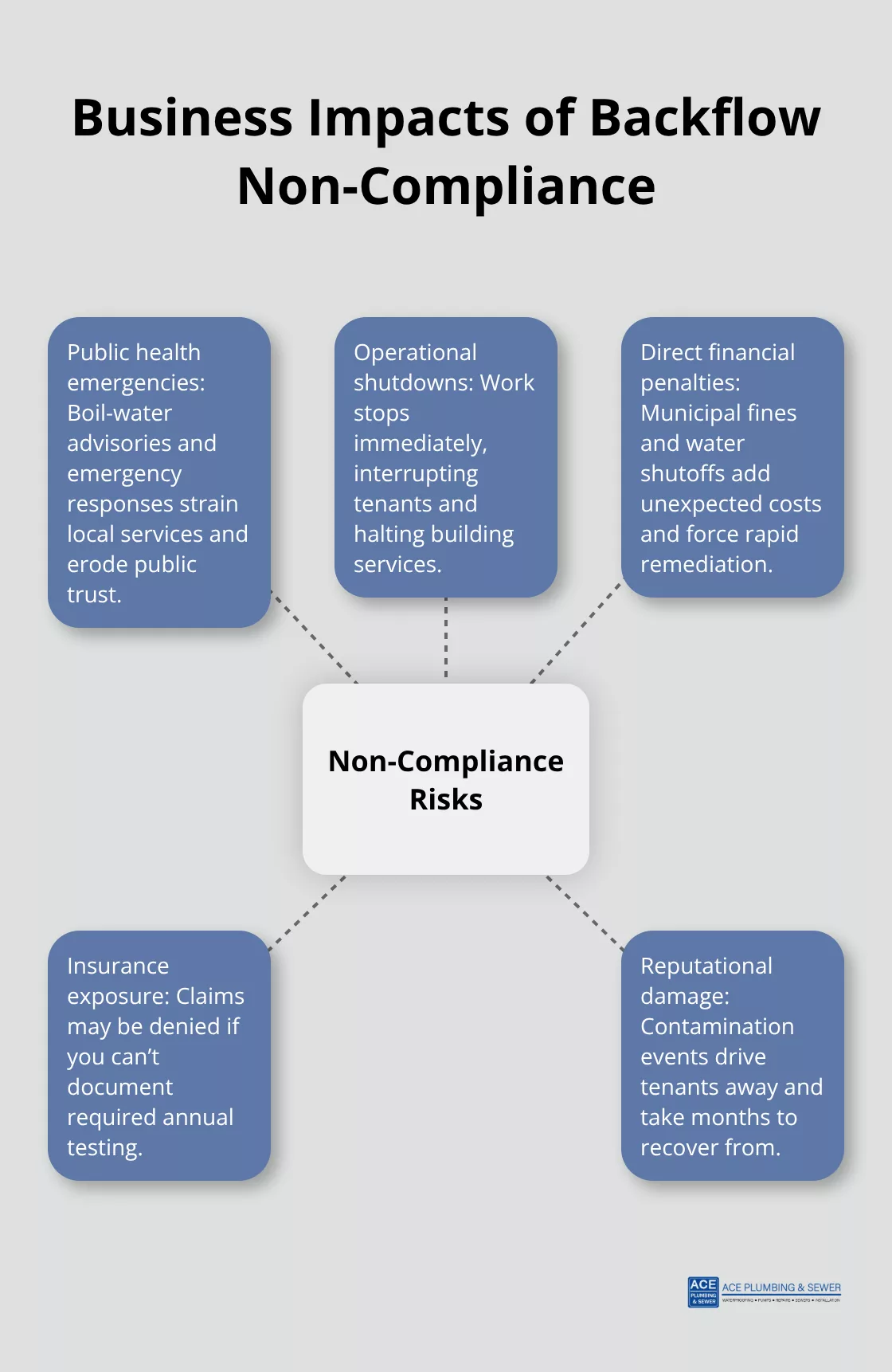
Your office’s water system connects to municipal supplies that serve your entire community. If backflow occurs-water flowing backward into the public system due to pressure drops or cross-connections-contaminants like chemicals, bacteria, or industrial waste poison the drinking water for thousands of people. This isn’t theoretical. The EPA and CDC track backflow incidents annually, and they result in boil-water advisories and public health emergencies. From a business standpoint, contaminated water stops operations immediately. Tenants leave, productivity halts, and your insurance may not cover losses if you failed to maintain required testing. Annual testing costs far less than a single contamination event, which triggers emergency repairs, liability claims, and reputational damage that takes months to recover from.
What Annual Testing Actually Covers
A certified technician performs pressure testing on your backflow device assembly-whether it’s a Double Check Valve Assembly for low-risk areas or a Reduced Pressure Zone device for high-risk zones like medical offices or food service areas. The inspection takes under an hour and checks that valves hold pressure, drains function properly, and no leaks exist. Results get submitted to your local water authority and retained for audits. If a test fails, repairs must happen promptly. Common failures include worn check valves, debris buildup, and pressure fluctuations. Postponing repairs after a failed test puts your office in violation and increases contamination risk. Working with a certified professional means annual testing documentation gets recorded correctly and submitted on time, keeping you audit-ready and compliant.
Insurance and Liability Protection
Your commercial liability policy likely has exclusions for code violations and non-compliance with local ordinances. If a backflow incident occurs and you can’t prove annual testing, your insurer may deny your claim entirely. Facilities managers and property owners carry personal liability exposure if negligence leads to public water contamination. Maintaining current backflow testing documentation proves you took reasonable precautions to protect public health. This documentation becomes critical if a tenant or community member files a claim. Additionally, lenders and prospective buyers view compliant plumbing systems as a sign of responsible property management, potentially increasing property value and reducing financing costs.
Next Steps: Understanding Your Testing Schedule
Different office setups face different backflow risks. Multi-tenant buildings, medical offices, and food service areas each require specific device types and testing protocols to stay compliant with Illinois codes.
How Backflow Testing Works and What You Need to Know
Understanding Your Backflow Prevention Device
Your office’s backflow prevention device sits on your main water line or at high-risk connection points like HVAC systems, fire suppression lines, or irrigation hookups. When water pressure in the municipal supply drops-which happens during main breaks, heavy demand, or firefighting operations-contaminated water can flow backward into clean lines without a functioning preventer in place. A backflow device contains check valves that allow water to flow forward but slam shut if pressure reverses, stopping contamination before it reaches the public system.
How the Annual Testing Process Works
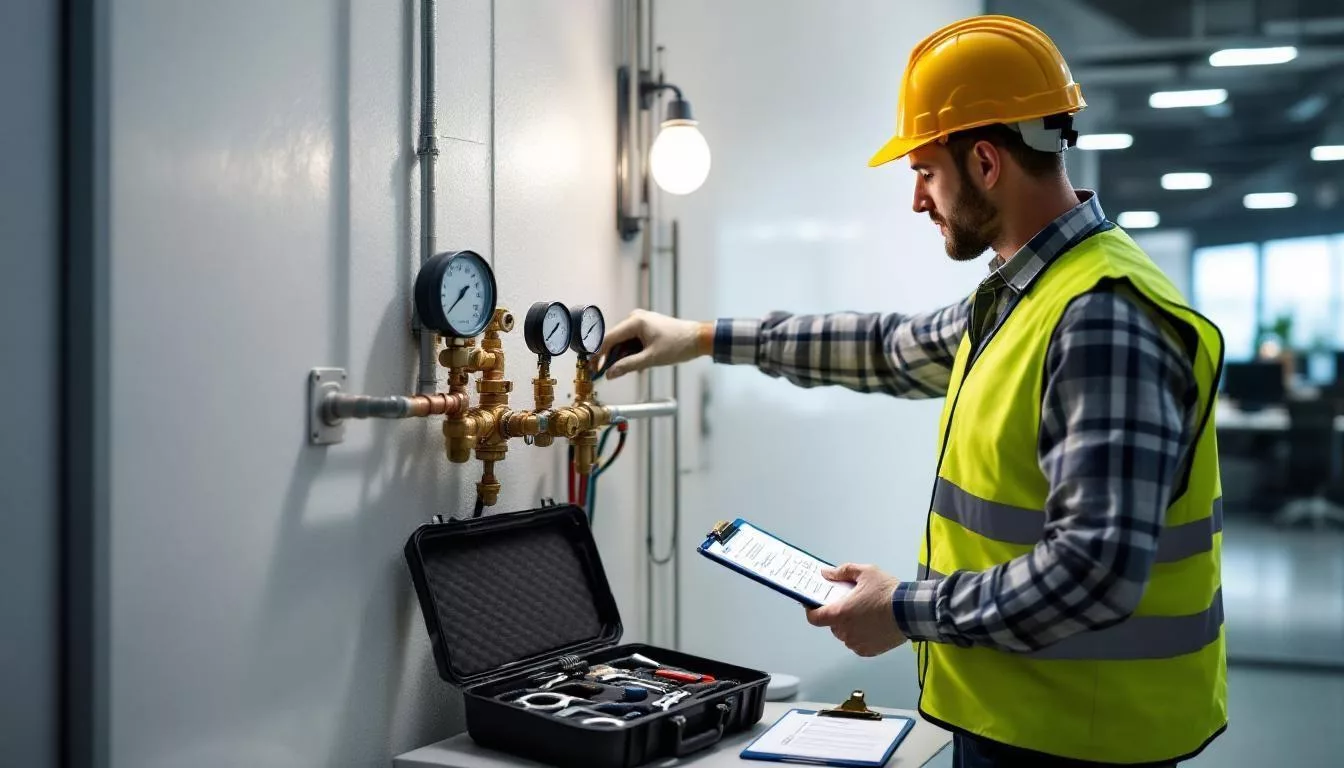
A certified technician connects specialized gauges to your device and measures valve response under simulated backflow conditions, checking that pressure holds steady and drains function properly. This test takes under an hour for most office buildings and produces a detailed report showing whether your device passed or failed. Illinois law requires annual inspection for every commercial property, and results must be submitted to your local water authority. If you operate in Burr Ridge, Hinsdale, Oak Brook, Western Springs, Downers Grove, or Elmhurst, your municipality enforces these requirements strictly-noncompliance triggers fines and potential water shutoffs that halt operations entirely.
Common Failures and What Causes Them
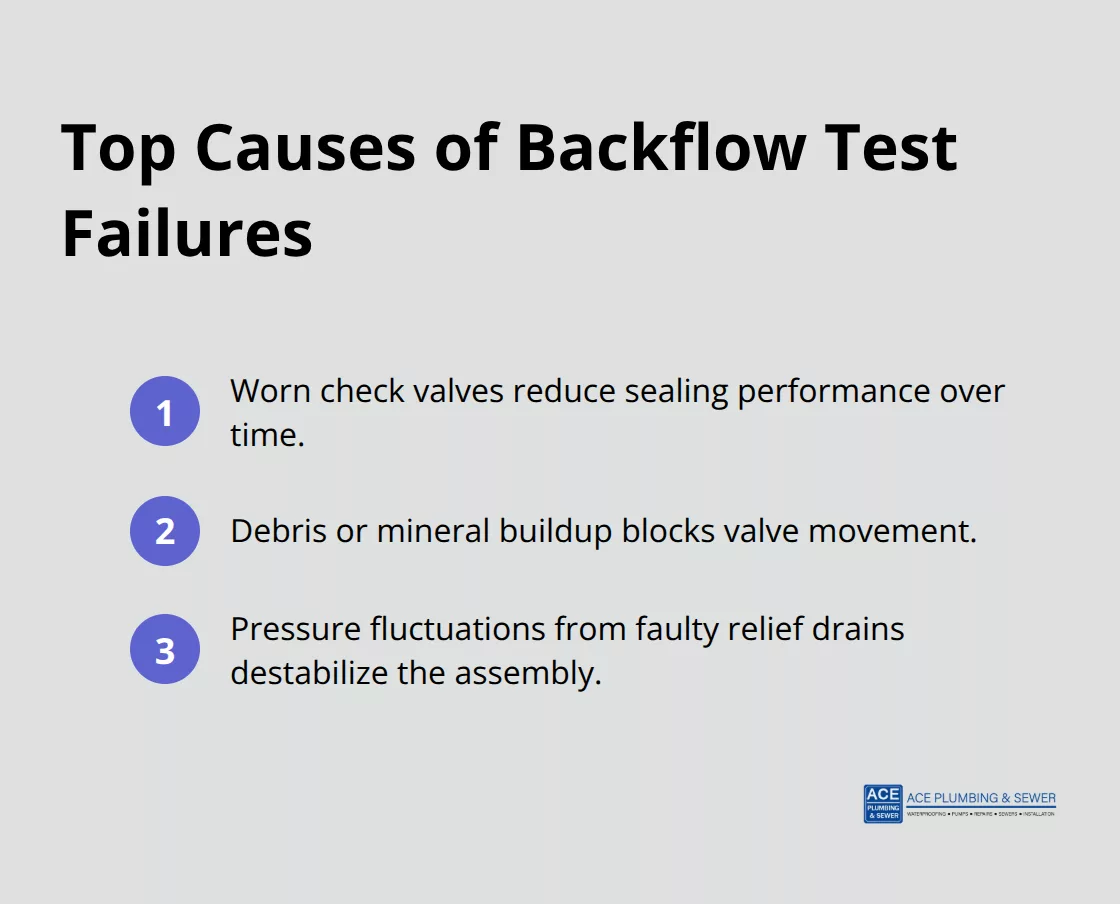
Three main issues cause most backflow test failures: worn check valves that no longer seal properly after years of use, debris or mineral buildup blocking valve movement, and pressure fluctuations caused by faulty relief drains. Medical and dental offices experience higher failure rates because their complex plumbing systems undergo constant pressure changes from specialized equipment. Food service areas fail more often due to chemical residue accumulating inside valve assemblies.
When a test fails, repairs must happen within days, not weeks-postponing repairs keeps your facility in violation and increases contamination risk dramatically.
Repair Versus Replacement Decisions
A failed test doesn’t always mean replacement; sometimes a certified technician can clean debris, replace worn internal seals, or adjust pressure settings to restore function. However, devices installed before 2010 often lack replacement parts available today, making full replacement more cost-effective than repair. Scheduling your annual test in the same month each year-many offices choose January or July to avoid peak seasons-prevents missed deadlines.
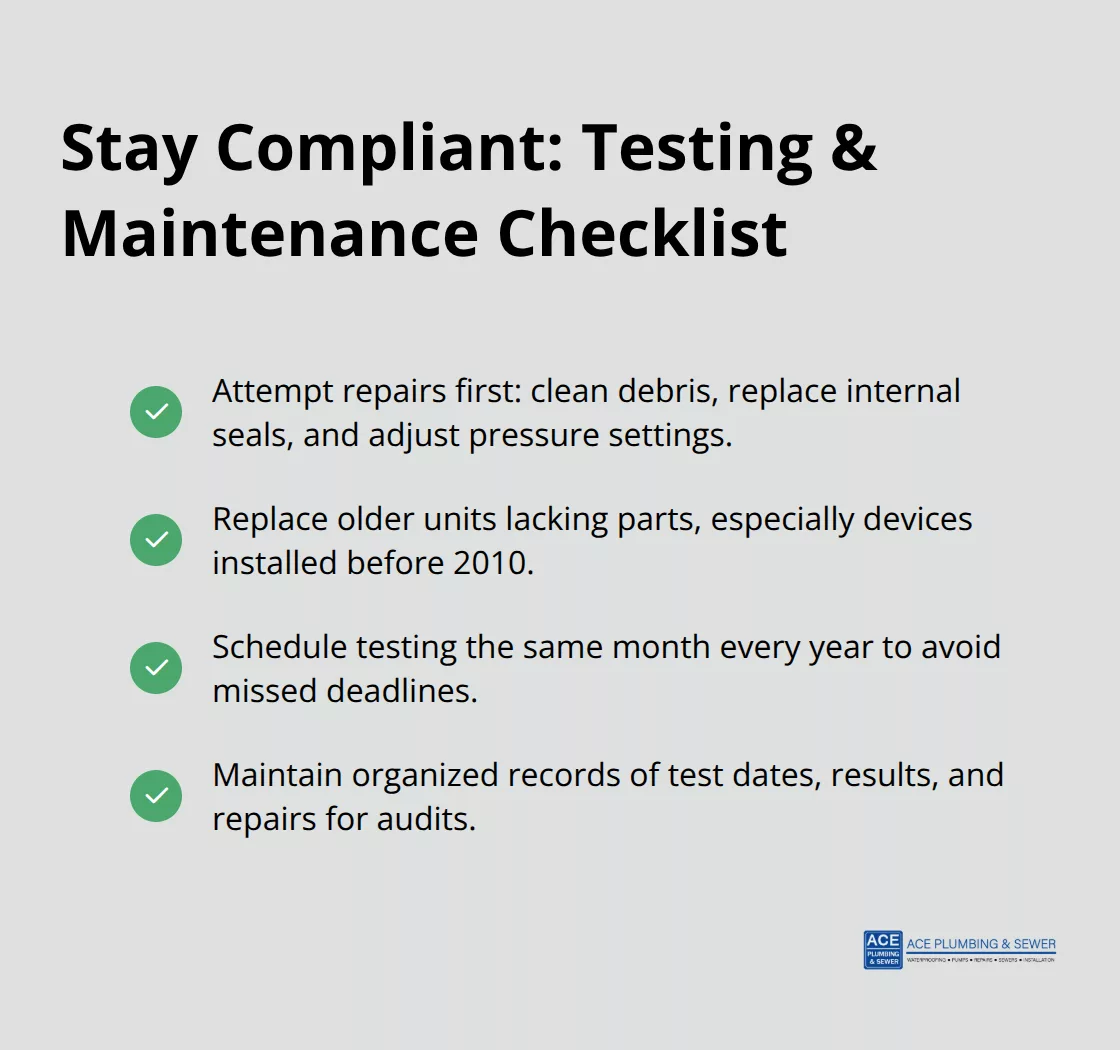
Organized records of all test dates, results, and repairs protect you during compliance audits and prove due diligence if a contamination event occurs.
Moving Forward With Your Testing Schedule
Different office setups face different backflow risks, and each requires specific device types and testing protocols to stay compliant with Illinois codes. Understanding your facility’s unique needs helps you prepare for the next phase of backflow compliance.
Backflow Protection Across Different Office Types
Multi-Tenant Buildings Require Strategic Device Placement
Multi-tenant commercial buildings demand different backflow strategies than single-purpose facilities because water systems serve dozens of separate tenants with competing demands and risk profiles. A typical office tower in Hinsdale or Oak Brook might have irrigation on the roof, HVAC systems on multiple floors, fire suppression lines, and tenant-specific equipment like medical imaging or food prep areas-each creating distinct backflow risks. The Illinois Plumbing Code mandates that high-risk zones like medical offices or food service areas use Reduced Pressure Zone devices, while low-risk common areas can use Double Check Valve Assemblies. This mixed approach saves money on device costs while maintaining compliance, but it demands careful documentation of which device protects which area and when each was last tested.
Map your entire building’s water connections before scheduling annual testing so certified technicians know exactly where devices are located and can flag any offline or removed assemblies that need reinstallation. Property managers in Western Springs and Downers Grove often discover during their first test that previous contractors installed devices incorrectly or failed to register them with the water authority-resulting in compliance gaps that take months to resolve. A comprehensive inventory listing device type, location, model number, and installation date for every assembly on your property prevents this problem.
Medical and Dental Offices Face Stricter Requirements
Medical and dental offices face stricter backflow requirements than standard office buildings because their complex equipment-sterilization systems, imaging machines, vacuum lines, and compressed air systems-creates constant pressure fluctuations that stress prevention devices. Dental offices in particular experience higher failure rates during annual testing because their specialized water lines for chairs and instruments accumulate mineral deposits and debris that block valve movement. The Chicago area’s hard water contributes to this problem significantly, making preventative maintenance between annual tests essential for facilities in Burr Ridge, Elmhurst, and surrounding communities.
Pressure changes in medical facilities happen frequently throughout the day, which means your backflow device works harder than in standard office spaces. Failed tests in these environments demand rapid repair within days, not weeks, because the contamination risk is acute. Scheduling preventative maintenance quarterly rather than annually helps catch problems before they cause test failures and operational disruption.
Food Service Areas Require High-Level Protection
Food service areas including break rooms with commercial-grade equipment, restaurants within office complexes, or catering kitchens require the same high-level Reduced Pressure Zone protection as medical facilities because backflow prevention devices work by allowing water to flow in only one direction, preventing the reversed flow that can bring contaminants into your clean water. These environments present acute contamination hazards that demand immediate attention when test failures occur.
Coordinate with your certified technician to schedule testing during slower business periods and always notify tenant operations to minimize disruption. Some facilities benefit from staggered testing of different zones across two visits rather than one comprehensive shutdown. Keeping detailed records of which tenants occupy which spaces and what equipment they operate helps your plumber recommend the appropriate device type and testing frequency, ensuring your facility stays ahead of compliance and prevents the costly emergency repairs that result from neglected backflow systems.
Final Thoughts
Backflow testing for offices protects your building, your tenants, and your community’s water supply. Illinois law mandates annual testing for every commercial property, and compliance isn’t negotiable-it’s the foundation of responsible facility management. Skipping this requirement exposes your business to fines, water shutoffs, liability claims, and the operational chaos that follows a contamination event.
Regular testing and maintenance catch problems before they become emergencies. Worn check valves, debris buildup, and pressure fluctuations show up during routine inspections, allowing repairs to happen on your schedule rather than forcing emergency shutdowns. Facilities across Burr Ridge, Hinsdale, Oak Brook, Western Springs, Downers Grove, and Elmhurst that maintain consistent testing schedules avoid the costly disruptions that plague unprepared properties.
We at Ace Plumbing & Sewer handle backflow testing and certification for commercial properties across the western Chicago suburbs. Contact The Ace Plumber today at (708) 204-8602 to schedule your annual backflow testing or discuss a preventative maintenance plan tailored to your facility’s needs.
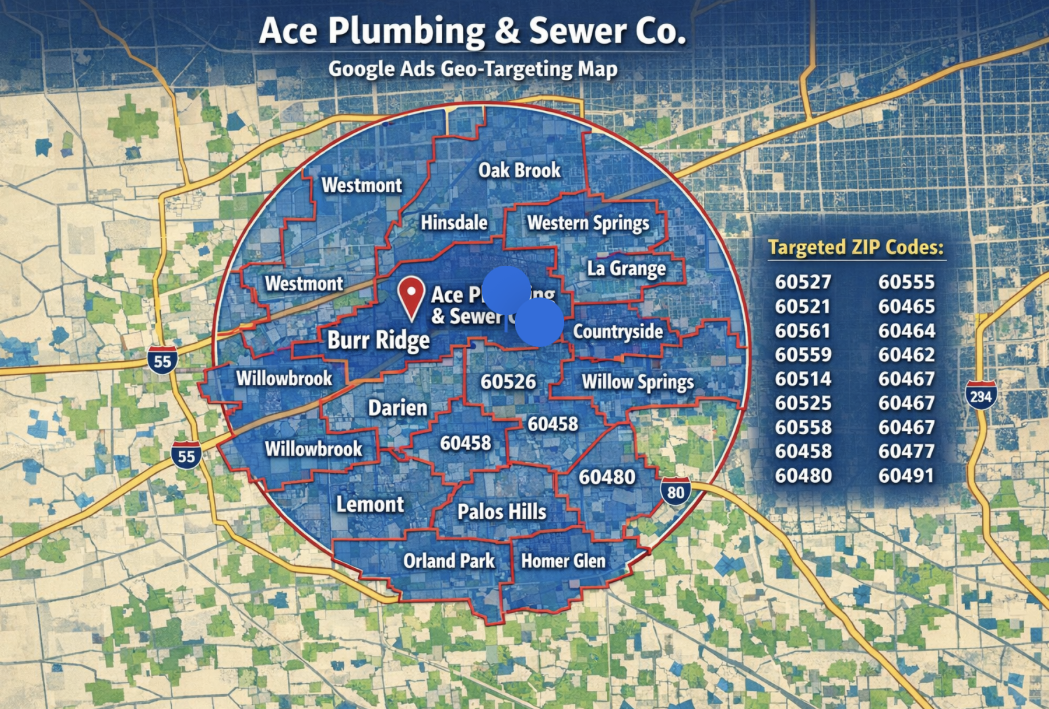
Proudly serving Burr Ridge and Southwest Chicago
Request a free quote
Tell us what’s going on and we’ll get right back to you. Need help now? Call and a real plumber answers 24/7.